Accessible Japan: The Guide for Wheelchair Users, Travellers with Limited Mobility and Senior Travellers
Table of contents
- Is Japan accessible? An honest assessment
- By train and Shinkansen: the backbone of accessible travel
- In the city: metro, bus and universal design taxi
- Accommodation: Universal Rooms and the ryokan question
- Temples, shrines and gardens: what works – and what does not
- Especially for older travellers: pace, tatami and stamina
- Practical help: toilets, Takkyūbin, wheelchair hire and apps
- Why a specialist on the ground is worth it – and the lead time
- Frequently asked questions
Japan can be travelled well with a wheelchair, with a walking aid or at an older age – very well in the cities, and with more preparation at historic and rural places. The large stations are almost consistently step-free, the Shinkansen has fixed wheelchair spaces, and station staff accompany you with a ramp from platform to platform. At the same time, old temples, ryokan with their entrance step and cobbled lanes remain a genuine hurdle. This guide states both things clearly: where Japan is already far ahead, and where care is needed. And because so much depends on booking early and directly, we plan your journey in a tailor-made way – individually, without a fixed group, and as a travel designer on the ground who takes care of the details.
The key points in brief
- Cities yes, old places with care: Tokyo, Osaka and other large cities are largely step-free and accessible in a modern sense; historic temples, narrow lanes and small country stations remain demanding.
- The railway is the backbone: large stations have lifts, staff put out a ramp and announce your arrival ahead to the destination station. On the Shinkansen, the wheelchair spaces and a lockable multi-purpose room are usually in car 11.
- Book Universal Rooms early and directly: accessible rooms are called “Universal Room” or “Barrier-free” in Japan, there are few of them per house, and they can often only be secured by telephone or e-mail – not through the normal online booking.
- Settle the ryokan question honestly: traditional houses with an entrance step (genkan) and a futon on the floor are often difficult; a modern ryokan with a bed and a private bath (kashikiri-buro) solve the bathing question and the tattoo question in one go.
- Practical help on the ground: accessible multi-purpose toilets are almost everywhere, the Takkyūbin luggage service takes your suitcases from door to door, and you can borrow wheelchairs free of charge at many attractions and in department stores.
- Check your medication in advance: some active substances that are common in Europe are strictly prohibited in Japan or require an import certificate – clarify this in good time before the journey, with a prescription and a doctor’s certificate.
- Lead time decides: rooms, wheelchair spaces and private baths are scarce, separate allocations. We secure them early, in writing and matched to one another, so that everything fits together on the day of travel.
Is Japan accessible? An honest assessment
Japan is more accessible than many travellers expect – but with clear contrasts. The modern large cities are among the best developed in the world: stations with lifts, a tactile guidance system for blind people that was invented in Japan, clean multi-purpose toilets at almost every station and a service culture that lends a hand as a matter of course. Historic and rural places, by contrast, remain demanding: temple steps, gravel paths, narrow old restaurants and traditional ryokan are often not easy to negotiate on wheels. If you know both sides, you can lay out your journey so that it uses the strengths and avoids the hurdles.
This guide is addressed to wheelchair users, to people with limited mobility, to older travellers and equally to families with a pushchair – because many of the same conveniences, such as lifts, wide toilets and ramps on the bus, help everyone alike. Our tone throughout stays open and clear: we name what works reliably, and equally where you should plan and ask in advance.
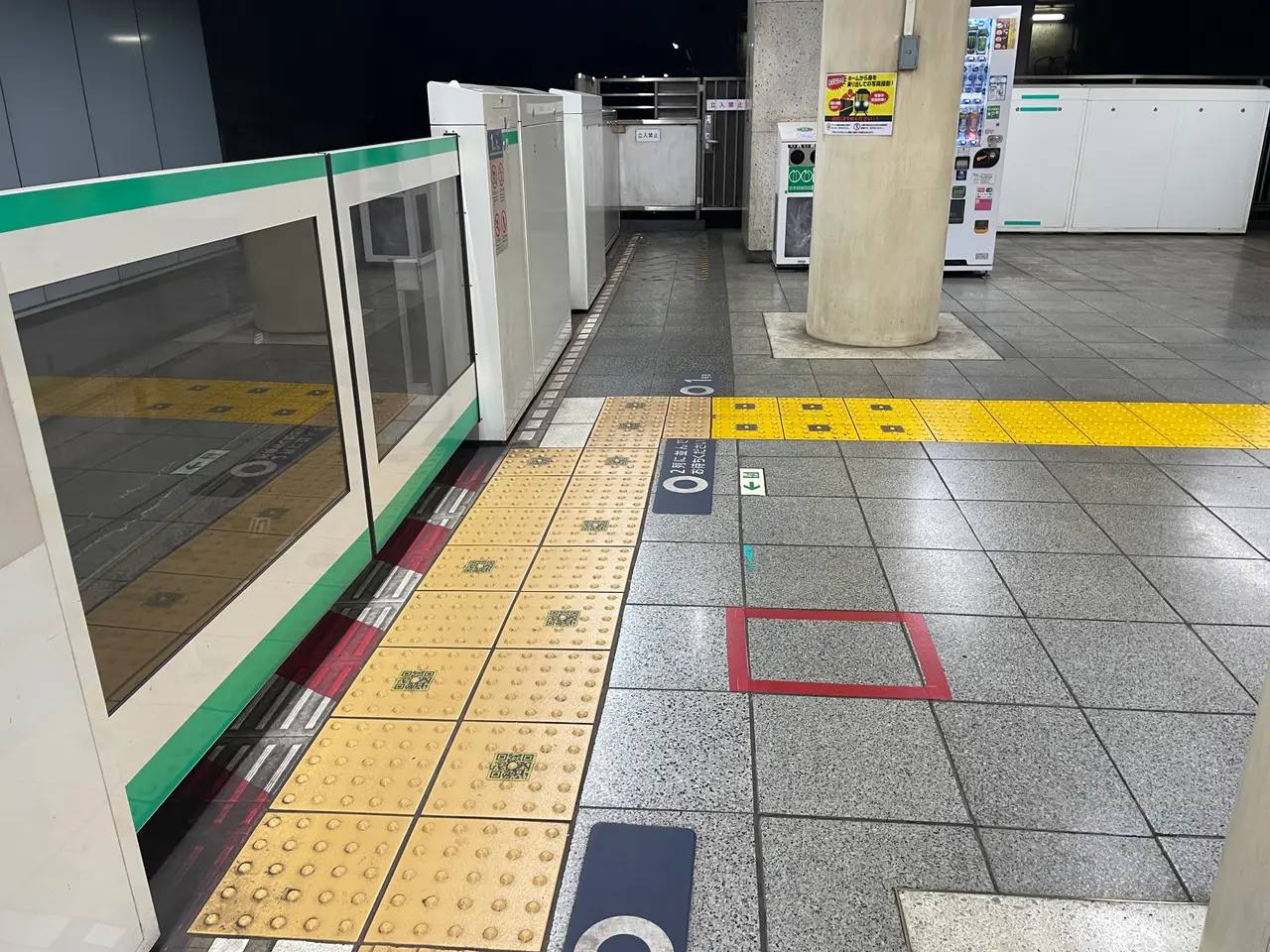
The dividing line runs less between accessible and inaccessible than between new and old. In Tokyo, Osaka and Kyoto almost all of the large stations are step-free; staff help you over the gap to the train with a portable ramp and announce your arrival ahead at the destination station. At small country stations, in temple grounds that have grown over centuries and in a traditional ryokan, by contrast, steps, tatami and narrow passages are part of the building fabric and can hardly be changed. The overview below sorts the most important points:
| Well accessible | Demanding – needs planning |
|---|---|
| Large stations in the cities – step-free, with lifts and staff who put out a portable ramp | Small country stations – lifts and ramps are considerably rarer here |
| Multi-purpose toilets at almost every station, in department stores and large parks | Narrow, old restaurants and historic buildings with steps at the entrance |
| Tactile guidance paving, invented in Japan and today practically nationwide | Temples and shrines with steep pilgrim staircases; individual side areas remain inaccessible |
| Low-floor buses in Tokyo, Osaka and Kyoto – the driver puts out the ramp personally | Traditional ryokan with a genkan step, tatami and a futon directly on the floor |
| Attentive service culture – staff often help even without being asked | Gravel paths and cobbled lanes (Gion in Kyoto, for example) as well as gardens with hills and unpaved paths |
It is precisely at these contrasts that we work, as a travel designer on the ground who advises you in English. We live in Japan and we know the stations with the short walks, the hotels with rooms you can genuinely move around in and the temples with a ramp at the side. In this way we plan your journey in a tailor-made way and around your own pace – without a fixed group and without sales pressure. We take care of the details so that you can concentrate on the experience: from the ramp at the platform to the right space on the Shinkansen and the room with the wide bathroom. What such a concept looks like as a whole is shown in our overview of independent travel in Japan.
Sources: JNTO – Traveling With a Disability (low-floor buses, ramp assistance), Nippon.com – Barrier-Free Design in Japan (as of 2014: 83 % of stations with 3,000+ passengers a day, but only 43 % of all roughly 9,500 stations), Accessible Japan – Accessible Toilets in Japan (multi-purpose toilets almost nationwide), Wikipedia – Seiichi Miyake / Tactile paving (tactile guidance paving invented in Japan)
By train and Shinkansen: the backbone of accessible travel
The railway is the most reliable and most accessible way to travel through Japan. In the large cities the stations are largely step-free and equipped with lifts, tactile guidance paving and wheelchair-accessible toilets; according to the Ministry of Transport, around 94 % of stations with at least 3,000 passengers a day are step-free (as of the end of March 2024). At small country stations the provision remains patchier – here we plan your route accordingly and arrange the changes in advance, so that no surprise is waiting for you along the way.
The heart of it is the personal assistance provided by station staff. Instead of going through the automatic gate, turn to the staffed counter or the gate and give the name of your destination station. A member of staff accompanies you to the platform, bridges the gap between the platform edge and the train with a portable ramp and announces your arrival ahead – so that at every interchange and at the destination station, staff are already waiting with another ramp. This service is free of charge and belongs to the ordinary everyday routine; often it is even offered without being asked for.
On local trains and metro lines the designated wheelchair space is usually at the ends of the carriage near the doors, where fold-up seats create room. The marked “Priority Seats” (優先席, yūsenseki) are reserved for older travellers, people with disabilities, pregnant women and injured passengers, and are indicated with pictograms in every carriage.
On the Shinkansen the wheelchair spaces are in a fixed car – on the Tōkaidō/Sanyō route in car 11, on the Tōhoku line in car 5. The newest N700S series offers six wheelchair spaces instead of the previous two on the Tōkaidō/Sanyō route, so that a companion or a small group can sit together. In the same car you will find an accessible toilet and the multi-purpose room (多目的室, tamokuteki-shitsu): a private room that can be locked from the inside, with a bench that can be converted for resting or lying down.
| Aspect | What you should know |
|---|---|
| Car with wheelchair spaces | Tōkaidō/Sanyō Shinkansen: car 11; Tōhoku Shinkansen: car 5. The new N700S trains offer six spaces on the Tōkaidō/Sanyō line; the extra-wide doors also allow large electric wheelchairs (approx. 70 cm) to board. |
| Multi-purpose room | A lockable private room near the wheelchair spaces; the bench can be converted for lying down. An accessible toilet is in the same car. It is usually reserved together with the space. |
| Reservation | At the JR counter “Midori no Madoguchi”, by telephone or online (smartEX, for example). Bookable from 10:00 one month in advance. Holders of a Japan Rail Pass book at the counter. |
| Assistance | Give the name of your destination station at the counter or gate. Staff put out the ramp, accompany you to the platform and radio ahead about your arrival to the interchange and destination stations. Free of charge. |
| Time buffer | Be at the gate at least 15 minutes before departure; you are collected around 10 minutes before boarding. Allow more time at peak periods. |
It is best to reserve the wheelchair space early – at the JR counter “Midori no Madoguchi”, by telephone or online. On the day of travel, allow a calm time buffer: be at the gate at least 15 minutes before departure, because staff will collect you from the waiting area about ten minutes before boarding. If you are linking several stages, on a two-week journey through Japan for example, we take over the reservations and the arrangements with the stations for you, so that the connections fit without any rush.
Sources: Ministry of Land, Infrastructure, Transport and Tourism (MLIT) – Station accessibility as of the end of March 2024 (93.9 % step-free at stations with 3,000+ passengers a day), JNTO – Traveling With a Disability, Japan-guide – Basic Guide to Accessible Travel in Japan, the Ayumi (Flat) – How to Reserve Wheelchair Seats on the Shinkansen, Accessible Japan – Shinkansen Wheelchair Accessibility
In the city: metro, bus and universal design taxi
In Japan’s large cities you will get along well with a little advance planning: nearly every metro station has a step-free route, the city buses are low-floor buses with a ramp, and universal design taxis run across the whole country, which you can roll straight into in your wheelchair. As a travel designer on the ground we coordinate these building blocks for your individual journey so that your distances stay short.
The metro systems of Tokyo and Osaka offer at least one accessible route from the street to the platform at every station, the so-called “one route” principle. One thing stays clear: this single route does not cover every exit. Large stations such as Ginza or Shibuya sometimes have only one or two lifts, which will not always bring you close to your destination. Ask the staff specifically for the exit with a lift, and in a wheelchair reckon with about twice as much time inside the station, because the lift routes often force you to go back and forth. At a staffed counter, staff will put out a portable ramp on request and announce your arrival ahead at the destination station.
In Tokyo, Osaka and Kyoto practically all city buses are low-floor buses. The driver stops close to the kerb, folds out a ramp and helps you board; inside, folded-up seats create room for the wheelchair. Here the driver alone is responsible for the assistance, unlike at a station with several members of staff. Long-distance coaches and most airport buses, by contrast, are not accessible, with steps at the entrance and no wheelchair space. For the longer stages of a round trip we therefore recommend the train.
For door-to-door journeys, universal design taxis are the most reliable choice. The nationwide Toyota “JPN Taxi” has an electric sliding door, a flat floor and a ramp; through apps such as GO you can order a certified wheelchair-accessible vehicle specifically. In Kyoto, MK Taxi and Miyako Taxi offer wheelchair-accessible cars. The ramps do have weight and size limits (a guide value of around 200 kg), and larger electric wheelchairs do not fit into every model – so it is better to register one with the taxi company in advance.
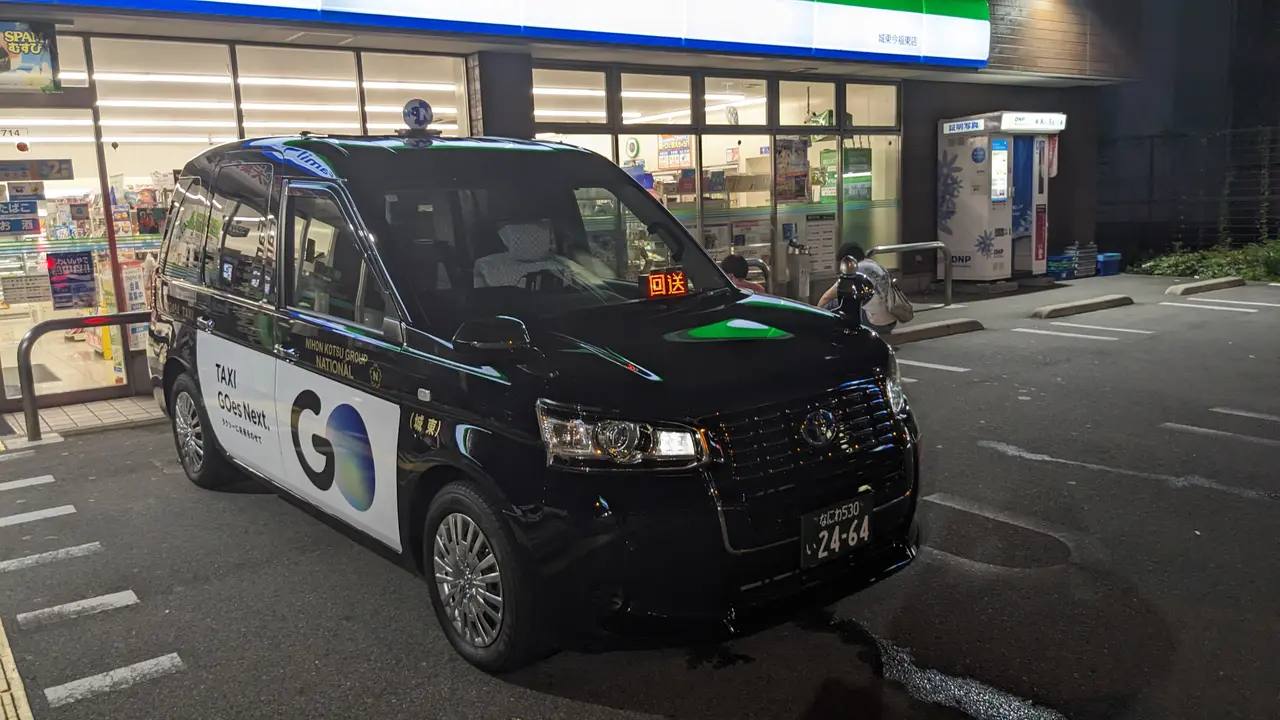
In Kyoto in particular we advise avoiding the city buses: they are often overcrowded and stuck in traffic in the narrow streets. The two metro lines and the JR trains are punctual, free of traffic jams and accessible, and together with a UD taxi for the last mile they are usually the more relaxed solution. You can pay everywhere conveniently with a contactless IC card such as Suica or ICOCA; for visitors there is the deposit-free “Welcome Suica”, which is valid nationwide for 28 days.
Sources: Toei Transportation – Accessibility on the metro (official), Accessible Japan – Bus Accessibility in Japan, Kyoto MK Taxi / Miyako Taxi – Wheelchair-accessible vehicles (official)
Accommodation: Universal Rooms and the ryokan question
You will certainly find accessible rooms in Japan – but in most houses there are only very few of them. We therefore advise enquiring early and always directly with the hotel. For a long time every hotel, regardless of its size, had to provide only a single accessible room; before the most recent reform, only 0.4 per cent of all Japanese hotel rooms were wheelchair-accessible. A revision of the Barrier-Free Law (2018/2019, ahead of the 2020 Paralympics) now prescribes around one per cent for new buildings and comprehensively renovated houses with 50 rooms or more – so one room for 50 to 100 rooms, and two for around 200 rooms. This does not apply retrospectively; older houses often stay at the old minimum.
Do not search for such rooms under “accessible”, but under “Universal Room” (ユニバーサルルーム) or “Barrier-free” (バリアフリー); the budget chain Toyoko Inn calls them “Heartful Room”. A good Universal Room has a widened door (the large Tokyo houses state around 85 cm), grab rails and a floor without thresholds. A genuine level-access roll-in shower, however, is rare in Japan – most of these rooms instead offer a bathtub with a shower chair beside it and a hand shower. If you need a roll-in shower, you should ask for it specifically and have the exact room category confirmed in writing.
Many hotels deliberately block their accessible rooms from the normal online booking, so that they are not occupied where there is no need for them. You will therefore usually reach them only by telephone or e-mail – ask for the confirmation in writing. It is exactly this coordination that we take care of on a tailor-made journey. Documented examples in Tokyo are the Keio Plaza Hotel with ten universal design rooms and the Grand Nikko Tokyo Daiba with doors around 85 cm wide.
The ryokan question
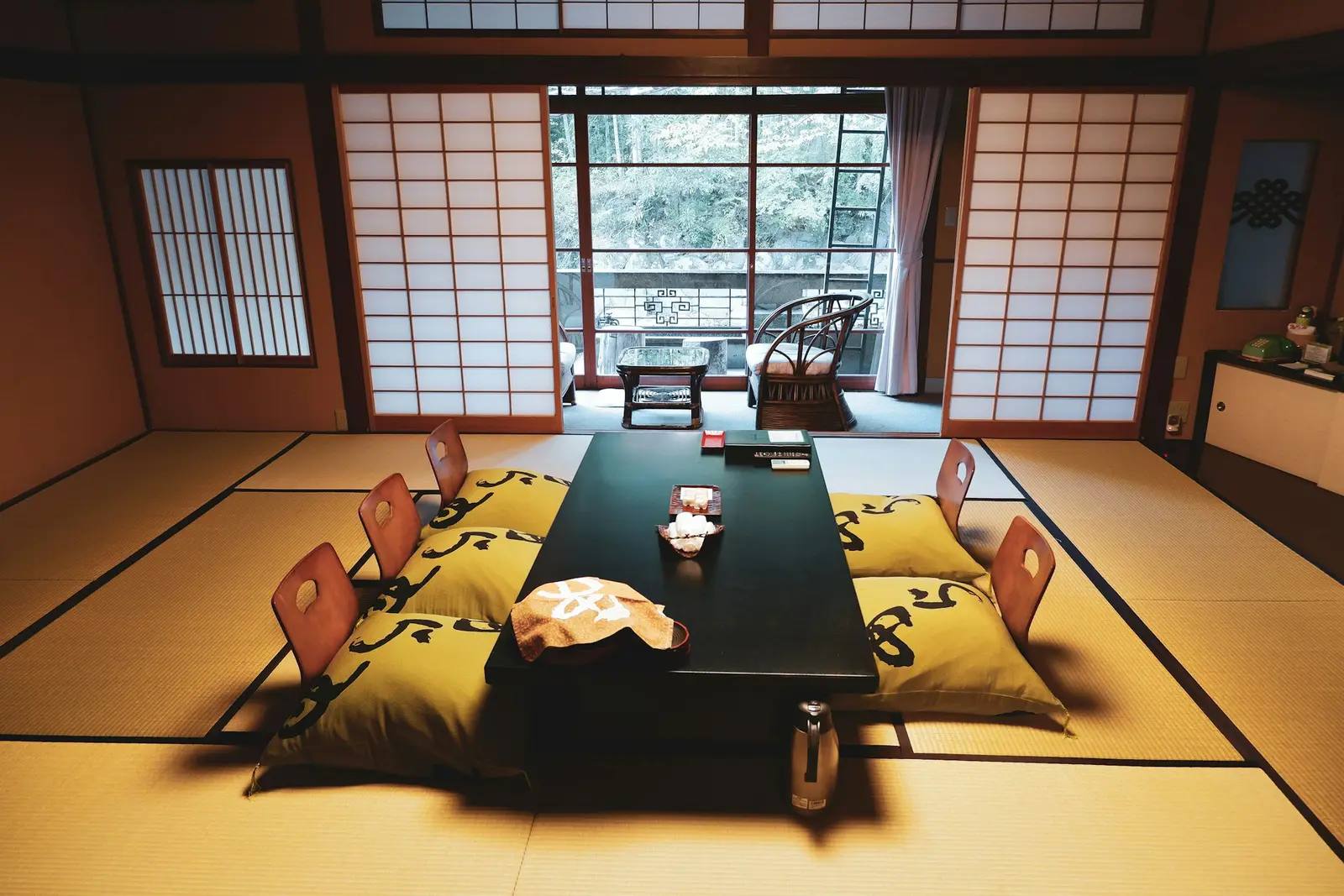
A classic ryokan is often not suitable for wheelchair users: the step in the genkan (entrance area), tatami mats on which wheelchairs may not be used, the futon directly on the floor and sunken onsen pools with stone steps. Small houses with fewer than 50 rooms are exempt from the legal quota in any case. But there are ways: modern or renovated ryokan offer beds and chairs instead of a futon on the floor – one documented example is the Naniwa Issui in Matsue, with a gentle ramp and an accessible floor. And a kashikiri-buro (貸切風呂, a privately bookable bath) gets around the mobility question and the tattoo question at the same time: your own wheelchair is prohibited in the communal bath for reasons of hygiene, whereas in a private bath a companion can assist in peace, and since nobody else shares the water, the usual tattoo bans do not apply. Not every private bath is step-free – ask in advance about grab rails and a bathing stool. More on this in our ryokan guide.
Sources: Accessible Japan – Increasing Accessible Hotel Rooms in Japan, Voyapon – Finding Accessible Hotels in Japan (Josh Grisdale), Japan Cheapo – 11 Accessible Hotels Around Japan, Japan Ryokan Guide – Step-Free Wheelchair-Accessible Ryokans
Temples, shrines and gardens: what works – and what does not
Modern sights in Japan are mostly well accessible, and many historic places have been retrofitted with surprising care – yet gravel, steps and cobblestones remain real limits that you should know about beforehand. A temple with a lift and a ramp is as much a reality as the garden whose gravel paths are hardly passable without a companion. We look at every place closely in advance and put together a tailor-made route for you that suits your mobility.
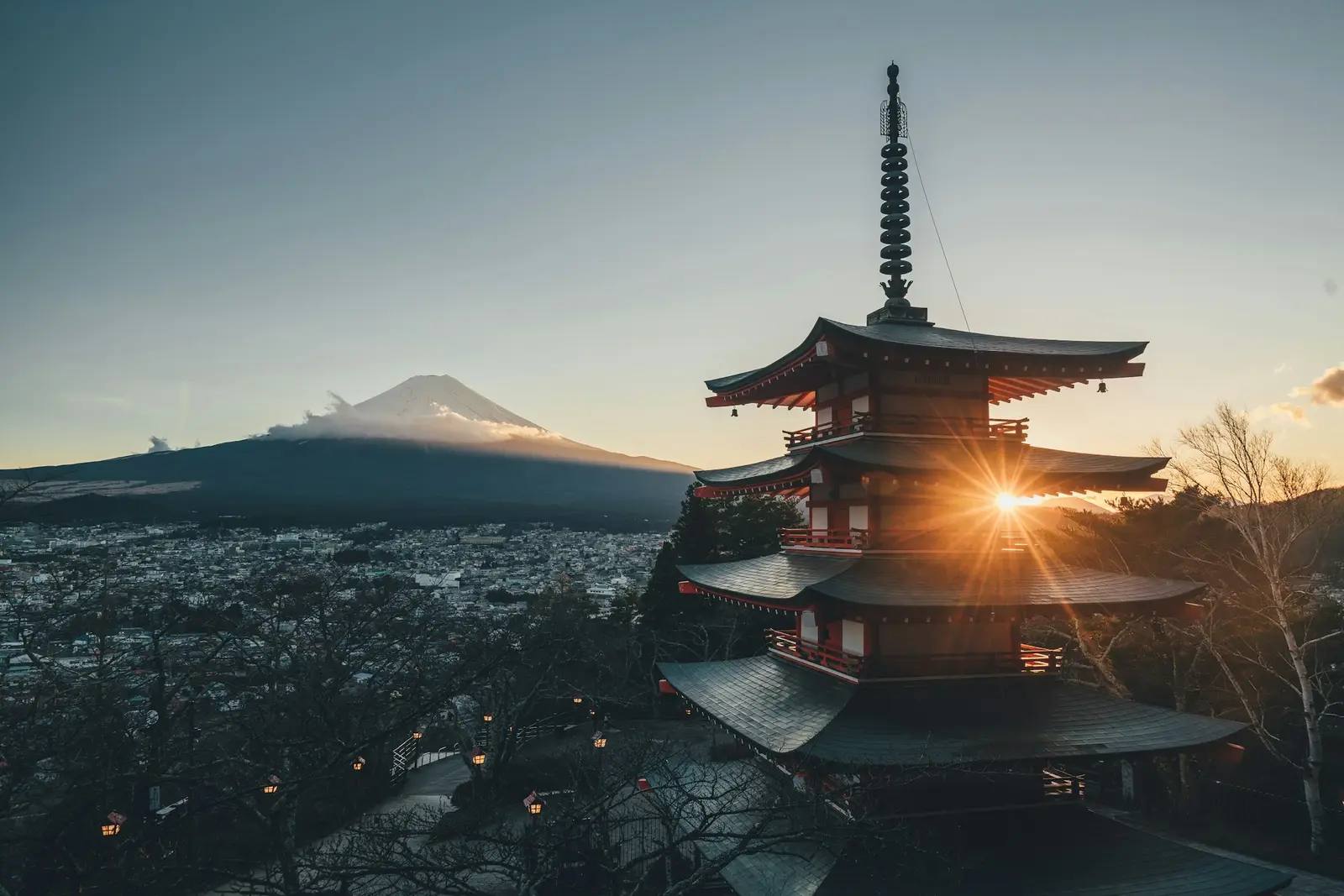
Among the well accessible destinations is Sensō-ji in Asakusa: the main path from the Thunder Gate through the Nakamise shopping street to the main hall is largely level and paved, a lift on the left-hand side of the hall and a stone ramp at the side bypass the front staircase, and free loan wheelchairs as well as four accessible toilets are available nearby. Kiyomizu-dera in Kyoto has a signposted accessible circuit despite its hillside position, which bypasses the steep pilgrim staircase and received an award from the Japanese Ministry of Transport in 2011. The biggest hurdle remains the roughly ten-minute climb from the bus stop, which an accessible taxi can shorten via the emergency access road.
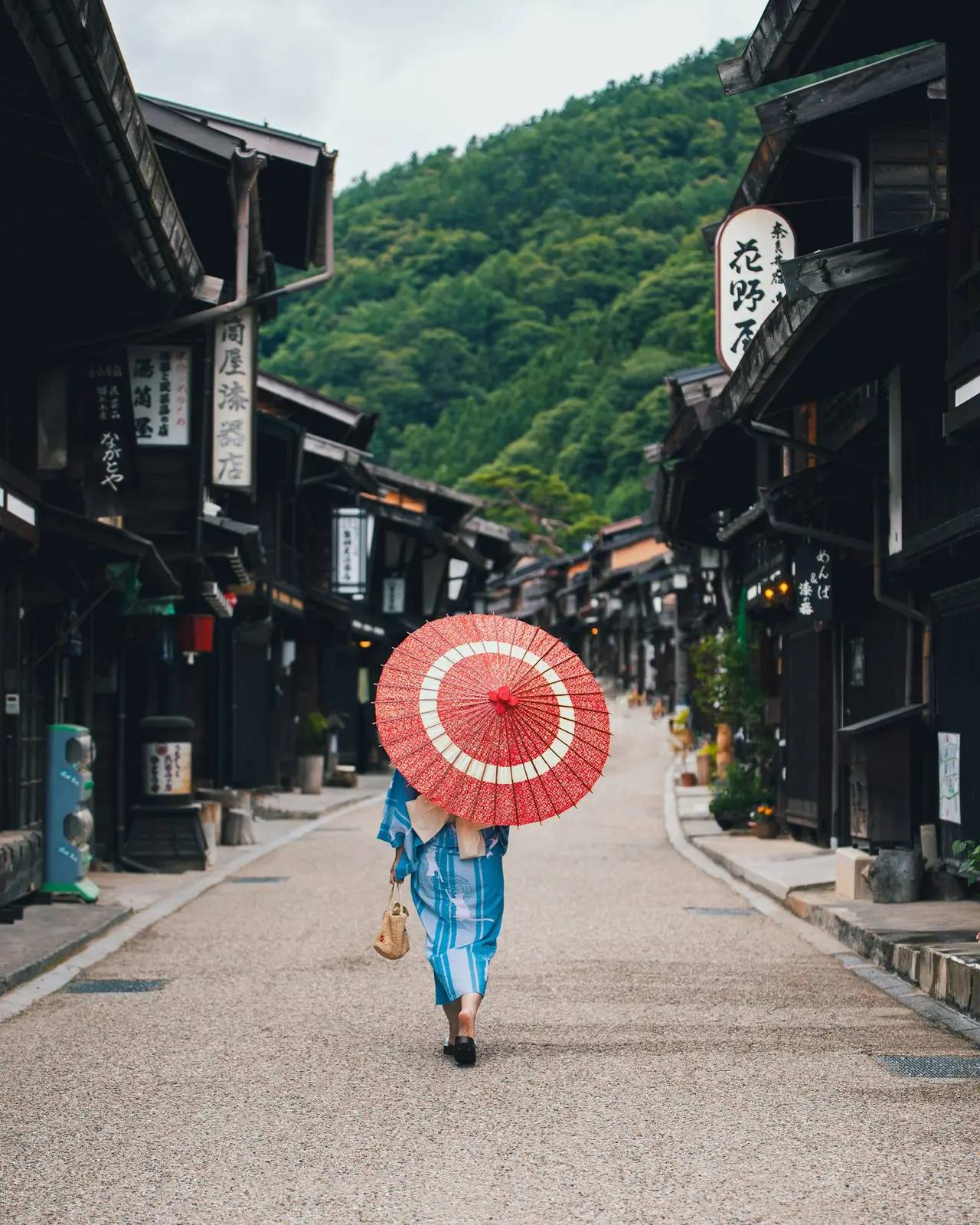
The limits show themselves where the old building fabric has been preserved. Japanese gardens are often only partly passable: at Kenrokuen in Kanazawa the main circuit consists of compacted gravel, with gradients and unpaved paths in addition, for which a companion to push is advisable. The Gion and Higashiyama district in Kyoto is demanding because of cobblestones and rising lanes, though flatter detours are feasible. And original, never-rebuilt wooden castles such as Himeji can only be climbed inside by way of steep staircases – unlike the modern concrete reconstructions with a lift. Free loan wheelchairs, incidentally, are standard at many museums, department stores and stations, usually for use on site only.
| Accessibility | Example places |
|---|---|
| Well accessible | Sensō-ji, Osaka Castle, modern museums (lifts, ramps, loan wheelchairs) |
| Partly accessible | Kiyomizu-dera (accessible circuit, but a climb of around ten minutes from the bus stop), Kenrokuen and other gardens (gravel paths, gradients – with a companion), Gion and Higashiyama (flatter detours) |
| Demanding | Historic wooden castles such as Himeji (steep internal staircases), narrow subsidiary shrines with steps |
Our principle for days like these is quality instead of quantity: two well chosen and properly prepared visits a day bring more than a marathon through half a dozen temples that in the end only leaves you exhausted. We group the destinations geographically, take care in advance of details such as access roads and loan wheelchairs, and set the pace according to the person who needs the most support. What emerges is an individually planned journey away from the crowds – without a fixed group and without sales pressure.
Sources: Tokyo Metropolitan Government – Accessibility guide Asakusa/Sensō-ji, Accessible Japan – Kiyomizu-dera Accessibility Guide, Ishikawa Prefecture – Kenrokuen Official Guidance, Osaka Convention & Tourism Bureau – Osaka Castle Universal Guide
Your accessible journey through Japan, individually planned
We check the stations along your route, secure the right Universal Room and reserve your wheelchair space and assistance in advance. In this way your tailor-made journey becomes plannable – individual, without sales pressure, from a travel designer on the ground.
Send a no-obligation enquiryEspecially for older travellers: pace, tatami and stamina
Japan suits older travellers very well – provided the pace and the distances are planned realistically. The country is the most aged society in the world: 29.4 per cent of the population are 65 or older, and everyday life is correspondingly well adjusted to older people. The service culture of “omotenashi” does the rest – staff at stations, in hotels and in shops usually help willingly, often without being asked. The real hurdle is not the friendliness on the ground, but the distances, the stairs and the stamina needed over several days.
Large interchange stations such as Shinjuku or Tokyo Station mean long underground walks, stairs and crowds – which tires you faster than many people expect. Use lifts and escalators consistently, avoid the peak hours and plan generous time buffers for each change. If you ask at the ticket counter, staff will accompany you to the platform. In every train there are also signposted “Priority Seats” (優先席) for older passengers, pregnant women and people with disabilities; for the last stage to the hotel a taxi is often worthwhile instead of the walk through the station.
Sitting on the floor is easily underestimated: in ryokan, temple lodgings and traditional restaurants you sit on tatami mats at low tables. The Japanese kneeling position becomes tiring for many people over a longer period, and in a ryokan you sleep on a futon directly on the floor. Many houses will provide a chair, cushions or a proper bed on request – others cannot offer an alternative. Register the need a few weeks in advance and combine one or two nights in a ryokan with hotel nights in a proper bed.
For older travellers the weather is a question of health. Summer, above all July and August, is hot and extremely humid; in July and August 2024 temperatures in Tokyo rose above 30 degrees on more than 80 per cent of the days, which makes heatstroke a real risk – according to the official cause-of-death statistics, 85 per cent of those who died of heatstroke in Japan in 2024 were aged 65 or over, and people aged 65 or over were also the largest group among heatstroke patients taken to hospital by ambulance, at 57 per cent. Move your programme into the morning and evening hours, drink regularly and retreat into air-conditioned rooms around midday. Winter stays mild in Tokyo, Kyoto and Osaka, while on Hokkaidō icy paths with a risk of falling are a real concern. Which season suits you is something we are glad to work out with you in our guide to the best time to travel.
Our advice: less is more
Japan means more walking than the map suggests – even Kyoto, which looks compact, demands many steps and stairs when you visit temples. We therefore plan less per day, group the sights geographically, deliberately build in rest days and set the pace according to the person who finds it hardest. Central accommodation near a station and taxis for the stretches in between take further pressure out of the day. How such a rhythm can be put into practice across several generations is something we also show in our guide to Japan with children.
Sources: Statistics Bureau of Japan – Share of people aged 65 and over (Statistics Topics No. 146, Sept. 2025), UME Travel – How to Plan a Trip to Japan for Senior Tourists, Japan and More – Will I Have to Sit on the Floor in Japan?, Nippon.com – Guide to Japan: summer heat and heatstroke, Ministry of Health, Labour and Welfare (MHLW) – Heatstroke deaths by age, vital statistics 2024 (85.0 % aged 65 and over), Fire and Disaster Management Agency (FDMA) – Heatstroke ambulance transports, May to September 2024 (57.4 % aged 65 and over)
Practical help: toilets, Takkyūbin, wheelchair hire and apps
A few Japanese particularities make your journey noticeably easier – especially with a walking aid, in a wheelchair or as an older traveller. Accessible toilets can be found almost everywhere, you can send your luggage ahead by courier and pass through narrow stations with your hands free, wheelchairs can be borrowed free of charge in many places, several apps plan accessible routes, and certified assistance dogs are allowed everywhere by law. We take care of these details as a travel designer on the ground.
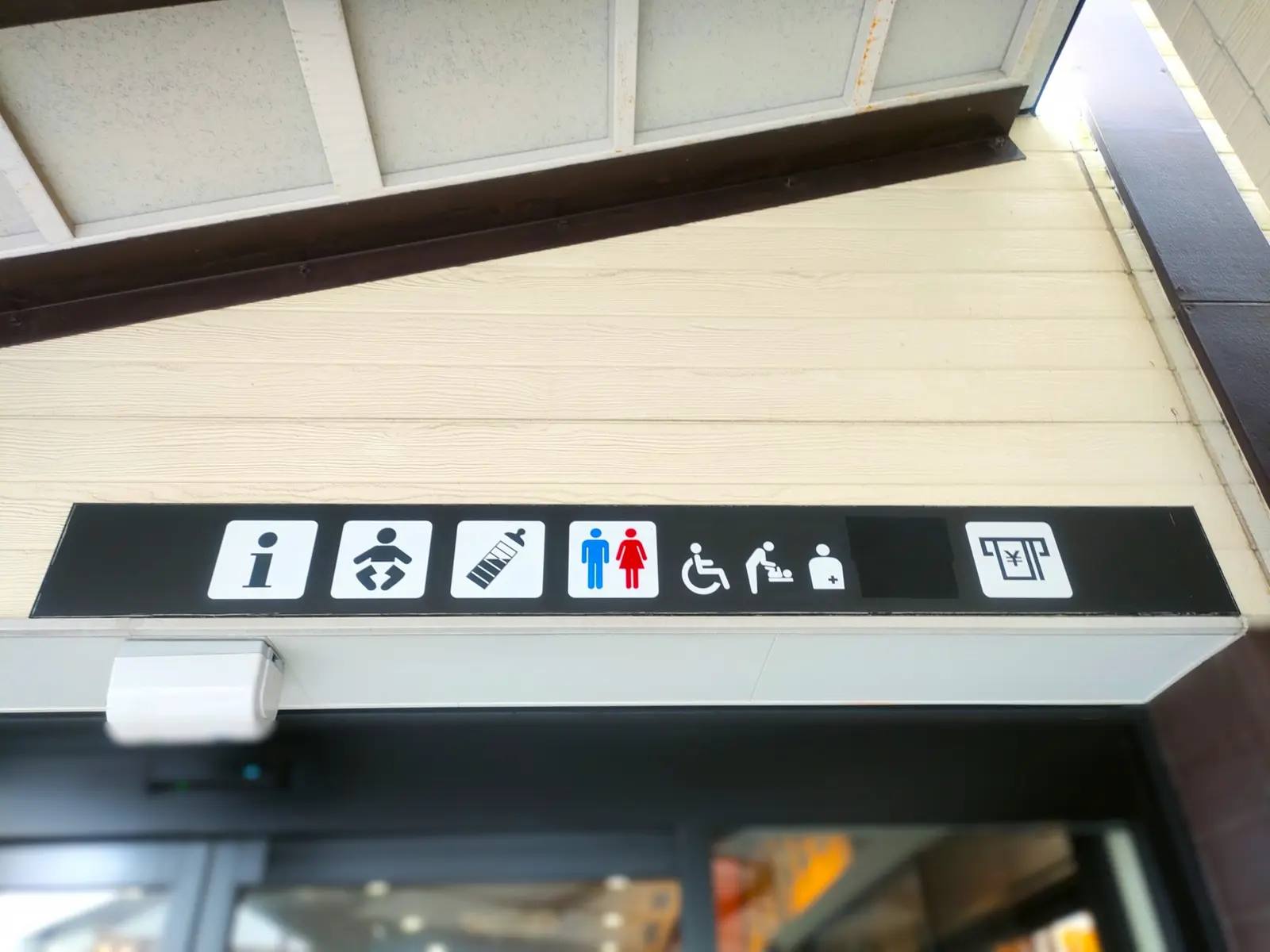
Multi-purpose or barrier-free toilets (多目的トイレ, tamokuteki toire) are almost nationwide in Japan – at practically every station, in department stores, shopping centres and large parks. At heavily used stations (from 3,000 passengers a day) such a toilet was present in around 88 per cent of cases at the end of March 2020. They are spacious rooms of their own with grab rails, a low washbasin and an emergency call button, intended for older travellers and families with small children as well. The red emergency button is deliberately placed low down near the floor so that a person who has fallen can reach it – do not confuse it with the flush button.
Very practical is the forwarding of luggage, called Takkyūbin (宅急便) in Japan and operated above all by Yamato Transport. You hand in your suitcase at the hotel reception, in a convenience store or at an airport counter and have it carried from door to door – from the airport to the hotel or between two places of accommodation. Delivery usually takes place the next day (two days to Hokkaidō or Okinawa), as a guide value around 2,000 to 4,000 yen per suitcase. In this way you travel through the narrow stations with your hands free – a noticeable advantage on a two-week round trip.
Certified assistance dogs are allowed everywhere by law – on public transport, in restaurants, shops and hotels; dogs from abroad, however, need a temporary certificate from a recognised Japanese body and a rabies import procedure with around seven months of lead time. Wheelchairs can usually be borrowed free of charge in department stores, museums, large stations and at sights – then only for use on site; for a whole journey, services such as WHILL or MoVA by ANA deliver a wheelchair to your hotel or to the airport. Several free apps also help with route planning:
- Google Maps shows wheelchair-accessible public transport routes in Tokyo; the “less walking” setting also helps if your walking ability is limited.
- WheeLog! is a community-maintained map with routes people have actually travelled, toilets and lifts, in Japanese and English.
- Tokyo Metro offers an online station search for accessible facilities, with lift maps and step-free routes.
Medication: check it beforehand without fail
Bring your medication with the original prescription and a doctor’s certificate in English, and settle the import question in good time. As a rule you may bring in up to a one-month supply of prescription medicines without a permit; for larger quantities you need an import certificate in advance (Yakkan Shōmei, today Yunyū Kakunin-sho), which you should apply for as early as possible, at the latest two weeks before your trip. Some common active substances are strictly regulated or prohibited – amphetamines (as in some ADHD preparations), for example, and cold remedies with a high pseudoephedrine content; strong painkillers such as morphine or fentanyl require a separate permit. If in doubt, check your preparations before you even book; we will point this out to you in good time.
Sources: Accessible Japan – Accessible toilets in Japan, Japan-guide – Takuhaibin (Takkyūbin) delivery services, Accessible Japan – Wheelchair-accessible routes in Google Maps (Tokyo), Embassy of Japan (USA) / MHLW – Bringing medications to Japan
Why a specialist on the ground is worth it – and the lead time
For accessible journeys and journeys suited to older travellers in particular, a travel designer on the ground who advises you in English makes the difference. Much of what planning on your own can hardly achieve is what decides whether the days run calmly: coordinating the station assistance across several changes, checking the actual room and bathroom details instead of trusting the label “accessible” alone, pre-booking a universal design taxi, setting a realistic pace, organising the luggage forwarding by Takkyūbin and choosing a ryokan that genuinely works for you. We live in Japan, we speak the language and we take care of exactly these details – without sales pressure.
The reason lies in the detail. An accessible room in Japan is not found under “accessible”, but under terms such as “Universal Room” or “Barrier-free” – and often only on the Japanese-language page. Many houses also block their accessible room from the normal online booking, so that it stays reserved for guests with a genuine need; you have to enquire directly and have the exact room category confirmed in writing. A genuine level-access shower is rare here – a shower chair beside the tub is more usual. At a ryokan, the accessible room and the private bathing slot have to be secured in the same enquiry. We check the difference between the label and the reality for you.
It is similar with the routes. The ramp assistance at the platform is reliable, but it needs to be announced ahead across every change, and the wheelchair space on the Shinkansen is reserved separately. Long-distance coaches are mostly not accessible – for many stretches the train or a pre-booked universal design taxi is the more reliable choice. Because Japan means more walking than the map suggests, we plan at the pace of whoever needs more time, group the sights away from the crowds and send the suitcases ahead so that you travel with light luggage. What that costs is something we set out in our cost overview.
Lead time: secure it early
Accessible rooms, Shinkansen wheelchair spaces and private onsen slots are scarce, separate allocations. As a guide value, allow several months of lead time, and rather more in the high season (cherry blossom, autumn leaves, public holidays). Wheelchair spaces on the train can generally be reserved from one month before the journey; rooms and private baths, by contrast, should be firmly booked as early as possible – confirmed in writing and reconfirmed once again shortly before arrival.
What emerges is a tailor-made journey – no standard programme, no fixed group, matched to your mobility, your pace and your wishes. How an individual journey through Japan is put together is something we are glad to show you; when the best time to travel is for you is something we work out together. Tell us about your needs, and we will take care of the details.
Sources: Voyapon (Josh Grisdale) – Finding Accessible Hotels in Japan, Japan Ryokan Guide – Step-Free Wheelchair-Accessible Ryokans, the Ayumi (Flat) – Reserving wheelchair spaces on the Shinkansen, Yamato Transport – TA-Q-BIN (luggage forwarding)
Frequently asked questions about accessible and senior-friendly travel in Japan
Is Japan suitable for wheelchair users?
Yes – very well in the large cities, and with limitations in the countryside and at historic places. Nationwide, around 94 % of stations with at least 3,000 passengers a day are step-free (Ministry of Transport, as of the end of March 2024), and in the large cities lifts, ramps and tactile guidance strips are standard. Small country stations are less often step-free. Modern museums, department stores and concrete castles such as Osaka are wheelchair-accessible, while narrow cobblestones in districts such as Gion remain demanding. As a travel designer on the ground we plan your route in a tailor-made way and take care of the details, so that the accessible routes fit together. More on this in our guide to independent travel.
Can you travel on the Shinkansen in a wheelchair, and how do you reserve?
Yes. The Shinkansen has wheelchair-accessible spaces together with an accessible toilet and a multi-purpose room – in car 11 on the Tōkaidō/Sanyō line and in car 5 on the Tōhoku line. The newer N700S trains on the Tōkaidō/Sanyō line offer six wheelchair spaces in car 11. Reservations are made at the “Midori no Madoguchi” counter, by telephone or online via smartEX, from 10:00 exactly one month before departure until about two days beforehand. If you are using a Japan Rail Pass, you book the spaces at the counter. We take over this reservation for you and match it to your round trip.
Are ryokan and onsen accessible?
Traditional ryokan are often difficult for wheelchair users: a step at the entrance (genkan), tatami mats, a futon on the floor and sunken onsen pools with stone steps. A personal wheelchair is not permitted in the communal bath in any case, for reasons of hygiene. More reliable are modern or renovated houses with beds, along with a privately bookable bath (kashikiri-buro) in which a companion can assist in peace. Always enquire about the room and the bathing slot directly, and have the exact category confirmed in writing. We take care of this coordination; the basics are explained in our ryokan guide.
Is Japan tiring for older travellers?
It can be tiring, but with planning it is quite manageable. Japan means more walking than expected: long distances inside large stations such as Shinjuku, stairs and many steps at temples. The humid summer in July and August is also a serious health risk, particularly for older travellers. What helps is a calmer pace with less programme per day, the priority seats in every train, taxis for the stretches in between and the attentive service culture (omotenashi). We plan at the pace of the person who needs the most support, without a fixed group. For the right season, our guide to the best time to visit will help.
How do I get help at the station?
Speak to the staff at the staffed counter or at the ticket gate – do not use the automatic gate – and give the name of your destination station. A member of staff accompanies you to the platform, places a portable ramp at the train door and radios ahead, so that staff with another ramp are already waiting at the interchange and destination stations. With JR East you can register the boarding assistance online one to two days in advance through “JRE Odekake Support”, which shortens the waiting time. Allow a little buffer, and more at peak times. We coordinate these procedures for your whole journey.
May I bring my medication to Japan (Yakkan Shōmei)?
As a rule yes, but with limits. You may bring in up to a one-month supply of prescription medicines without a certificate; for larger quantities you need an import certificate in advance (Yakkan Shōmei, today Yunyū Kakunin-sho), which is free of charge – apply for it as early as possible, at the latest two weeks before your trip. Important: some active substances are strictly prohibited, for example amphetamines (such as Adderall) and cold remedies with a high pseudoephedrine content; narcotics require a separate permit. Always carry the original prescription and a doctor’s certificate in English, and check in advance whether your medicines are permitted. We clarify these points together in good time before the journey.
How early should I plan an accessible journey to Japan?
As early as possible, ideally several months in advance. Accessible hotel rooms are scarce – before the reform only around 0.4 % of all hotel rooms were wheelchair-accessible, today's quota of around 1 % applies only to new and extensively renovated hotels with 50 rooms or more, and older houses do not have to retrofit – and frequently cannot be booked online, only directly by telephone or e-mail with written confirmation. Private onsen slots in a ryokan fill up independently of that as well. Shinkansen wheelchair spaces can be booked from one month beforehand, and you should apply for a medication certificate at the latest two weeks before your trip. As a travel designer on the ground we secure these scarce allocations in good time and match everything to one another – without sales pressure, tailor-made. For the budget question, our cost guide will help.
Your journey through Japan, accessible and individually planned
Tell us how mobile you are when travelling and what you would like to see – we put together a route at the right pace, take care of accessible accommodation, trains and assistance, and advise you in English, directly from Japan.
Enquire about a journeyAbout the author

Kentaro Asakura
Founder of Japan Privat · A Japan specialist who guides you in English
Kentaro Asakura was born and raised in Japan. His student years took him first to the UK, where English became second nature to him, and later to Munich, where he met his wife, who is German – together they returned to Japan. With Japan Privat, he has been designing individual journeys for European travellers for more than ten years – in English, with the eyes of a local and a genuine feel for what guests from Europe are looking for.