Package Tour or Independent Travel? Japan Compared 2026
Contents
- Package tour or independent travel? The short answer
- What the terms mean – package, group, independent, modular
- The question of cost: fixed package versus flexible budget
- Pace, freedom and the question of the group
- Who the package tour is the right choice for
- Who independent travel is worthwhile for
- The third way: travelling independently without planning it all yourself
- Typical mistakes on both sides
- How to reach your decision
- Frequently asked questions about package tours and independent travel in Japan
If you are deciding whether to experience Japan on a package tour or as an independent journey, the short answer is this: a package tour takes the decisions off your hands and is ideal if you have little time to prepare, are travelling far for the first time, or simply want to come along without having to take care of anything. An independent journey gives you back the freedom over route, pace and style – at the price of more planning work. For many of our guests the best solution is a third way, which we explain further below: travel independently, but hand over the planning.
The key points in brief
- Package tour: takes all the decisions off your hands and is often less expensive per day – ideal for a first long-haul journey or when there is little time to prepare, but with a fixed programme at the pace of the group.
- Independent travel: full freedom over route, pace and style – at the price of more planning work.
- Cost: package tours are usually €1,000–3,500 per person for around seven nights (flight included); an independent journey of 14 days starts at about €2,500 (economy), is around €5,000 (comfort) and from €15,000 (luxury) – in each case excluding the flight.
- The third way: a modular journey planned with support – travelling independently, but handing over the planning and the language barrier.
- Planning: sought-after ryokan are often booked out nine to twelve months in advance – deciding early gives you the freer choice.
Japan is regarded as one of the most fascinating and at the same time most demanding countries to travel in: three writing systems, driving on the left, an etiquette of its own and a train system that is superb but not self-explanatory. That is precisely why the question “package tour or independent?” arises more urgently here than for most other destinations. We live and work in Japan and have been planning journeys for travellers from Europe for years – in this comparison you will find no sales message for one side or the other, but an honest basis for deciding, along the lines of cost, freedom and effort. The wider frame around it is drawn by our complete guide to independent travel in Japan.
What the terms mean – package, group, independent, modular
Before comparing, it is worth separating four terms cleanly, because in everyday use they are often mixed up. The decision is rarely between two options, but rather between four.
- Package tour: a complete package made up of at least two components – usually flight plus hotel, often with transfers, a rail pass or meals added. In legal terms it is a package holiday under travel law, with the corresponding protection provided by the tour operator.
- Guided group tour: a particular form of package tour with a fixed group, a fixed programme and a tour guide. You see a great deal in a short time, at a shared pace.
- Independent travel on your own: you plan, book and organise everything yourself – maximum freedom, maximum responsibility of your own.
- Modular or tailor-made journey: you travel independently, but have the planning put together by a specialist. The freedom of independent travel, without the full workload.
At its core, then, it comes down to a single question: how much do you want to decide yourself, and how much do you want to hand over? A detailed side-by-side comparison of the individual aspects – pace, flexibility, language barrier, cost – can also be found in the comparison table in our large Japan guide; here we concentrate on the decision itself.
The question of cost: fixed package versus flexible budget
The short answer to the most common question first: calculated per day, the package tour is often less expensive, because an operator buys flights and hotel allocations in large volumes. The real difference, however, lies not in the price but in the structure – a fixed package versus a flexible budget.
Package tours to Japan typically combine flight, hotels and often a rail pass, and depending on their scope they usually cost between about €1,000 and €3,500 per person for around seven nights. Inexpensive offers often have a reason: long flight times with several stopovers, less central accommodation or low-season dates. It is therefore always worth looking closely at what is actually included.
An independent journey is more flexible in both directions, because you determine every item yourself. As a guide, for 2026 we work with three budget ranges, in each case per person for 14 days when travelling as a couple and excluding the flight (we calculate the international flight separately; package prices, by contrast, usually include it):
| Travel style | Per person (excl. flight) | Character |
|---|---|---|
| Economy | approx. €2,500 | Hostels and business hotels, konbini and ramen, standard class on the train |
| Comfort | approx. €5,000 | central four-star hotels, one or two nights in a ryokan, good restaurants |
| Luxury | from €15,000 | top ryokan with a private onsen, outstanding cuisine, private transfers |
The comparison “€1,000 package versus €5,000 independent” is therefore misleading: the package covers seven nights in standard hotels with a fixed programme – and as a rule the flight – while the independent comfort journey covers fourteen days with better accommodation and a free choice of route, with the flight calculated separately here. You are not comparing price tags, but two different journeys. What exactly makes up a journey to Japan – exchange rate, rail pass, accommodation, food – we break down item by item in our article on the cost of a journey to Japan.
Pace, freedom and the question of the group
Beyond money, a second factor decides the matter, and for most guests it is in the end the more important one: pace. A package or group tour takes decisions off your hands – that is its promise and at the same time its limit. Departure times, lunch breaks and the length of stay at each individual place are fixed weeks before you arrive, so that the group works as a whole. You therefore see a great deal in a short time – but you see it at the rhythm of the group, not your own.
An independent journey turns this relationship around: the route forms around your interests, not around a bus timetable. You stay longer in Kyoto if the city holds you, and shorten your time somewhere else instead. You get up early for a temple garden in the first light – or sleep in when the jet lag demands it. In Japan in particular this is more than a gain in comfort: the finest hours here are often early in the morning or late in the evening, outside the times when groups are on the move.
The question of language is also often overestimated. In the tourist centres you manage well with English, signs are mostly bilingual, and people are extraordinarily helpful. Away from the well-known places it becomes more difficult – and this is where local preparation has its practical value, less in the travelling itself than in booking, reserving and understanding how things work. How to build a sensible route over two weeks is something we show in our 14-day route along the Golden Route.
Two small scenes – how the difference feels
Sometimes a scene says more than a list. Both pictures are examples, not accounts of particular journeys – but days like these happen again and again.
This is what it looks like when the independent form works. Imagine a morning in Kyoto. You have been staying in the same district for three nights and do not have to pack a suitcase today. Before seven you walk to one of the well-known temples in the east of the city, in the blue hour, before the first coaches arrive. For half an hour the garden is almost yours alone, the moss is still damp, somewhere a bell rings. You stay as long as you like, have a quiet breakfast afterwards and decide only at the table whether Nara will be added today or a slow afternoon by the river. Precisely this window – early, quiet, unscheduled – can only be experienced when nobody is waiting for you with a coach at nine.
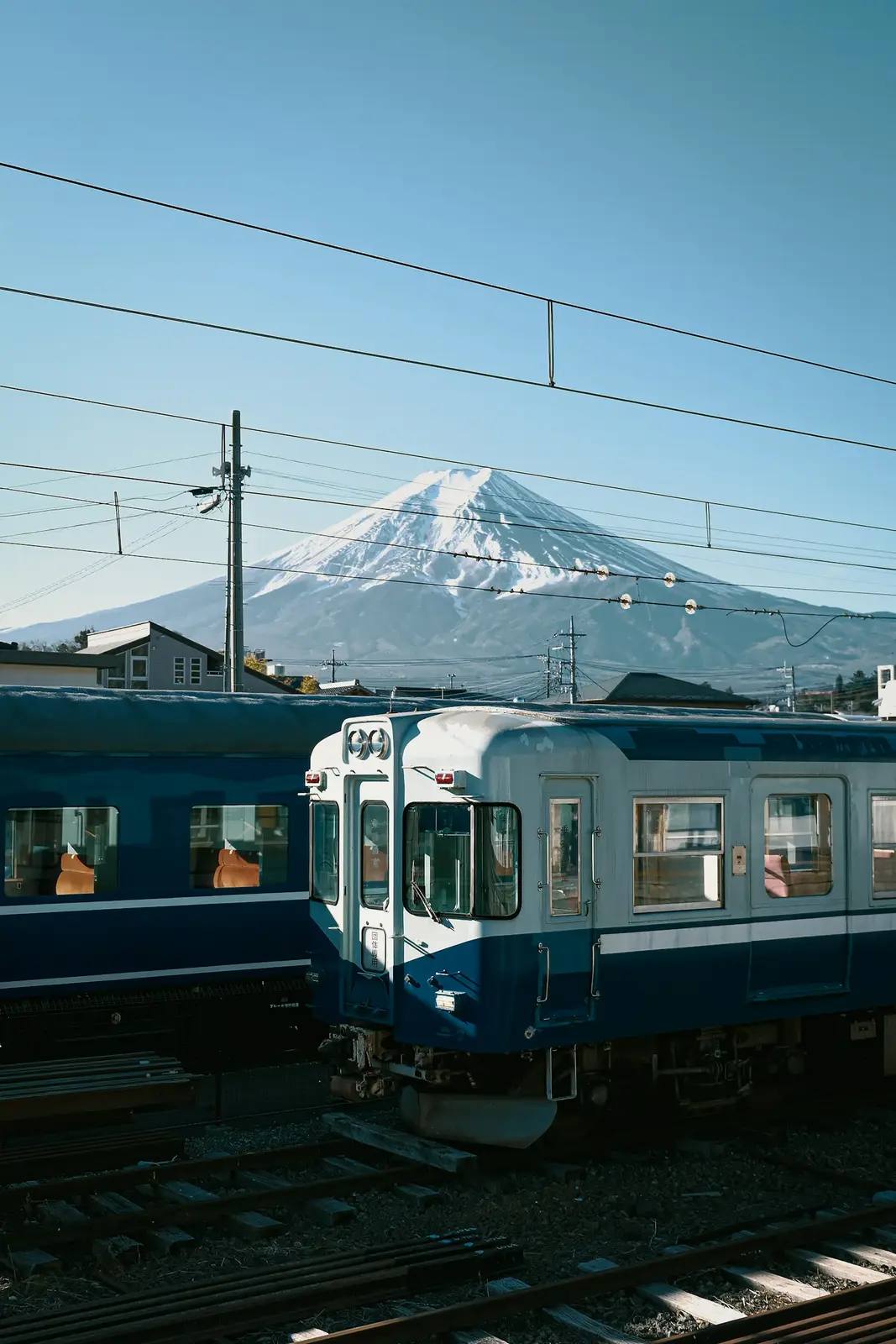
And this is what it looks like when you take on too much. A different journey, a different plan: ten days, seven places, a new hotel almost every night. The day begins with packing and checking out, then the station, the change of trains, the search for the right exit – large stations are a small science of their own. The excursion to the Fuji region, casually planned in, ends up eating almost the whole day because of full trains and unclear bus timetables. In the evening there is no energy left for what you had been looking forward to. And the one ryokan with an onsen that had tipped the balance in favour of the journey? Booked out months beforehand – the reservation came too late. What remains at the end is the feeling of having seen much and experienced little.
The difference rarely lies in the destination and almost always in the pace. Fewer places, more nights in the same spot and accommodation reserved early reliably turn the second scene into the first – regardless of whether you plan yourself or hand the planning over.
Not sure which way suits you
Tell us briefly how you would like to travel – we will tell you clearly and without detours whether a package tour is enough or whether individual planning is worthwhile. Without obligation.
Get personal adviceWho the package tour is the right choice for
A package or guided group tour is the right choice if you are travelling far for the first time, have little time to prepare, want to keep to a fixed budget or wish to see the great classics in a limited time – it is exactly the right thing for many people, and for good reasons. It suits you particularly well if several of the following points apply to you:
- It is your first big long-haul journey, and you do not want to have to take care of anything.
- You have little time to prepare and value a ready-made, well-considered programme.
- A fixed budget matters more to you than maximum flexibility.
- You enjoy travelling in company and like the reassurance of a tour guide on the ground.
- You want to see the great classics in a limited time – Tokyo, Kyoto, Osaka, perhaps Hiroshima.
One note from practice that applies regardless of the operator: “one city, one hotel” is not a good plan for such a varied country. Make sure the package connects several regions – a metropolis, a city of culture and a piece of nature – instead of spending a week in a single place. A well-built modular route gets considerably more out of the same amount of time.
What a typical guided group tour looks like – an example
So that you can picture concretely what we are talking about here, a typical example: a guided group round trip of around eleven to twelve days along the classic route from Tokyo to Kyoto, the classic choice for a first visit to Japan. This is not about any particular operator, but about the shape that looks very similar with many providers.
The basic framework could look like this:
| Stage | Stops | Focus |
|---|---|---|
| Days 1–3 | Tokyo (arrival), Kamakura | Metropolis, the great classics |
| Days 4–5 | Hakone or Kawaguchiko, Fuji region | Onsen, views of Fuji (often 1 night in a ryokan) |
| Days 6–7 | Matsumoto, Takayama, Shirakawa-gō | Japanese Alps, mountain villages |
| Days 8–9 | Kanazawa, Kyoto | Gardens, temples, culture |
| Days 10–12 | Nara, Osaka (departure) | Great Buddha, city, flight home |
This guided group format costs more than the pure flight-and-hotel packages mentioned above, because a tour guide, all travel on the ground and a considerably longer programme are included. In 2026 the price for such a programme is usually between about €3,200 and €4,400 per person in a double room – including the flight from Europe. The package usually includes:
- a scheduled flight in economy class from a major European airport, often with a connecting flight from your home city (frequently as an open-jaw flight, for example into Tokyo and out of Osaka)
- an English-speaking tour guide on the ground during the travel days
- all transfers and journeys, including the Shinkansen in standard class with a reserved seat
- overnight stays with breakfast in mid-range hotels, often supplemented by a night in a ryokan or a hotel with its own onsen and a Japanese dinner
- the admission fees listed in the programme
Deliberately left out are usually most lunches and dinners, drinks, optional day trips (to Himeji or Nikkō, for instance) and the single-room supplement – here, too, it is always worth looking closely at what is included.
Who does this format suit? Above all travellers who are coming to Japan for the first time, want to see the great highlights in a limited time and appreciate having logistics, language and bookings taken off their hands entirely. You pay for this with a fixed programme at the pace of the group – for many a good trade, for others exactly the point at which they think again.
Who independent travel is worthwhile for
An independent journey is particularly worthwhile if you have interests of your own – a ryokan with an onsen, regional cuisine, quiet places – if you are travelling in a moveable season such as the cherry blossom, if you want to determine pace and length of stay yourself, or if you already feel confident travelling in a distant country. For Japan only unfolds its particular appeal when you allow it time and your own decisions. It suits you especially well if you recognise yourself in several of these points:
- You have interests of your own – a classic ryokan with an onsen, regional cuisine, craft, quiet places away from the main routes.
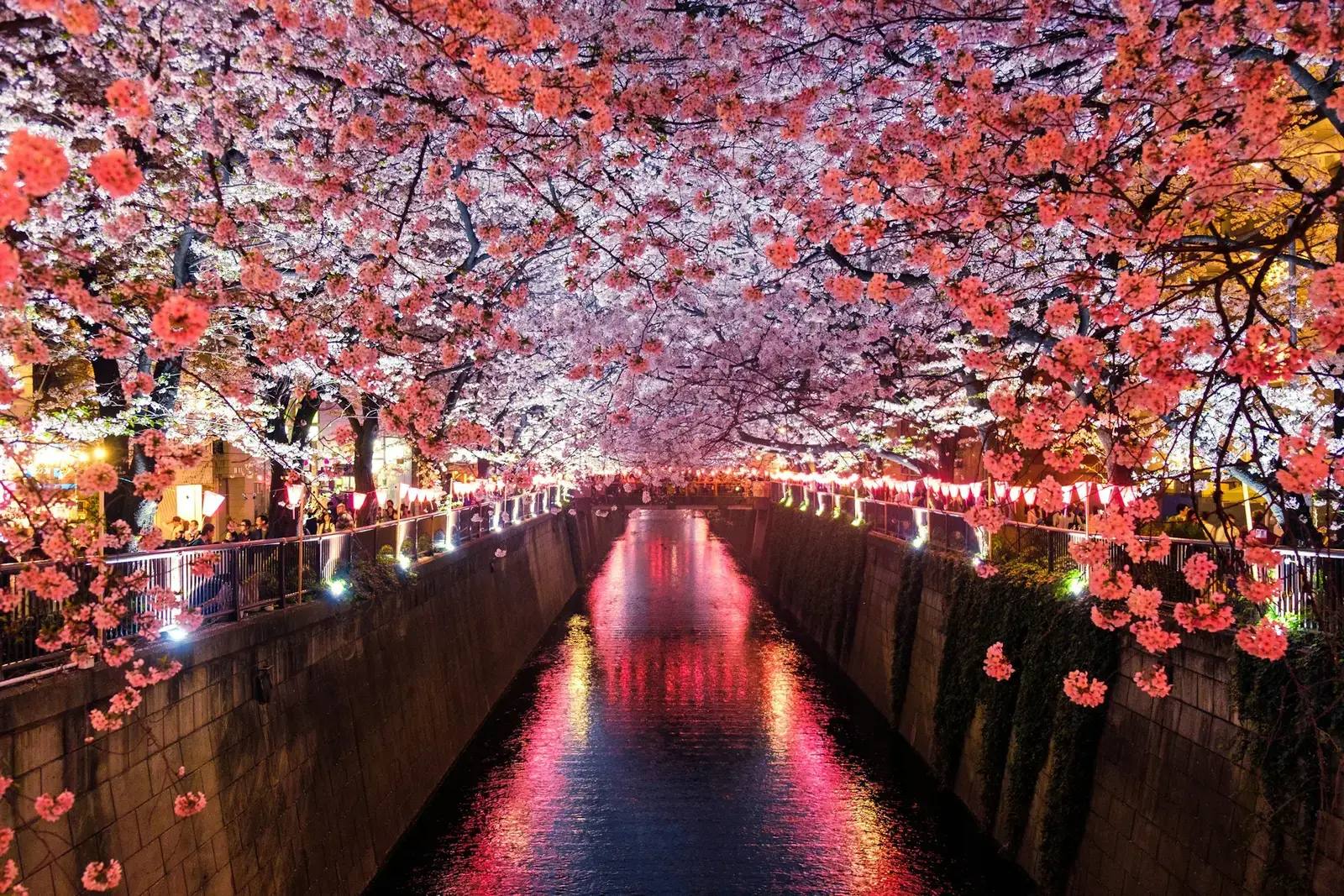
- You are travelling in a moveable season such as the cherry blossom or the autumn leaves and want to respond flexibly to the timing.
- You want to determine pace and length of stay yourself instead of following the rhythm of a group.
- You have already travelled on your own in a distant country and feel confident finding your way on the ground.
- You are travelling as a couple or a small family and need a journey that fits your own rhythm.
A stay in a ryokan, the early morning window at a famous temple or a spontaneous extra day in a place that surprised you – these are the moments that make the independent form worthwhile. What makes a good ryokan and what you should look out for is something you can read in our ryokan guide.
The third way: travelling independently without planning it all yourself
The third way means travelling independently and handing over only the planning: you keep your own route, your own pace and your own choice of accommodation, while someone on the ground takes care of connections, reservations and the language barrier for you. This resolves the most common reason for deciding against independent travel – which is rarely the wish to be in a group, but the reluctance to face the planning work and the language barrier. The question “package or independent?” therefore presents an either-or that reflects only half of reality.
With a modular or tailor-made journey you keep the individual route, your own pace and your own choice of accommodation – but the planning is taken over by someone who lives here. The connections, the reservations, the knowledge of when a small ryokan releases its rooms or which temple is still quiet early in the morning: that is the work you hand over, while the decisions remain with you. It is not a lazy compromise between two worlds, but for many travellers to Japan the form that actually fits.
This is exactly where our own approach lies, and we say so openly: we do not sell ready-made group packages, we put together individual journeys – in English, from Japan. Why this kind of support is worthwhile in a country like Japan in particular is something we explain in detail in our article on why a Japan specialist makes a difference – not because you could not travel Japan yourself, but because it is the knowledge of detail that tips the balance.
What a journey planned by us could look like
An example of how such a journey can look in concrete terms – not a real booking, but a route as we would put it together: two weeks, Kyoto at the centre, within the comfort range of around €5,000 per person (travelling as a couple, excluding the flight). Central four-star hotels, one or two nights in a ryokan, everything by Shinkansen and bus instead of a domestic flight. We have chosen autumn, because kōyō, the autumn foliage, is held by many to be even more beautiful than the cherry blossom – and because it is easier to plan.
Days 1–3 – Tokyo
Arrival at Narita or Haneda, a central hotel in Shinjuku, Ginza or Marunouchi. Asakusa with Sensō-ji, the Shibuya crossing, the Meiji Shrine, the fish market in Toyosu. In late November the ginkgo avenues at Meiji Jingū Gaien glow golden. What we take care of for you: we arrange the transfer from the airport so that you do not have to stand in local trains after the long flight, and we deliberately plan the first days quietly, for as long as the jet lag is still with you.
Day 4 – Hakone (1 night in a ryokan)
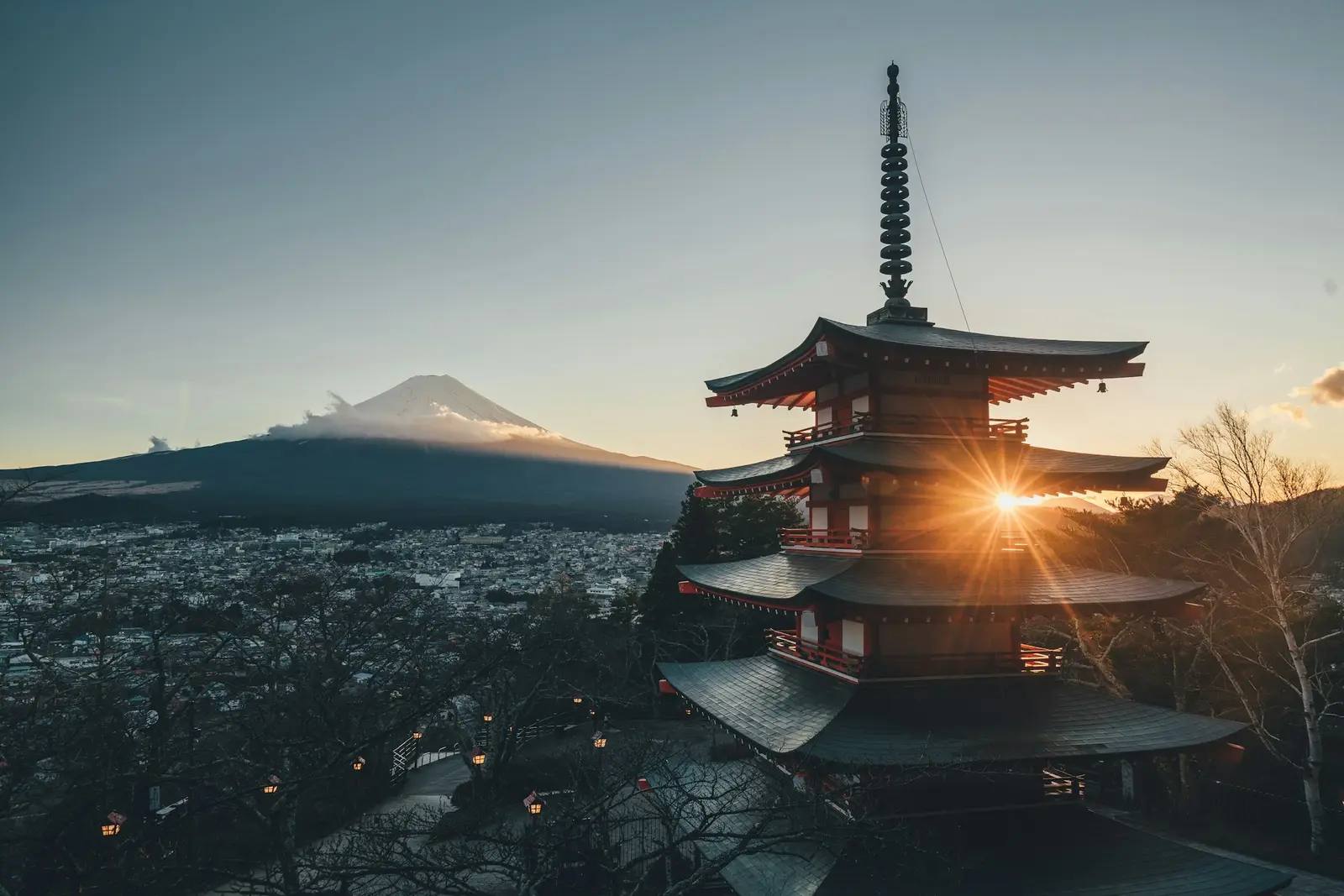
By Romancecar from Shinjuku, then the Hakone loop: a boat across Lake Ashi, the ropeway over Ōwakudani, the open-air museum, autumn colours by the water. In the evening an onsen ryokan with a view of Fuji and a multi-course kaiseki dinner. Behind the scenes: good houses with a view of Fuji often release their rooms only about six months beforehand, and with the most sought-after top houses it is worth looking up to a year in advance – we note the release date and book as soon as the time comes.
Days 5–8 – Kyoto (4 nights)
Shinkansen from Odawara to Kyoto, where you stay in a four-star hotel or a machiya boutique house in Higashiyama. The kōyō highlights early in the morning, before the coaches arrive: Tōfuku-ji with the Tsūtenkyō bridge, Eikan-dō, Arashiyama with Tenryū-ji, Kiyomizu-dera. An evening yoru-momiji illumination – some temples (Rurikō-in, for instance) require a reservation for this and are booked out early. We add Fushimi Inari early in the morning, less for the foliage than for the famous senbon torii, the rows of red gates, which are then still almost deserted. A day trip to Nara to Tōdai-ji and the deer park rounds off the days. Our part: we match the order of the temples to the times of day, reserve the evening illuminations that require booking in good time, and tell you which place is still almost empty at half past seven in the morning.
Days 9–10 – Kanazawa (2 nights)
On by Shinkansen to Kanazawa: the Kenroku-en garden in autumn colours, gold-leaf craft, a well-preserved samurai and artisan quarter – noticeably quieter than Kyoto.
Day 11 – Shirakawa-go & Takayama
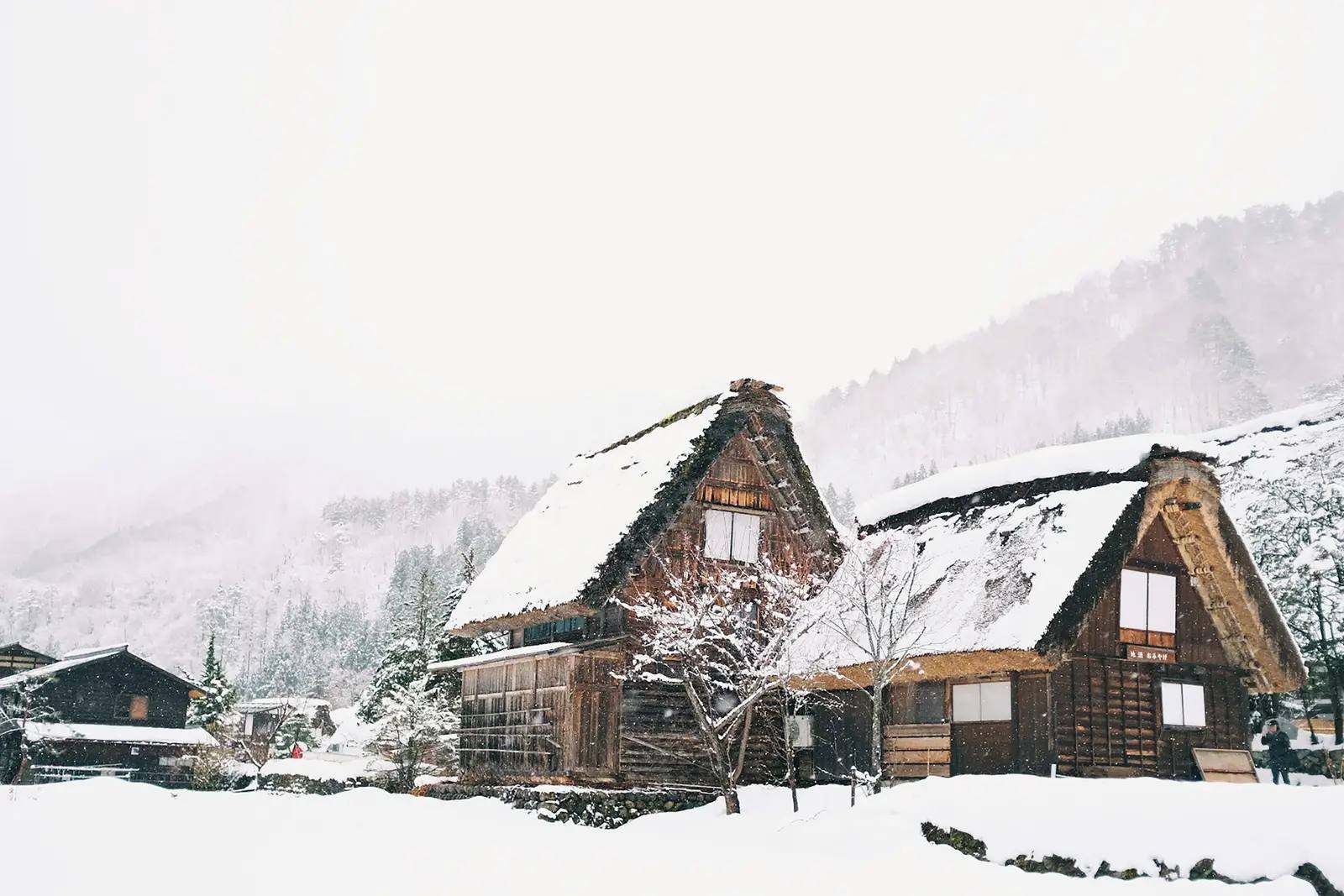
By bus via Shirakawa-go with its thatched gasshō farmhouses into the Japanese Alps. What we watch out for here: this connection runs on long-distance buses, not on the railway – we secure the seats in advance, because they become scarce in the foliage season.
Days 12–13 – Takayama (2 more nights)
The old town of Sanmachi, the morning market, the autumnal mountain backdrop. Deliberately three nights in Takayama in total and a leisurely pace, with a buffer in case the colouring shifts by a few days.
Day 14 – Departure
By Shinkansen or express train to Nagoya for the flight home.
The thread running through it stays the same: you travel independently, at your own pace, without a group – and the weeks of research, the connections and the right moments for booking are taken off your hands by us here in Japan, along with the quiet morning hours. Which houses are chosen in the end we decide together with you; you will deliberately find no invented hotel names here. If you like, we will design such a journey for your wishes, without obligation.
Typical mistakes on both sides
Both ways have pitfalls of their own. Knowing them makes the decision clearer – and the journey better, whichever way you choose.
On the package tour
The most common mistake is to look at the price alone. A very cheap package often means awkward flight connections, hotels on the outskirts or a programme that spends more time on the bus than in the places themselves. Read the small print: which meals are included, how central are the hotels, how much free time actually remains? And check whether the route connects several regions instead of staying too long in one place.
On independent travel arranged entirely by yourself
Here the typical mistake is the opposite: too much at once. Many self-planners fill every day with a change of place, underestimate the distances and end up exhausted in front of closed doors, because the sought-after ryokan had long been booked out months in advance. Plan fewer stops with more days, reserve early, and allow a buffer day per stage. What a more relaxed, longer route looks like is shown by our 21-day route through Japan.
How to reach your decision
In the end the choice comes down to a few honest questions to yourself. The more often your answer is on the right, the more an independent – or individually planned and supported – journey is worthwhile.
| Your situation | Rather a package tour | Rather independent |
|---|---|---|
| Time to prepare | little, better handed over | available or can be delegated |
| Pace and route | a fixed programme is fine | determined by you |
| Interests | the great classics | ryokan, cuisine, quiet places |
| Travel dates | fixed dates are no problem | flexible, for the cherry blossom for instance |
| Travel experience | first big long-haul journey | have already travelled on your own |
And if your answers turn out mixed – many “independent” wishes, but little time or inclination to plan it yourself – then that is not a contradiction, but exactly the starting point for the third way: an individually planned journey in which you hand over only the work. The broad overview of routes, accommodation and planning is gathered in our complete guide to independent travel in Japan, and when a particular season is worthwhile is something you can read in our overview of the best time to travel.
There is therefore no generally “right” answer, only the one that suits your journey. If you would like to let yourself be carried along and simply come with the group, a good package tour serves you very well. If you want to experience Japan at your own pace but would rather not shoulder the logistics yourself, the individually planned and supported way offers the best of both worlds. We are glad to advise you on this – openly and without sales pressure.
Frequently asked questions about package tours and independent travel in Japan
Which is less expensive – a package tour or independent travel in Japan?
Looked at per day, the package tour is often less expensive, because the operator buys flights and hotels in larger allocations. Depending on their scope, package tours to Japan usually cost between around €1,000 and €3,500 per person for about seven nights. Independent travel is more flexible in both directions: travellers on a tight budget manage 14 days from about €2,500 per person, a comfortable journey is around €5,000, and in the luxury segment it starts at about €15,000 – in each case excluding the flight (package prices, by contrast, usually include it). The real comparison is therefore less “cheap versus expensive” than “fixed package versus flexible budget”.
Is Japan a good country to travel independently, or is a package tour safer?
Japan is very well suited to independent travel – the country is safe, clean and served by an excellent rail network. The real hurdle is not the travelling on the ground but the planning: much of it takes place in Japanese, the finest ryokan are booked out months in advance, and the train system is superb but not self-explanatory. If you would rather not take care of that yourself, you do not have to fall back on a group tour – there is a middle way: travel independently and delegate only the planning.
Who is a package tour to Japan worthwhile for?
A package tour or guided group tour suits you well if you are travelling far for the first time, have little time to prepare, want to keep to a fixed budget or value the security of a fully organised journey with a tour guide. You see the great classics in a short time, without having to take care of logistics, language or bookings. The price for this is a fixed programme at the pace of the group.
What is a modular journey, and is it a compromise?
A modular journey (also called a tailor-made journey, or an individual journey planned with support) is not a compromise but a way of its own, and often a sensible one: you travel independently, at your own pace and on your own route, but let the planning – flights, accommodation, train connections, reservations – be taken over by someone who knows Japan. You keep the freedom of independent travel and hand over only the organisational work and the language barrier.
How far in advance should I plan a journey to Japan?
For the high seasons – cherry blossom in spring and autumn leaves in autumn – good hotels in Tokyo and Kyoto should be settled four to six months beforehand, and sought-after ryokan sometimes nine to twelve months in advance. A package tour takes this lead planning off your hands, but ties you to fixed dates. With an independent or modular journey you plan earlier, but gain flexibility in route and pace.
Package tour or independent travel for a first journey to Japan?
Both are possible. If you would rather not take care of anything and simply come along, a package or group tour is a good and safe start. If you have interests of your own – quiet places, ryokan, cuisine, a slower pace – and still have no wish to plan everything yourself, an individual journey planned with support is usually the more suitable first journey. What matters is less your travel experience than the question of how much you want to shape yourself.
Your journey through Japan, individually planned
Tell us how you would like to travel – we put your route together, take care of accommodation, trains and reservations, and advise you in English, directly from Japan.
Get personal adviceAbout the author

Kentaro Asakura
Founder of Japan Privat · A Japan specialist who guides you in English
Kentaro Asakura was born and raised in Japan. His student years took him first to the UK, where English became second nature to him, and later to Munich, where he met his wife, who is German – together they returned to Japan. With Japan Privat, he has been designing individual journeys for European travellers for more than ten years – in English, with the eyes of a local and a genuine feel for what guests from Europe are looking for.