Why a Japan Specialist? – 5 Advantages over Booking Online
Contents
- What is a Japan specialist?
- Advantage 1: local insider knowledge
- Advantage 2: tailor-made instead of standard
- Advantage 3: language and culture
- Advantage 4: a contact on the ground
- Advantage 5: access to the hidden
- When is booking online enough?
- What does a specialist cost?
- Finding the best tour operator
- Frequently asked questions
- Our conclusion
You could of course click your trip to Japan together yourself – on the well-known booking platforms, with a comparison site open in the next tab, perhaps a travel forum alongside. In two hours the basic plan is ready. It is tempting, and for some destinations it is entirely enough. Japan is different. Nowhere else does the right recommendation decide so much about whether a journey becomes a memory for life or merely an album full of familiar postcard views. In this article we show you openly when a Japan specialist is really worth it – and when you will do perfectly well without us.
The key points at a glance
- Is a specialist worth it? As soon as you want ryokan, remote regions or special experiences such as geisha, sushi counters or tea masters, yes – for a short city trip to Tokyo or Kyoto, booking online is enough.
- The five advantages: local insider knowledge, tailor-made routes instead of a standard package, advice in English, a contact on the ground if something goes wrong, and access to experiences that cannot be booked online.
- What it costs: a moderate mark-up of around 10 to 15 percent on the travel costs – often about as expensive as booking purely online, because we negotiate better rates.
- How to recognise a good operator: they live in Japan, advise you directly in English, plan in a tailor-made way and offer a personal first conversation.
Are you planning an individual trip to Japan? This article is part of our large overview. You will find the complete guide – with the travel season, routes, costs and planning – here: Japan Independent Travel 2026 – the complete guide.
What is a Japan specialist?
The term Japan specialist is not protected – anyone may use it. In practice, however, the differences are considerable. You recognise a genuine specialist by three characteristics:
- They know Japan up close. Ideally they live here, or they are on the islands several times a year. Anyone who knows Japan only from brochures sees it as it was ten years ago – and not as it is today.
- They advise you in English. Not with a third language in between and not through a translation tool, but directly in a language in which you can express nuances. “Preferably quiet” and “quiet” end up meaning very different ryokan.
- They plan in a tailor-made way. No ready-made packages, but a route that suits your pace, your interests and your budget.
A tour operator for individual Japan travel is therefore not a classic travel agency in a shopping centre, but a personal travel adviser with deep knowledge of a single country. That is what makes the difference – and these are the five advantages you gain from it.
Advantage 1: local insider knowledge
A specialist knows the places that never appear online at all. Many of the finest addresses in Japan are not advertised in English – they work by word of mouth, through regular guests of decades, through local recommendations. An algorithm, by contrast, shows you only what is advertised or booked most often. It does not show you what is genuinely good. In Japan this difference is particularly large.
Three examples from our practice:
- Onsen villages beyond the top-10 lists. Kinosaki and Kurokawa are wonderful – and they appear in every guidebook. We recommend places such as Yunomine, Takaragawa or the tiny Sukayu Onsen, where you are more likely to meet a tanuki than a tour group.
- Sushi counters that cannot be booked online. The truly good houses in Tokyo and Kanazawa accept no online reservations – you need a telephone call in Japanese and, ideally, a recommendation from an existing guest.
- Pottery villages, sake breweries, indigo dyers. Three hours with a master of his craft in a small workshop – that is not the result of an internet search, but of a chain of telephone calls among colleagues.
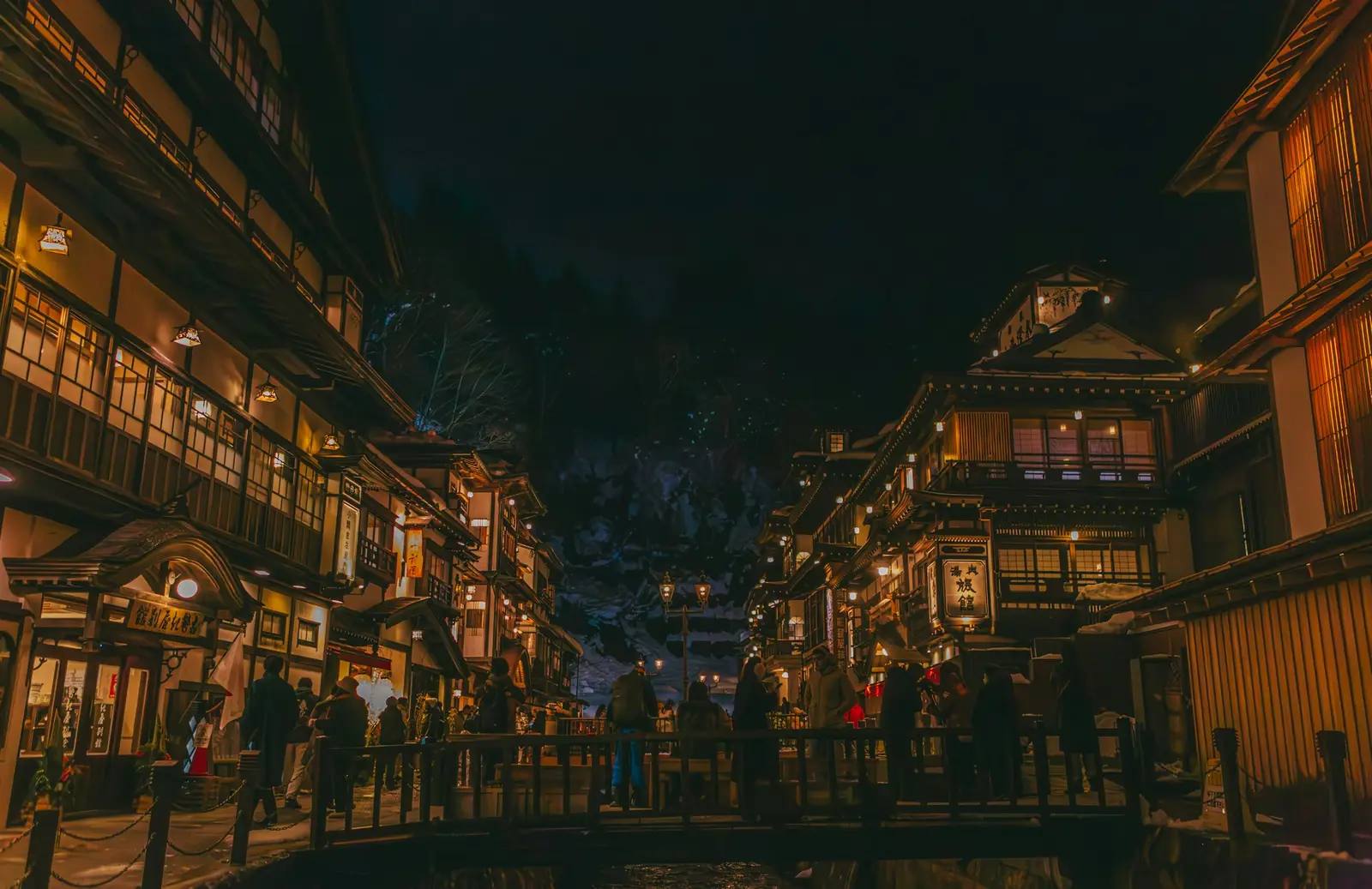
What matters to us: you can also visit Japan by the top-10 lists – you will have a lovely time. But you will also see the same things that millions of other travellers have seen before you. A specialist opens the doors next to them for you.
Discover the Japan beyond the postcard views
We recommend places, houses and experiences that we know personally – not the ones that pay us the highest commission.
Request a no-obligation consultationAdvantage 2: tailor-made instead of a standard package
Instead of a standard route, we build the journey around your pace, your interests and your budget. Package tours to Japan almost always follow the same choreography: Tokyo three nights, Kyoto three nights, Osaka one, with Hakone or Nara in between. That route exists online by the hundred – and it is not wrong. But it simply does not suit everyone. Which of the two forms of travel suits you, we have compared point by point in a separate article: Package tour or independent travel?
What we do instead when we plan in a tailor-made way:
| Your profile | Instead of the standard route… | …we suggest |
|---|---|---|
| Foodie couple | Tokyo–Kyoto–Osaka | Tokyo–Kanazawa–Kyoto, with a sake brewery and a kaiseki course |
| Interested in architecture | The classic temple round in Kyoto | Naoshima, Teshima and Inujima – the art islands in the Seto Inland Sea |
| Keen walkers | City–city–city | The Kumano Kodō pilgrimage route with nights in temples and mountain villages |
| Family with children | Overcrowded main routes | More days per place, early sights, child-friendly ryokan |
| Third time in Japan | “We know that already” | Tohoku in summer, Kyushu in spring – regions without European mass tourism |
We listen to you for 30 to 60 minutes before we make a single suggestion. What excites you? What tires you? Do you sleep badly in unfamiliar beds? Do you prefer many small meals or two proper meals a day? Out of answers like these grows a journey that suits you – not an average target group.
Advantage 3: language and culture without a detour
Japan is friendly, but it is not an English-speaking country. In Tokyo and Kyoto you will get far with English and gestures – but as soon as you travel beyond those routes, that changes quickly. We take three of the typical difficulties off your hands:
Translating your special requests
Vegetarian within a kaiseki menu? Gluten-free? A wedding anniversary with a small gift in the room? We tell the ryokan or the restaurant in Japanese and with the right degree of politeness what it is about. A direct booking e-mail in English often ends up in the pile of pending messages – a request in Japanese from a known intermediary is dealt with immediately.
Cash, IC cards, tax refunds
Japan is still a cash culture in many small restaurants and rural regions. Suica, Pasmo and ICOCA – the contactless cards – work everywhere in the big cities, but not always in the countryside. We prepare you concretely: how much cash, which card, which app, and which konbini ATMs accept European cards.
Etiquette without memorising
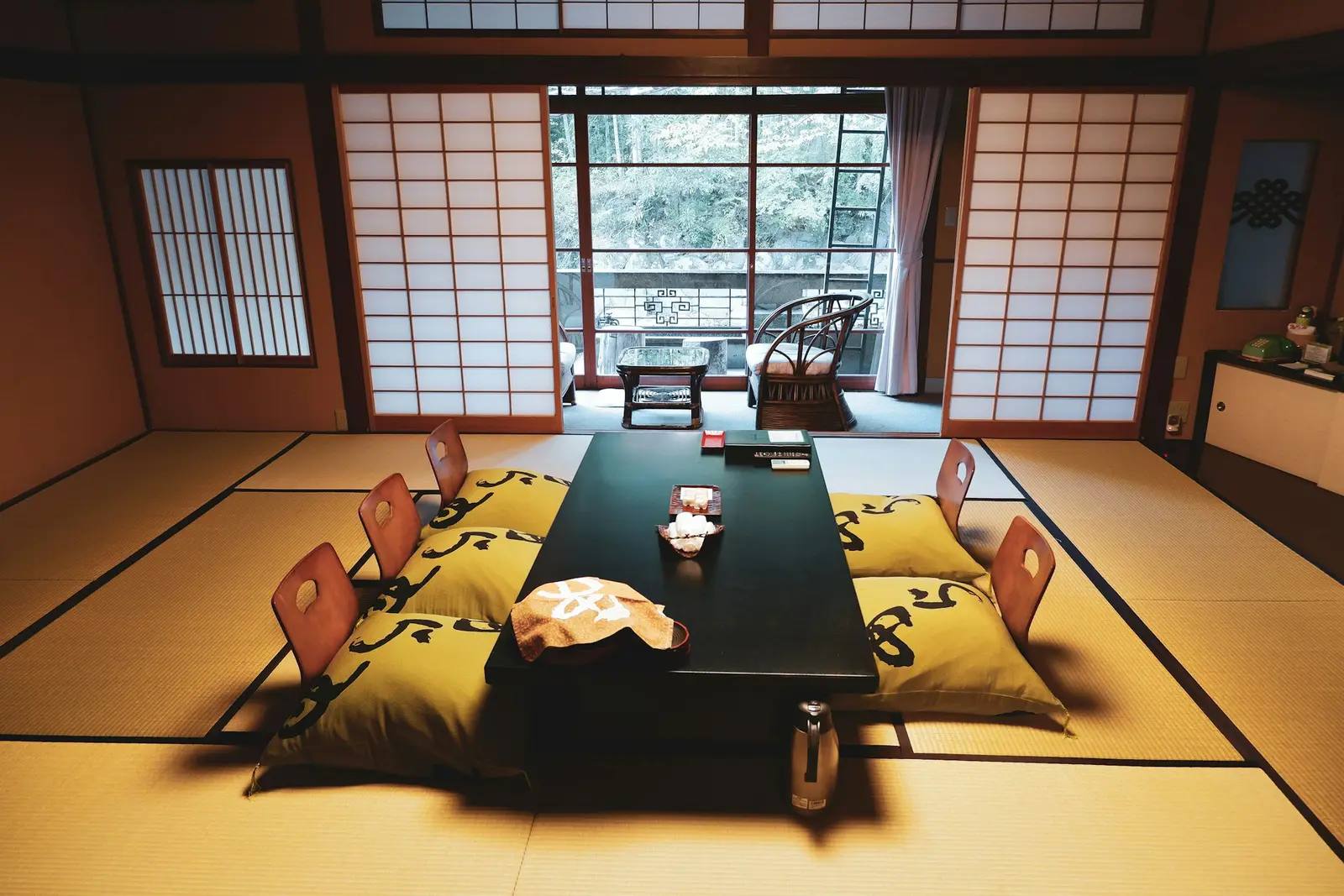
No shoes on the tatami in the ryokan, no photograph of the Buddha in the temple, washing before entering the water in the onsen, no tipping in restaurants. These rules are not complicated, but they are unfamiliar – and a good specialist gives you a short list before the journey that puts you at ease in every setting. You are meant to enjoy Japan, not to practise etiquette.
Advantage 4: a contact on the ground when something happens
Most journeys through Japan run smoothly. But if something does happen, the difference between an online booking and a specialist becomes very tangible. Three examples from the past year among our guests:
- Typhoon-related train cancellations in Kyushu. Within a few hours we organised alternative routes, moved ryokan reservations and forwarded the luggage by takkyubin. Through a platform, our guests would have been left hanging on five different hotlines.
- A lost passport in Osaka. We supported the guest by telephone when reporting the loss to the police – translating into Japanese in real time – before they took the police certificate to their country's embassy or consulate, and rebooked the following domestic leg accordingly for the interim period.
- A heavy cold on the third day. A recommended clinic appointment with an English-speaking doctor, translation of the diagnosis, and an adjustment of the journey to include two rest days in a nearby onsen.
Help of this kind cannot be booked online. It is not part of the service promise of a booking portal – and when it matters, you want someone who answers in your time zone, in your language and with an overview of your whole journey.
Reassurance at no extra cost
While you are travelling we are reachable in Japan – by WhatsApp, by telephone, in English. That is part of the service, at no surcharge.
An itinerary with support on the groundAdvantage 5: access to the hidden
Some experiences in Japan are fundamentally not bookable online. They work exclusively through introduction and personal relationship. A small selection:
- An evening with a geiko or maiko in a Kyoto ochaya. These houses accept only regular guests or guests introduced by recommendation – an “ichigen-san okotowari” principle (一見さんお断り) that cannot be overcome without an introduction.
- A private concert with a shakuhachi master in a temple garden. Encounters of this kind grow out of personal networks – not out of search engines.
- Family-run ryokan without a booking profile. There are still hundreds of small houses in Japan that can be booked only by telephone or through a tour operator – deliberately so, in order to protect the atmosphere.
- A sake tasting with the Toji (the master brewer) rather than with a salesperson. Visiting a brewery by appointment is common – spending an hour in conversation with the person in charge is the rare variant.
- Sushi counters with eight seats, where online reservation simply does not exist. Some of these houses hold Michelin stars, others do not – the taste is independent of that.
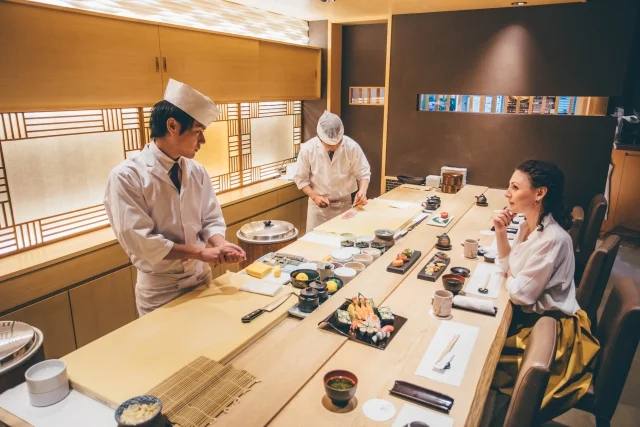
If experiences of this kind interest you, a specialist is not an option but a precondition. Not everyone has to want this – but anyone who has experienced it once gladly thinks of this form of introduction again for the next journey to Japan.
When is booking online enough?
For a short city trip, as an experienced Japan traveller or on a tight backpacker budget, you can book perfectly well yourself. We would have no interest in pressing a specialist on you if you do not need one. These three scenarios in detail:
- A short city trip to Tokyo or Kyoto. Three to five days in a single large city, a standard hotel, a few well-known sights – that works through any common platform.
- You have already been to Japan several times. Anyone who knows the country, has the most important apps installed (Google Translate offline, Japan Travel by NAVITIME, the Yamanote line in English) and is comfortable with cash will manage well alone.
- A very tight budget with a backpacker mentality. Anyone travelling with hostels, konbini food and night buses benefits less from advice – this form of travel works excellently through online platforms and forums.
In such cases we too openly recommend that you book yourself – or that you approach us only for a short assessment instead of having the whole journey arranged. We want your journey to suit you – not to suit our offer.
What does a Japan specialist cost?
A Japan specialist usually works with a mark-up of around 10 to 15 percent on the travel costs – and in return the complete planning, booking and support on the ground is included. The answer is therefore simpler than many people think. We work with a model that is easy to understand:
The mark-up on the travel costs
The specialist receives roughly 10 to 15 percent of the travel costs as a mark-up, and in return the complete planning, booking and support on the ground is included. For a three-week journey through Japan for two people with comfort requirements (a guide value of around €18,000, excluding flights), that comes to about €1,800 to €2,700.
What surprises many guests: we often obtain better rates than online platforms, because we negotiate directly with the houses and pay no intermediary fees to Booking, Expedia or Agoda. In the end, in many cases our guests pay a similar amount to what they would pay booking purely online – but they also receive advice, adjustment and help on the ground.
What you do not have to pay
- No hidden booking fees – everything is stated openly in advance
- No surcharge for questions during the journey
- No minimum booking volume – we also help with a short one-week trip
How do you find the best Japan tour operator?
If you have decided to work with a Japan specialist, this short checklist will help you find the best tour operator for your journey:
| Criterion | Why it counts |
|---|---|
| Does the provider live in Japan? | Up-to-date knowledge, the same time zone as your journey, personal research |
| Do they advise you directly in English? | Understanding nuances, striking the right level of politeness in requests |
| How many years of experience? | Measured not in the number of trips, but in the depth of everyday life on the ground |
| Personal or form-based advice? | A 30-minute conversation shows more than any online form |
| Rapport and style | You will be in contact with this person for six to twelve months – they should suit you |
Our most important advice: arrange a short, no-obligation first conversation – ideally by telephone or video. Within the first ten minutes you will sense whether the chemistry is right. If it is not, decline in a friendly way. Advice is a matter of trust, not a purchase process.
Frequently asked questions
Do I really need a specialist for a one-week trip to Japan?
If you are visiting only Tokyo and Kyoto, speak good English and are happy with standard hotels, you will manage well online. But as soon as you want ryokan, remote regions or special experiences (geisha, sushi counters, tea masters), advice is worth it even from one week onwards. The same applies when particular requirements come into play – accessibility, for example, or the travel pace of older companions, on which the information available online is often patchy or written only in Japanese.
What does a Japan specialist cost compared with booking online?
Reputable specialists work with a moderate mark-up of around 10 to 15 percent on the travel costs. In the end, our guests often pay a similar amount to booking purely online, because we avoid double bookings, know better rates and prevent costly beginners' mistakes.
What if I have already booked some of my flights or hotels?
No problem – we build the trip around your existing bookings. Simply send us an overview of what is already fixed, and we will add domestic legs, ryokan, experiences and support on the ground.
Do you also book international flights to Japan?
Most guests prefer to book international flights from Europe themselves, through platforms they know or through their regular travel agency. We concentrate on everything that happens on the ground in Japan – hotels, ryokan, transport, experiences, reservations and personal support.
What is the difference between a travel agency and a Japan tour operator?
A classic travel agency arranges trips to many countries and from many operators, often as standardised packages. A specialised Japan tour operator, by contrast, plans your trip itself and exclusively for Japan: individually composed, advised in English and looked after on the ground. As a Japan-based tour operator for individual Japan travel, we know the houses we recommend from our own experience.
What makes the best Japan tour operator?
Not the size of the catalogue, but the depth of local knowledge. A good Japan tour operator ideally lives on the ground, advises directly in English, plans in a tailor-made way instead of following a standard route, and is reachable while you are travelling in Japan. Ask for a personal first conversation – it will tell you more about serious advice than any advertising promise.
Further reading
Our conclusion
For most people a journey to Japan is a journey of a lifetime – rarely repeated, planned long in advance, bound up with high expectations. In that context, 10 to 15 percent for personal advice is not a surcharge but an investment in what matters: that the journey becomes what you dreamed of.
A good specialist is not an intermediary between you and a platform. They are someone who knows Japan and who helps you find your Japan – the one that suits your pace, your taste and your stage of life. Sometimes that means the well-known places in an unfamiliar light. Sometimes it means houses and experiences you would never have heard of without us.
We are Japan Privat: a Japan-based tour operator for individual Japan travel, advising you in English. If you feel that a short, no-obligation conversation could be the right next step, we invite you to get in touch.
A 30-minute first conversation – free and without obligation
Tell us what you hope for from your journey to Japan. We listen, we ask questions – and together we decide whether our advice makes sense for you.
Request a consultationAbout the author

Kentaro Asakura
Founder of Japan Privat · A Japan specialist who guides you in English
Kentaro Asakura was born and raised in Japan. His student years took him first to the UK, where English became second nature to him, and later to Munich, where he met his wife, who is German – together they returned to Japan. With Japan Privat, he has been designing individual journeys for European travellers for more than ten years – in English, with the eyes of a local and a genuine feel for what guests from Europe are looking for.