Adding Okinawa to Your Japan Itinerary? When It’s Worth It – and When It Isn’t
Table of contents
- A destination of its own, not just another stop
- Who Okinawa is worth it for – and who it isn’t
- Best time to visit: Okinawa month by month
- How many days: three ways to fit Okinawa in
- Start, not end: where Okinawa belongs in your route
- Getting there and around: flights instead of Shinkansen
- More than beaches: history, craft, forest
- What Okinawa adds to the cost
- Frequently asked questions
A Japan itinerary with Okinawa is worth it if you have three weeks or more – or if you are prepared to drop other stops for it. Plan three to four nights for the main island and, as a rule, put the islands in the first half of your route, not at the end. Unlike Kyoto or Hiroshima, Okinawa cannot be reached by Shinkansen, only by air. It is a destination in its own right: subtropical and with the history of a kingdom of its own. Many suggested itineraries tack Okinawa on to the end of a trip as a beach extension. We plan it the other way round. Why we do that, who the detour is worth it for and in which months, you can read here.
In brief
- Who for: travellers with three weeks or more, returning visitors and anyone interested in the sea, the culture of the old Ryūkyū Kingdom or the history of the Pacific War. With two weeks, Okinawa means other stops have to go; in our suggested route, Hakone and Hiroshima.
- When: in April up to Golden Week, after the rainy season until mid-July, and in November. The rainy season comes about a month earlier than on the main islands, and the typhoon season is longer.
- How long: the main island at least three nights, better four; together with the Yaeyama Islands around Ishigaki, six nights or more.
- Where in the route: in the first half, and from May to November never on the last two days before your flight home. Airlines cancel flights for a typhoon on the strength of the forecast, often hours or a day in advance.
- Getting around: no direct flight from Europe, no JR Pass, no Shinkansen. For the north of the main island you will usually want a car, and for that you need the right licence documents.
A destination of its own, not just another stop
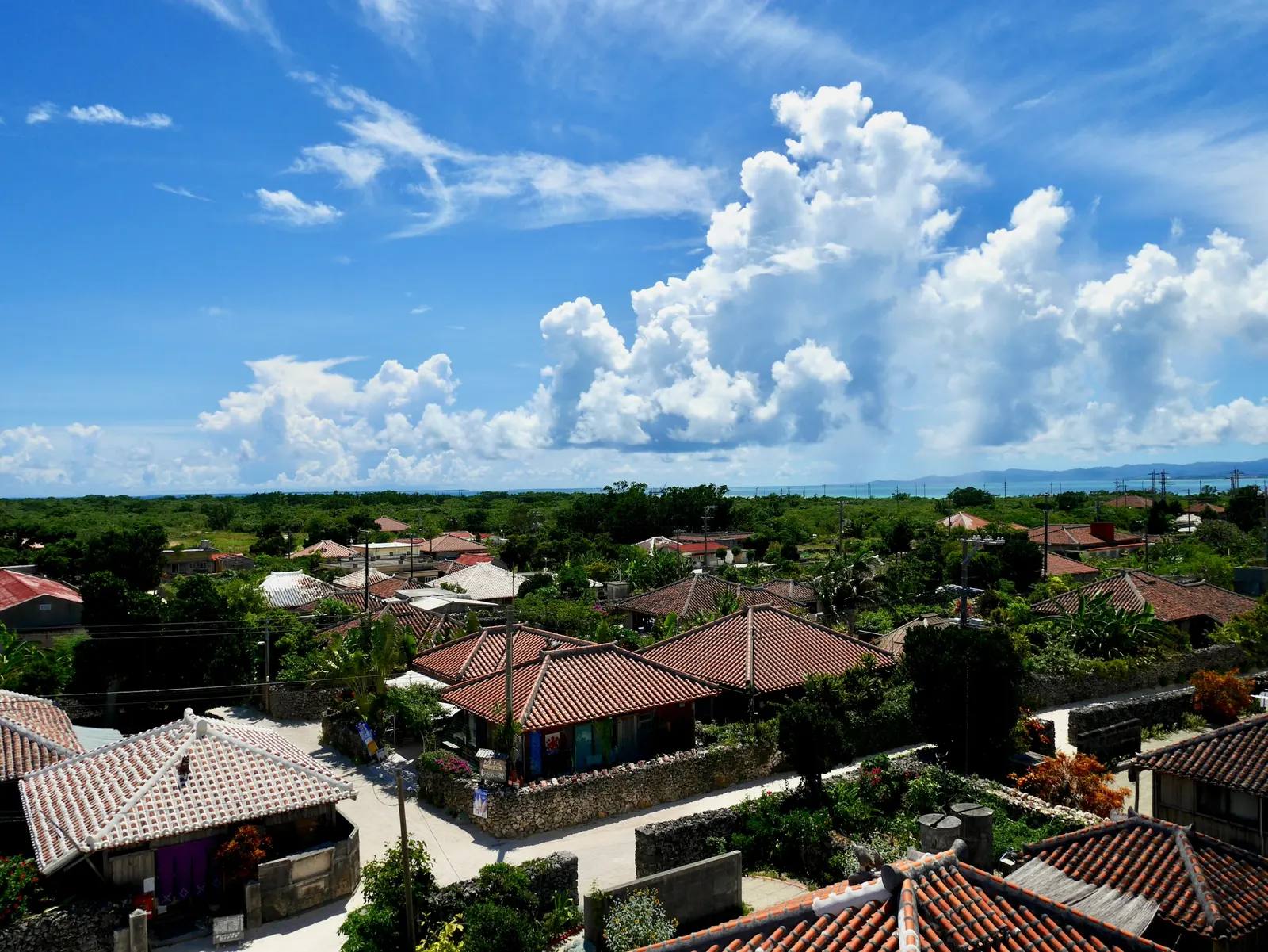
Okinawa is around two and a half hours by air from Tokyo, and when you land you find a different climate, a different cuisine and a different history. Until 1879, Okinawa was the Ryūkyū Kingdom, which traded with China, Japan and South-East Asia. You can see this in the red tiled roofs, in the curving stone walls of the old castle sites and in the food, in which pork and bitter melon play a bigger role than raw fish.
For your planning, this means Okinawa is not a side trip you slot in between Kyoto and Hiroshima. It is a stage of its own, with a flight there and back, with days that consist largely of travel and transfers, and with a different way of getting around. If you want to combine an Okinawa holiday with a trip around the main islands and plan the islands in that way from the start, you will rarely be disappointed. If you expect “a few quick beach days”, you usually lose more time than you gain. So the question is not whether Okinawa is beautiful, but whether it is worth the days you give up for it elsewhere.
Who Okinawa is worth it for – and who it isn’t
Okinawa is worth it above all for travellers with three weeks or more and for anyone who already knows Japan. On a first trip of two weeks we usually advise against it – not because Okinawa is worth less, but because other stops have to go to make room for it; in our suggested route, two out of five. We would rather tell you beforehand that Okinawa does not fit than build a route that contains everything on paper and feels rushed on the ground.
| Okinawa is a good fit if … | Better leave Okinawa out if … |
|---|---|
| you have three weeks or more | it is your first time in Japan and you have two weeks or less |
| you already know Japan and would like to see something other than temples and big cities | Tokyo, Kyoto and Hiroshima are all three essential for you |
| you want to snorkel, dive or swim in a warm sea | swimming would be the only reason and you are travelling between December and February |
| you are interested in Ryūkyū culture or the history of the Pacific War | between May and November, only the last days before your flight home would be free |
| you are looking for a mild contrast to Tokyo and Kyoto in winter | you also want to fit Hokkaidō into two weeks |
We explain two points from the right-hand column in more detail below: why Okinawa is not a beach destination in winter even though it is warm, and why we do not put the islands at the end during the typhoon season. How to compare the regions that come into question for the second half of a longer trip is shown in our section on choosing a region for three weeks. With one difference: Kyūshū, Hokkaidō or the Alps fill the second half of the trip, whereas Okinawa belongs in the first.
Best time to visit: Okinawa month by month
The best time to visit Okinawa as part of a Japan trip is April up to Golden Week, the weeks after the rainy season until mid-July, and November. In April and November the sea is pleasant to warm, and typhoons are rare. From July the sea is at its warmest, but the typhoons also increase markedly; in these weeks Okinawa belongs in the first half of your route all the more. The table shows the long-term averages of the Japan Meteorological Agency for 1991–2020 and the visitor numbers for the prefecture’s last fiscal year.
| Month | Air °C | Sea °C | Rain mm | Typhoons | Visitors (000s) | What it means for your trip |
|---|---|---|---|---|---|---|
| January | 19.8 | 22.9 | 102 | – | 836 | Mild, often cloudy and windy; the Kanhi cherries start to bloom in mid-January |
| February | 20.2 | 22.2 | 115 | – | 843 | Coolest sea of the year; whale watching off the Kerama Islands |
| March | 21.9 | 22.3 | 143 | – | 978 | Japanese spring school holidays at the end of March, then busy |
| April | 24.3 | 23.4 | 161 | 0.0 | 883 | One of the best windows until Golden Week at the end of April: warm, no rainy season yet |
| May | 27.0 | 25.1 | 245 | 0.4 | 843 | Golden Week in early May, rainy season from about 10 May |
| June | 29.8 | 27.2 | 284 | 0.6 | 839 | Rainy season until about 21 June, then high summer |
| July | 31.9 | 29.0 | 188 | 1.5 | 948 | Sunniest month; Japanese holidays from mid-July |
| August | 31.8 | 29.2 | 240 | 2.2 | 1,075 | The most typhoons and the most visitors |
| September | 30.6 | 28.7 | 275 | 1.9 | 949 | A lot of rain, still peak typhoon season |
| October | 28.1 | 27.4 | 179 | 1.1 | 986 | Sea still warm, typhoons less frequent, but not over |
| November | 25.0 | 25.8 | 119 | 0.3 | 895 | One of our windows: warm, quieter, hardly any typhoons |
| December | 21.5 | 24.2 | 110 | 0.0 | 863 | Mild, but little sunshine; Japanese holidays at the end of December |
Air: average daily maximum temperature in Naha. Sea: average surface temperature of the coastal waters off the south of the main island, not the temperature at any single beach. Rain: average monthly total in Naha. Typhoons: average number of typhoons whose centre comes within 300 kilometres of a weather station in the Okinawa region (“–”: no case in the period; “0.0”: isolated cases, on average below 0.05). The weather values are averages for 1991–2020. Visitors: arrivals in Okinawa Prefecture from April 2025 to March 2026, rounded.
Rainy season: a month earlier than on the main islands
On average, the rainy season in Okinawa begins around 10 May and ends around 21 June. In Tokyo and Kyoto it only begins in early June and lasts into the second half of July. The end varies a great deal: in the eleven years from 2016 to 2026, the rainy season in Okinawa ended between 7 June and 10 July, and in 2026 around 29 June. This creates a window that many people overlook: from the end of June to mid-July it is often already high summer in Okinawa while it is still raining on the main islands. If you travel between mid-May and early June, for instance during the May half-term, you meet Okinawa’s rainy season instead, while in Tokyo and Kyoto the rainy season has usually not yet begun. How the months feel in seven cities from Sapporo to Naha is shown in our overview of weather and clothing by month.
Typhoons: a longer season than in Tokyo and Kyoto
On average, just under eight typhoons a year come close to the Okinawa region, a good twice as many as to the region around Tokyo or the region around Kyoto and Osaka. The peak is in August and September, but in July and in October, too, you can expect more than one typhoon each on average. Incidentally, under the Meteorological Agency’s rules, a “landfall” only counts when the centre of a typhoon reaches the coast of one of the four main islands; a typhoon that hits Okinawa directly does not count as a landfall in the statistics. The frequently quoted number of landfalls therefore tells you nothing about the risk in Okinawa. What matters for your trip is not so much whether a typhoon comes, but where you are when it does. We follow how things look this season in our guide to the rainy season and typhoons.
Winter: mild, but not beach weather
In January, Naha reaches just under 20 degrees on average, ten degrees more than Tokyo. But the sun shines for only around 93 hours a month, about half as long as in Tokyo, and from October to March the wind mostly blows from the north. By February the sea cools to around 22 degrees. Naha’s city beach, for example, only has lifeguards from April to October; if you would like to swim in winter, ask beforehand whether anyone is keeping watch at the beach you have chosen. On the beaches in winter you will see walkers rather than swimmers; the locals, too, hardly go into the water then. In return, winter has other things to offer: in mid-January the deep pink Kanhi cherries begin to bloom, a different species from the cherry blossom on the main islands in March and April, and humpback whales can be watched off the Kerama Islands, every year roughly from January to March; in 2026 the season ran from 8 January to 25 March. You can read more about the cherry blossom on the main islands in our cherry blossom guide.
A note for the summer: from June to September the prefecture warns every year about the box jellyfish habu-kurage; in 2025, 81 of the 199 reported injuries caused by marine creatures were due to it. During this period, swim at supervised beaches. And as for the Japanese holidays: Golden Week, the summer holidays from mid-July, the long weekends and the turn of the year fill Okinawa’s hotels and flights too. The dates for 2027 are in our overview of public holidays in Japan. In Okinawa, Obon follows the lunar calendar and therefore moves every year; in 2026 it fell on 25 to 27 August, in the middle of the typhoon season.
Sources: JMA – climate normals for Naha 1991–2020, JMA – climate normals for Tokyo 1991–2020, JMA – sea surface temperature of Okinawa’s coastal waters, JMA – typhoon averages 1991–2020, JMA – start and end of the rainy season in Okinawa, JMA – first bloom of the Kanhi cherries, Okinawa Prefecture – visitor statistics April 2025 to March 2026 (PDF), Okinawa Prefecture – warning about the habu jellyfish, Naminoue Beach – swimming season, Zamami whale watching – 2026 season
How many days: three ways to fit Okinawa in
For the main island alone we plan at least three nights, better four. A day trip to the Kerama Islands costs one extra night, including a spare day. With the Yaeyama Islands around Ishigaki we allow six nights or more. The arrival and departure days are largely taken up by transfers, and from Naha to the aquarium in the north of the main island it is around two hours each way by car. The following figures are our guide values based on flight times, driving times and boat connections, not official figures.
| Option | Nights | What you experience and what matters |
|---|---|---|
| Main island only | 3, better 4 | Naha and Shuri Castle, a day in the south with the memorial sites, a night by the sea in the north with the aquarium and forest; for the north, usually by car |
| Main island and Kerama Islands | 4–5 | As above, plus a day on the Kerama Islands around 40 kilometres west of Naha: about an hour by high-speed boat, about two by ferry. Plus a spare day in case the boat does not sail because of rough seas |
| Yaeyama Islands around Ishigaki | 4, better 5–6 | Ishigaki as a base, from there by boat to Taketomi (about 15 minutes) and Iriomote (about 40 minutes). Jungle on Iriomote, which is part of a World Natural Heritage site, and coral reefs – but even more dependent on the weather |
| Main island and Yaeyama | 6 or more | Only sensible with three weeks or more; the flight between Naha and Ishigaki takes around an hour |
Two weeks with Okinawa: what has to go
Our suggested route for two weeks in Japan has 13 nights: Tokyo 4, Hakone 1, Kyoto 4, Hiroshima with Miyajima 3, Osaka 1. With Okinawa it looks like this: Tokyo 4, Okinawa 4, Kyoto 4, Osaka 1. Hakone and Hiroshima drop out. Okinawa thus starts in the first half of the trip, and after the onward flight from Naha five nights remain before your flight home. In return, you fly from Tokyo to Naha and from Naha on to Osaka in around two hours. The route runs in one direction without doubling back, and the flight home leaves from Osaka, as in the original suggestion. Okinawa and Hokkaidō together do not fit into two weeks.
With three weeks you have more room. We then put Okinawa, with three to four nights, into the first week and shorten the second half a little. If you would like to combine Okinawa with the Yaeyama Islands, you give up the nights of the second region for them, but still put the islands at the front: for example Tokyo, then Okinawa and Yaeyama, then Kyoto and Hiroshima, flying home from Osaka. In both cases, what matters most is where the islands sit in the route.
Sources: Ministry of the Environment – Kerama Shotō National Park, Zamami Village – getting to the Kerama Islands, Churaumi Aquarium – access, Taketomi Town – journey times from Ishigaki
Start, not end: where Okinawa belongs in your route
We put Okinawa in the first half of a trip and, from May to November, never on the last two days before the flight home. An island is not a place that is hard to reach, but a place you may not be able to leave. Many travel offers do it the other way round and finish with beach days in Okinawa. That sounds like a lovely ending, and in many weeks of the year it works out fine. In the typhoon season, however, your flight home to Europe then hangs on a domestic flight that may be cancelled.
Why we are so strict about this: when a typhoon approaches, airlines decide whether to fly on the strength of the forecast, often hours or a day in advance, and not on the wind that actually blows later. When a typhoon passed to the south-east of Okinawa’s main island at the end of September 2026, ANA alone cancelled around two dozen flights to and from Naha on 27 September, even though the strongest gust measured in Naha on 27 September and the morning of 28 September, at 19.5 metres per second, stayed well below the gusts of up to 35 metres per second that the weather agency had forecast as the maximum for the main-island area, which includes Naha. On top of that, the sea calms down more slowly than the sky: when the flights are running again, the boats to the smaller islands often are not yet. And after a storm everyone wants to leave at the same time, so the first flights afterwards can quickly be fully booked.
Our preferred order is therefore: arrive in Tokyo, at least one or two nights there to get over the jet lag, then three to four nights in Okinawa, and after that on to Kyoto or Osaka. If a flight in Okinawa is cancelled, only the next stage shifts, not your flight home. Flying on directly on the day you arrive is possible – the last flight from Tokyo Haneda to Naha leaves in the evening. After a long-haul flight with immigration and a change of terminal, though, that makes for a long day, and if you are delayed, the connection is gone.
If you do want Okinawa at the end, perhaps because you would like to rest at the close of your trip: leave the islands so that at least two nights on the main islands remain, and book the domestic flight on a changeable fare. From December to April, when typhoons on average almost never come close, we consider this acceptable for the main island. Even then, a night on a small island does not belong at the end, because in winter the north wind stops the boats. From May to November our rule stands: Okinawa in the first half. There is no flight back to Europe directly from Naha; the airport’s international connections are only within Asia.
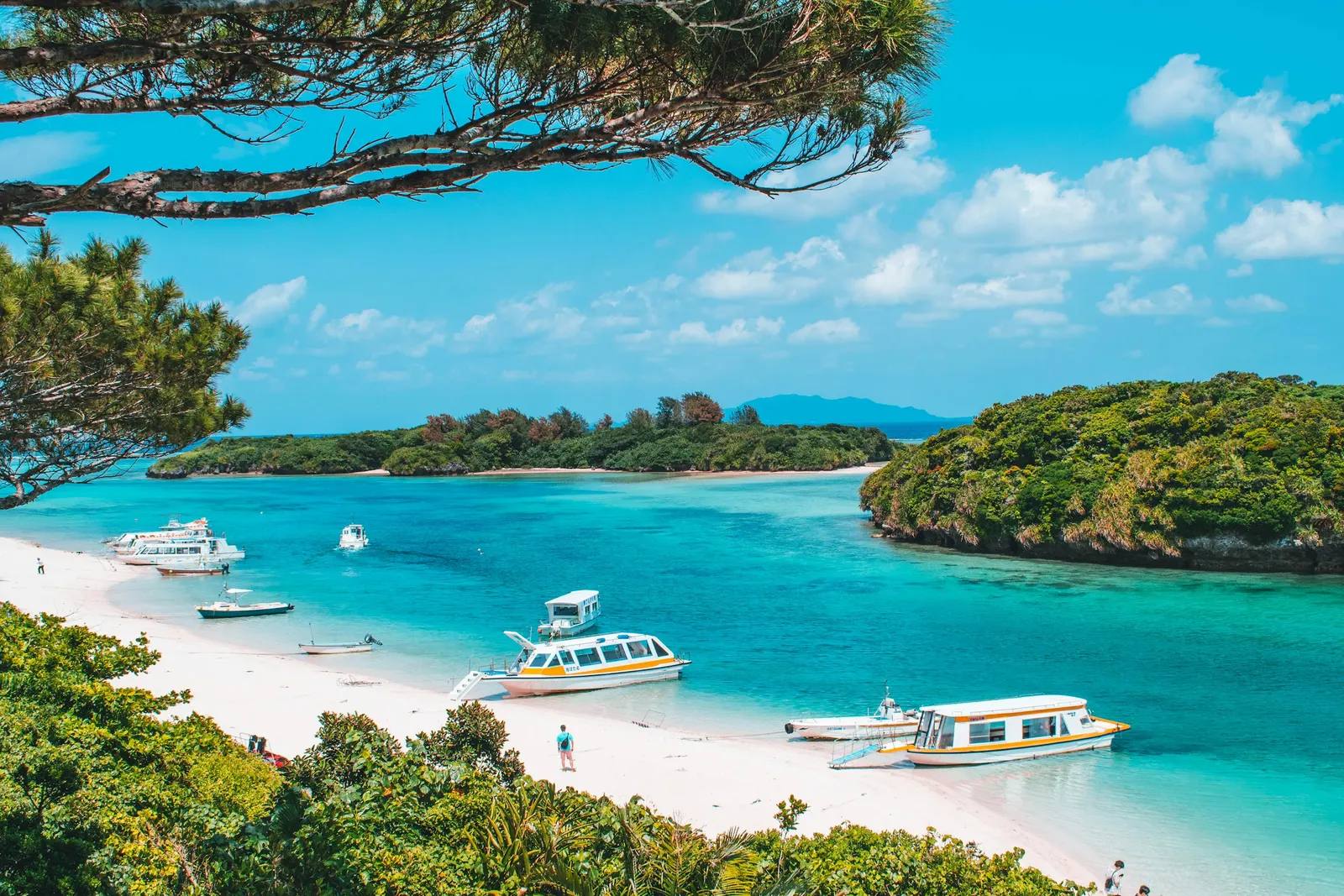
Within Okinawa, the same rule applies one step smaller. The boats to the smaller islands are cancelled in summer and autumn because of typhoons, and in winter because of the north wind. The ferry company in the Yaeyama Islands itself states that the service to the port on the north side of Iriomote is often cancelled, especially in winter; you are then left with the detour via the port in the south of the island and around an hour by bus. So we never put a night on a small island on the day before the flight back to the main islands.
Sources: Ryūkyū Shimpō – cancelled flights, 28 September 2026, JMA – daily values for Naha, September 2026, Okinawa Times – forecast for the main island, 27 September 2026, Naha Airport – destinations, Yaeyama Kankō Ferry – notes on the service to the north side of Iriomote
Okinawa or not – let’s work it out together
Tell us when you are travelling and what matters to you. We will tell you honestly whether Okinawa fits your route, where we would place it and what would have to go to make room.
Request a no-obligation consultationGetting there and around: flights instead of Shinkansen
You fly to Okinawa from Tokyo in around two and a half hours, from Osaka in just over two and from Fukuoka in just under two hours. There is no direct flight from Europe. On an ordinary day there are around 40 flights in each direction between Tokyo Haneda and Naha, so the connection is frequent. You can also reach the Yaeyama Islands without going via Naha: Ishigaki has direct flights from Tokyo, Osaka and Nagoya, among others. The ferry from Kagoshima to Naha takes around 25 hours and does not fit into a round trip.
No JR Pass, no Shinkansen
There is no JR line in Okinawa. The only railway is the monorail in Naha, which runs from the airport through the city to Shuri Castle and beyond. If you use a Japan Rail Pass, start it only after Okinawa; otherwise you pay for pass days on which you take no train. You do not have to take your large luggage with you: the luggage delivery service takkyubin sends suitcases from hotel to hotel, to Okinawa usually in two days. It is often simpler to send your suitcase straight to your first hotel after Okinawa and travel to the islands with light luggage.
Car, bus or driver
For Naha, Shuri Castle and a day in the south you do not need a car. For the north of the main island things get tedious without one: the buses from the airport to the aquarium take around two and a half hours and usually run about once an hour, and if you want to combine several places in one day, the bus will not get you far. For the north we therefore recommend a hire car or a car with a driver. In Japan you drive on the left, as in the UK and Ireland. Which documents you need depends on where your licence was issued:
| Licence issued in | What you need in addition in Japan |
|---|---|
| United Kingdom | An international driving permit under the 1949 Geneva Convention (the “1949” IDP, available in person at shops with PayPoint), together with your UK licence |
| Ireland | An international driving permit under the 1949 Geneva Convention, together with your Irish licence |
| Germany, Switzerland, France, Belgium, Monaco | A Japanese translation of the licence, for example from the Japan Automobile Federation JAF (online application only, processing on average two to three working days). An international driving permit is not enough |
| Other countries | The requirements differ from country to country, and with a licence from some countries, such as Liechtenstein, you cannot drive in Japan at all. Check the conditions for your own country before you travel; if driving is not possible, plan in a car with a driver |
You may then drive for up to one year from arrival, but never for longer than your documents are valid: with a translation, at most as long as your licence; with an international driving permit, at most as long as the permit, which is valid for one year from issue. Arrange your permit or translation before you travel, so that it is ready when you collect the hire car.
Sources: National Police Agency – driving with a foreign licence, Tokyo Metropolitan Police – translation of the licence, Tokyo Metropolitan Police – Geneva Convention countries, JAF – applying for a translation, GOV.UK – international driving permits, Okinawa Bus Association – buses to the aquarium, Ishigaki Airport – flight network, Marix Line – ferry Kagoshima–Naha
More than beaches: history, craft, forest
You can find a beach in many countries, but the Ryūkyū Kingdom only here. If you plan Okinawa purely as a beach destination, you miss the part that sets the trip apart from others. There are three things we include in almost every Okinawa stage, even for guests who mainly want the sea.
Shuri Castle: the main hall reopens
Shuri Castle in Naha was the seat of the kings of Ryūkyū and is part of the World Heritage site of the castles and sacred sites of Okinawa. Its main hall burned down in October 2019, having already been destroyed in the Battle of Okinawa in 1945 and later rebuilt. The main hall, reconstructed once again, opens to visitors on 23 November 2026 at 12:00; some of the outbuildings will only be rebuilt afterwards. You can only see the inside of the main hall with a ticket for a 30-minute time slot. It is best to reserve it in advance; any remaining places are also sold on the day. For visits from January 2027, reservations open at 13:00 Japan time on the 1st of the month two months before, so for a visit in March on 1 January. Without such a ticket you can visit the rest of the grounds and see the hall from outside. From 23 November 2026, admission costs 1,000 yen for adults (as of 28 September 2026).
The south: remembering the Battle of Okinawa
In 1945 one of the costliest battles of the Pacific War was fought on Okinawa, in the midst of the civilian population. In the south of the main island, the Prefectural Peace Memorial Museum and the Himeyuri Peace Museum tell this story from the perspective of the people who lived through it. We plan a day of its own for this: half a day for the museums, and deliberately nothing else afterwards. The prefectural museum is closed from 29 December to 3 January. If you have already visited the Peace Memorial Park in Hiroshima, you will see a different side of the same war here.
Pottery, food and the forests of the north
Okinawa’s pottery, yachimun, originated in the Tsuboya pottery quarter in Naha, around eight minutes on foot from a monorail station. Many workshops later moved to Yomitan in the centre of the main island, where numerous potteries work today. The cuisine is a world of its own, from pork to the bitter melon gōyā and the rice spirit awamori.
Since 2021, the forest in the north of the main island, Yanbaru, and the island of Iriomote have been part of a World Natural Heritage site. On Iriomote, five areas of forest can only be entered with a permit from the municipality and usually with an approved guide, the number of visitors per day is limited, and you can apply from six months before your visit. That cannot be done on the spur of the moment, but with some notice it works well. A theme park in the north that opened in 2025 is one we happily recommend to families as an extra – but not as the sole reason for travelling to Okinawa.
Sources: Shuri Castle – opening of the main hall on 23 November 2026, Shuri Castle – opening at 12:00 (special website of the committee for the main hall completion celebrations, FAQ), Shuri Castle – reservations and admission, Shuri Castle – visiting with and without a reservation, Okinawa Prefectural Peace Memorial Museum – opening hours, Himeyuri Peace Museum – visitor information, City of Naha – Tsuboya pottery quarter, Ministry of the Environment – World Natural Heritage Amami, Tokunoshima, northern Okinawa and Iriomote, Taketomi Town – access to the protected areas on Iriomote
What Okinawa adds to the cost
Per day, Okinawa costs roughly as much as the rest of your trip. What is new are the two domestic flights and, for the north, the car. As in our cost overview, our budget figures are per person for two travellers and exclude the international flight; in the Comfort range we allow around €330–370 per day. The domestic flights to Okinawa and back are not included and come on top.
Hotels: according to a survey by the state-owned Okinawa Development Finance Corporation, the average room rate of the large hotels in fiscal year 2024 was around 29,000 yen per night in resort hotels and around 15,700 yen in city hotels – at 185 yen to the euro, about €157 and €85 per room. The city hotels thus fall within the range we give in the cost overview for business hotels (€80–140 per room), and the resort hotels below our range for comfort hotels (€180–320). These are annual averages: during the Japanese holidays, in August, over New Year and at the end of March, hotels are more expensive and book up earlier.
Flights: ANA’s fully changeable standard fare between Tokyo and Naha costs 60,610 to 79,310 yen each way, around €330 to €430, and between Osaka and Naha 51,150 to 67,210 yen (as of 28 September 2026, excluding airport charges). That is the upper limit. For travellers resident outside Japan who enter the country on an international ticket, JAL offers the Japan Explorer Pass, whose price depends on the date and demand. Because these prices change constantly, we only quote them once there is a specific travel date.
If you swap Hakone and Hiroshima for Okinawa within two weeks, you pay for the two flights but save the longest Shinkansen journeys of the route – from Tokyo to Kyoto, to Hiroshima and back to Osaka – and the night in the ryokan in Hakone. At standard fares the trip still becomes noticeably more expensive; with promotional or pass fares the extra cost is considerably lower. We calculate the difference for you with a specific travel date.
Sources: Okinawa Development Finance Corporation – hotels in fiscal year 2024 (PDF), ANA – fares until 24 October 2026 (PDF), ANA – fares from 25 October 2026 (PDF), JAL – Japan Explorer Pass
Frequently asked questions about Okinawa on a Japan itinerary
Is Okinawa worth it on a first trip to Japan?
With two weeks or less, usually not – unless Okinawa matters more to you than one of the classic stops. Okinawa is a destination in its own right, with its own history, its own cuisine and a subtropical sea, and you can only reach it by air. If you fit it into two weeks, something else has to go; in our suggested route, that is Hakone and Hiroshima. From three weeks upwards, Okinawa can be planned in without giving up much.
How many days should I plan for Okinawa?
For the main island alone, at least three nights, four for a more relaxed pace. With a day trip to the Kerama Islands we allow four to five nights, because a boat can be cancelled due to rough seas and you then need a spare day. For the Yaeyama Islands around Ishigaki it is four nights, better five to six, and for the main island and Yaeyama together six nights or more. These are our guide values based on flight times, driving times and boat connections, not official figures.
When is the best time to visit Okinawa?
For a Japan trip that includes Okinawa, we recommend April up to Golden Week, the weeks after the end of the rainy season until mid-July, and November. On the long-term average, the rainy season in Okinawa lasts from about 10 May to 21 June, roughly a month earlier than on the main islands. From July the typhoons increase markedly; in August and September, on average, the most of them come close. From December to February it is mild at around 20 degrees during the day, but often cloudy and windy.
When is typhoon season in Okinawa?
On the long-term average for 1991–2020, just under eight typhoons a year come close to the Okinawa region, most of them in August and September, but in July and in October, too, more than one each on average. That is a good twice as often as in the region around Kyoto and Osaka or the region around Tokyo, and the season is longer. You can still travel, as long as Okinawa lies in the first half of your route and not on the last two days before your flight home. You will find the exact monthly values in the table in the section on when to go.
Is the Japan Rail Pass valid in Okinawa?
No. There is no JR line and no Shinkansen in Okinawa. The only railway is the monorail in Naha, which runs from the airport through the city. If you use a Japan Rail Pass, start its validity only after Okinawa, so that no pass days are wasted on the islands.
Do I need a hire car in Okinawa?
Not for Naha and a day in the south, but usually yes for the north of the main island and for combining several places in one day. The buses from the airport to the aquarium in the north take around two and a half hours and usually run about once an hour. With a UK or Irish licence you need an international driving permit under the 1949 Geneva Convention in addition to your licence. What you need depends on the country that issued your licence: licences from Germany or Switzerland, for example, require a Japanese translation instead, and an international permit is then not valid. Alternatively, we plan in a car with a driver.
Your route with or without Okinawa
Tell us when you are travelling and how many days you have. We will show you how Okinawa would fit into your route, what would have to go and in which weeks we would advise against it. We advise you in English, directly from Japan and without sales pressure.
Enquire about your journeyAbout the author

Kentaro Asakura
Founder of Japan Privat · A Japan specialist who guides you in English
Kentaro Asakura was born and raised in Japan. His student years took him first to the UK, where English became second nature to him, and later to Munich, where he met his wife – together they returned to Japan. With Japan Privat, he has been designing individual journeys for European travellers for more than ten years – in English, with the eyes of a local and a genuine feel for what guests from Europe are looking for.
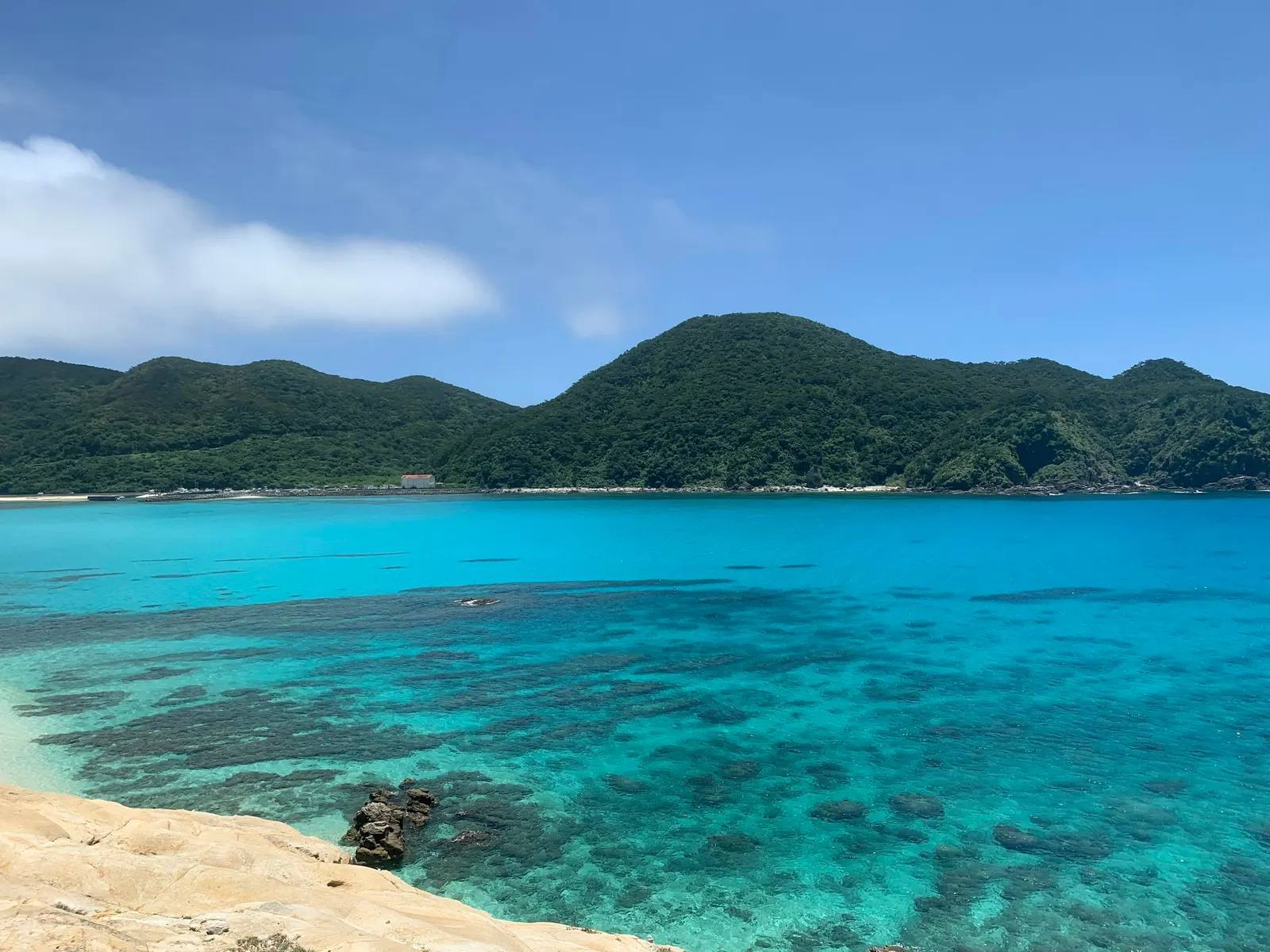
Photos via Unsplash: Stefanie Akkerman (cover image, Kerama Islands), Hiroko Yoshii (Taketomi), Roméo A. (Kabira Bay). The images have been reduced in size for the web.