Public Holidays & Travel Seasons in Japan 2027: What Golden Week, Obon and New Year Mean for Your Trip
Table of contents
- The three peaks at a glance
- All public holidays in 2027 and the long weekends
- The year as a traffic light: which weeks really get busy
- Crowded is not the same as closed
- Golden Week 2027: 29 April to 5 May
- Obon 2027: 11 to 16 August
- New Year’s Eve & New Year 2026/27
- The invisible peaks: school holidays, school trips, long weekends
- When your holidays meet Japan’s peaks
- How we plan around the peaks
- Frequently asked questions
Japan’s public holidays for 2027 are fixed, and three periods shape the travel year: Golden Week from 29 April to 5 May, Obon from 11 to 16 August and the turn of the year from 29 December to 3 January. On these days, half of Japan is on the move at the same time. For your trip, the date matters less than what it does: during Golden Week everything is open, but crowded. Over New Year many museums are closed, while the shrines overflow. And some bottlenecks appear in no holiday calendar at all, such as the school groups in Kyoto on perfectly ordinary Tuesdays. This guide sorts the year the way we plan it for our guests. All dates are as of 28 September 2026.
In brief
- Three peaks in 2027: Golden Week 29 Apr–5 May (30 April is a working day that many take off), Obon 11–16 Aug and the turn of the year, 29 Dec 2026–3 Jan 2027 and 29 Dec 2027–3 Jan 2028.
- Crowded is not the same as closed: Golden Week is crowded, but almost everything is open. Over New Year, government offices, banks, many museums and the palace gardens close. At Obon it is above all trains, flights and motorways that are overloaded; little is closed, because Obon is not a public holiday.
- There is no Silver Week in 2027: between 20 and 23 September lie two working days.
- The invisible peaks: Japanese spring school holidays during the cherry blossom, school trips to Kyoto and Nara on weekdays, mainly in May and October, but also in June, September and November, as well as the long weekends.
- Your holidays: the Easter school holidays in England in 2027 fall in the cherry blossom season, the early May bank holiday lands in Golden Week, the May half-term comes conveniently after it, and the summer holidays cover Obon completely.
- Shinkansen: on peak days, all Nozomi trains between Tokyo and Hakata run with reserved seats only. The Japan Rail Pass is not valid on Nozomi and Mizuho.
The three peaks at a glance
During Golden Week and Obon, Japan is crowded; at the turn of the year it is crowded and partly closed at the same time. If one of these periods falls within your trip, you do not have to steer clear of it. New Year in a ryokan or the fire festival marking the end of Obon in Kyoto are, for some guests, the very reason for the journey. What matters is what you do on these days and where you sleep.
| Period | What happens | Crowded or closed | Our advice |
|---|---|---|---|
| Golden Week 29 Apr–5 May 2027 | Four public holidays within seven days, spring outings all over the country | Crowded: trains, motorways, well-known places. Closed: almost nothing | Stay in one place; move on the days before 29 April or after 5 May |
| Obon 11–16 Aug 2027 | Families travel to their home towns, summer holidays under way | Crowded: transport, holiday resorts, Kyoto on 16 August. Closed: some family businesses | Travel long distances before 7 August or from 17 August (in 2026 the Nozomi rule already applied from 7 August) |
| Turn of the year 29 Dec 2026–3 Jan 2027 | Trips home, New Year shrine visit, businesses closed | Crowded: shrines, temples, transport. Closed: government offices, banks, many museums | Arrive by 28 December or only from 4 January; stay in one place over New Year |
All three periods have one thing in common: the travel wave has a direction. At the start, people leave the big cities; at the end, they return. For Golden Week 2026, based on reservations, JR East expected the heaviest outbound travel on 2 May and the heaviest return travel on 5 May; for Obon, the major JR companies expected the peaks on 8 and 16 August. The railways only publish their forecasts for 2027 two to three weeks beforehand, the motorway companies about three to six weeks beforehand.
On these peak days, all Nozomi trains on the Tōkaidō and San’yō Shinkansen between Tokyo and Hakata also run without non-reserved cars. Anyone with only an unreserved ticket may merely stand in the vestibule. Hikari, Kodama, Mizuho and Sakura keep their non-reserved cars; of these, Hikari, Kodama and Sakura can be used with the Japan Rail Pass.
Sources: JR Central – Nozomi reserved seats only on peak days, JR East – travel forecast for Golden Week 2026 (via PR TIMES), JR Central – reservation status for Obon 2026
All public holidays in 2027 and the long weekends
In 2027 Japan has 16 public holidays and one substitute holiday on 22 March, 17 days off in total. The list is official: Japan’s Cabinet Office has published it, and the two equinoxes are fixed as well. Outside Golden Week, five public holidays combine with the weekend to form a long weekend; on top of that come Golden Week and New Year, which falls on a Friday in 2027.
| Date | Day | Public holiday | Long weekend | Effect on your trip |
|---|---|---|---|---|
| 1 January | Fri | New Year’s Day Ganjitsu | yes, 1–3 Jan | Very high: closures, shrines packed |
| 11 January | Mon | Coming of Age Day Seijin no Hi | yes, 9–11 Jan | Medium: Nozomi reserved seats only |
| 11 February | Thu | National Foundation Day Kenkoku Kinen no Hi | no | Low |
| 23 February | Tue | The Emperor’s Birthday Tennō Tanjōbi | no | Low |
| 21 March | Sun | Vernal Equinox Day Shunbun no Hi | yes, 20–22 Mar | High: start of the spring school holidays, Nozomi reserved only |
| 22 March | Mon | Substitute holiday Furikae Kyūjitsu | (see above) | High |
| 29 April | Thu | Shōwa Day Shōwa no Hi | bridge day 30 Apr | Very high: start of Golden Week |
| 3 May | Mon | Constitution Memorial Day Kenpō Kinenbi | yes, 1–5 May | Very high: Golden Week |
| 4 May | Tue | Greenery Day Midori no Hi | (see above) | Very high: Golden Week |
| 5 May | Wed | Children’s Day Kodomo no Hi | (see above) | Very high: return travel wave |
| 19 July | Mon | Marine Day Umi no Hi | yes, 17–19 Jul | Medium: start of the summer season |
| 11 August | Wed | Mountain Day Yama no Hi | no, but Obon follows | Very high: Obon travel wave |
| 20 September | Mon | Respect for the Aged Day Keirō no Hi | yes, 18–20 Sep | Medium |
| 23 September | Thu | Autumnal Equinox Day Shūbun no Hi | no | Low to medium |
| 11 October | Mon | Sports Day Supōtsu no Hi | yes, 9–11 Oct | Medium |
| 3 November | Wed | Culture Day Bunka no Hi | no | Low to medium: start of the autumn leaves season |
| 23 November | Tue | Labour Thanksgiving Day Kinrō Kansha no Hi | no | Medium: autumn leaves in Kyoto |
The “effect” column is our assessment for travellers: a public holiday in the middle of the week, such as 11 February, changes little; a long weekend fills trains and day-trip destinations; and when a public holiday coincides with the blossom or autumn leaves season, the well-known places get busy.
The remaining public holidays in 2026 and the turn of the year
If your trip is this autumn: 12 October 2026 (Monday, Sports Day) creates a long weekend from 10 to 12 October. 3 November 2026 (Culture Day) is a Tuesday. 23 November 2026 (Monday, Labour Thanksgiving Day) brings the long weekend of 21 to 23 November, exactly when the autumn leaves in Kyoto usually reach their peak. We follow how the season is developing this year in our guide to the autumn leaves. Government offices then close from 29 December 2026 (Tuesday) to 3 January 2027 (Sunday).
Three rules behind the calendar
Substitute holiday: if a public holiday falls on a Sunday, the next day that is not a public holiday becomes a day off. In 2027 this only affects the vernal equinox on Sunday 21 March, so Monday 22 March is a day off.
Bridge holiday: if exactly one day lies between two public holidays, it becomes a day off as well. This is how the Silver Week of 19 to 23 September came about in 2026. In 2027 there are two days between 20 and 23 September, the rule does not apply, and so there is no Silver Week.
Equinoxes: the Public Holidays Act gives no date for spring and autumn, only the astronomical day. It is fixed when the National Astronomical Observatory of Japan publishes its calendar data in the official gazette in February of the preceding year. The data for 2027 appeared on 2 February 2026. For 2028, the two days will only be final with the gazette of February 2027. That is why we update this guide every February.
Sources: Cabinet Office (内閣府) – list of public holidays (CSV), Cabinet Office – about national holidays, NAOJ – calendar data for 2027 published in the official gazette
The year as a traffic light: which weeks really get busy
In 2027 six stretches are red: early January, late March to mid-April, early May, the first half of August, the second half of November and late December. The overview brings together what otherwise sits in three different calendars: public holidays, Japanese school holidays, and blossom and autumn leaves. Each month is split into two halves. The hatched fields mark the days around the turn of the year when many places are also closed.
- quiet
- busy
- very crowded
- many places closed
Guide values for Japan as a whole: public holidays according to the Cabinet Office, school holidays and blossom seasons following the usual pattern. Individual places differ, for example Kyoto during the autumn leaves or Hokkaido in winter.
Show reasons for each half-month
| Period | Level | Reason |
|---|---|---|
| January, 1–15 | very crowded · many places closed | New Year: government offices closed until 3 Jan, some museums and palace gardens still closed until 1, 3 or 4 Jan depending on the site; return rush; long weekend 9–11 Jan. |
| January, 16–end of month | quiet | One of the quietest times of the year. |
| February, 1–15 | busy | Winter festivals in Hokkaido (e.g. Sapporo Snow Festival); the public holiday on 11 Feb itself has little effect. |
| February, 16–end of month | quiet | Quiet; public holiday 23 Feb (Tuesday). |
| March, 1–15 | quiet | Quiet before the cherry blossom. |
| March, 16–end of month | very crowded | Japanese spring school holidays from about 20–26 Mar, long weekend 20–22 Mar, cherry blossom begins. |
| April, 1–15 | very crowded | Cherry blossom in Tokyo and Kyoto; spring holidays until about 5 Apr. |
| April, 16–end of month | busy | Quieter after the blossom; Golden Week from 29 Apr. |
| May, 1–15 | very crowded | Golden Week until 5 May; from 6 May everyday life returns, only school trips in Kyoto and Nara. |
| May, 16–end of month | busy | School trips in Kyoto and Nara on weekdays. |
| June, 1–15 | busy | School trips; start of the rainy season. |
| June, 16–end of month | quiet | Rainy season, few domestic travellers; school trips still in Kyoto and Nara on weekdays. |
| July, 1–15 | quiet | Quiet before the summer holidays. |
| July, 16–end of month | busy | Long weekend 17–19 Jul, Gion Matsuri in Kyoto, summer holidays begin. |
| August, 1–15 | very crowded | Summer holidays, public holiday 11 Aug, Obon from 13 Aug; peak roughly 7–16 Aug: trains, flights and motorways full. |
| August, 16–end of month | busy | 16 Aug itself is still a peak day (return trips, Okuribi in Kyoto); then summer holidays until the end of August. |
| September, 1–15 | quiet | Quiet; late summer and typhoon season; occasional school trips in Kyoto and Nara on weekdays. |
| September, 16–end of month | busy | Long weekend 18–20 Sep, public holiday 23 Sep; school trips. |
| October, 1–15 | busy | Long weekend 9–11 Oct; school trips in Kyoto. |
| October, 16–end of month | busy | Many school trips in Kyoto on weekdays. |
| November, 1–15 | busy | Autumn leaves in the north and in the mountains; school trips. |
| November, 16–end of month | very crowded | Autumn leaves at their peak in Kyoto and Tokyo. |
| December, 1–15 | busy | Last autumn leaves in Kyoto, then quieter. |
| December, 16–end of month | very crowded · many places closed | Winter school holidays from about 25 Dec; depending on the site, many museums close from 26–30 Dec, government offices from 29 Dec; New Year travel rush. |
Yellow does not mean “bad”. Yellow means that certain places or days are busier than you might expect, for instance school groups in Kyoto or a long weekend. If you would like to match the months against the weather, our overview of weather and clothing by month gives the temperatures of the major cities. We introduce the quiet months themselves in our guide to the best time to visit.
Crowded is not the same as closed
The three peaks work in quite different ways: during Golden Week everything is open and crowded; over New Year much is closed, and what is crowded then are above all the shrines and transport; at Obon it is primarily the journey there that is crowded. Most holiday lists leave out this distinction, yet it decides how you plan. Against crowds, a different time of day or a different place helps. Against a closed door, only a different day helps.
| Period | What closes | What is crowded |
|---|---|---|
| Turn of the year | Government offices 29 Dec–3 Jan, banks 31 Dec–3 Jan (both by law), most post office counters, many national museums, palace gardens, department stores on 1 Jan, many small restaurants | Large shrines and temples, trains and flights, the New Year sales |
| Obon | Some family businesses; banks, post offices and government offices work normally | Trains, flights, motorways, holiday resorts, Kyoto on 16 Aug |
| Golden Week | Almost nothing; banks and post office counters on the public holidays | Everything touristy, plus transport |
| Normal week | Many museums on Mondays; after a public holiday Monday, usually on the following day | – |
The trap after a public holiday Monday
Many museums in Japan close on Mondays. If the Monday is a public holiday, they stay open and make up the closing day later. The Tokyo National Museum then closes on the next working day, the Kyoto National Museum on the Tuesday, and the East Gardens of the Imperial Palace in Tokyo also on the Tuesday. In 2027 six Mondays are days off (five public holidays and the substitute holiday on 22 March): 11 January, 22 March, 3 May, 19 July, 20 September and 11 October. During Golden Week in 2027, Tuesday 4 May is also a public holiday; when the institutions make up their closing day in that case is set by each one in its own calendar. So we never plan the first working day after a long weekend as a museum day without first checking the institution’s website.
Sources: Tokyo National Museum – opening hours and closing days, Kyoto National Museum – visitor information, Imperial Household Agency – East Gardens of the Imperial Palace
If your holiday falls right in Golden Week or on Obon
Then keep your dates and we will arrange the route around them: which days you spend in one place, when you move on and which places are actually open on your days.
Request a no-obligation consultationGolden Week 2027: 29 April to 5 May
Golden Week 2027 begins on Thursday 29 April and ends on Wednesday 5 May. Anyone who takes Friday 30 April off has seven days in a row. There is no substitute holiday in 2027, because none of the public holidays falls on a Sunday. Thursday 6 May is an ordinary working day again.
| Date | Day | What applies |
|---|---|---|
| 29 April | Thu | Shōwa Day, public holiday |
| 30 April | Fri | Working day, taken off by many |
| 1–2 May | Sat–Sun | Weekend |
| 3–5 May | Mon–Wed | Constitution Memorial Day, Greenery Day, Children’s Day |
| 6 May | Thu | Working day |
During Golden Week almost everything is open: temples, shrines, museums, department stores and restaurants. The museums stay open on the public holidays too; in 2026 the Tokyo National Museum was open until 20:00 on every evening from 1 to 5 May. On the public holidays themselves, only banks and post office counters close. Many museums make up the missed closing day on the next working day – at the Tokyo National Museum, following its usual rule, probably on Thursday 6 May 2027; the calendar for 2027 has not yet been published.
What is crowded, on the other hand, is everything people in Japan visit on their days off, and that across the whole country. Accommodation is more expensive and books up earlier than usual in May. When we plan this week for guests, the first thing we check is when they change cities. Moving from Tokyo to Kyoto on 29 April or in the opposite direction on 5 May is a strain on the nerves; the same move on 27 April or on 7 May is much more relaxed.
For Golden Week 2026, the rule “all Nozomi reserved only” applied from 24 April to 6 May. JR Central is likely to announce the periods for 2027 at the start of the year; for 2026 this happened on 7 January 2026. As soon as the dates are available, we will add them here.
Sources: JR Central – Nozomi rule for the 2026 fiscal year (press release), Tokyo National Museum – opening hours
Obon 2027: 11 to 16 August
Obon is not a public holiday, but it is the busiest travel week of the summer: in 2027, Mountain Day on Wednesday 11 August is followed by the Obon period proper from Friday 13 to Monday 16 August. Anyone who has Obon leave from 13 to 16 August gets six days in a row by taking Thursday 12 August off. Many companies close for a company holiday this week, and families travel to their home towns to welcome the spirits of their ancestors and see them off again.
The travel wave therefore has a clear direction: at the start out of Tokyo, Osaka and Nagoya into the countryside, at the end back again. Government offices, banks and post offices work normally; only some small family businesses close for a few days. At Obon 2026, all Nozomi trains ran with reserved seats only from 7 to 16 August, and the motorway company NEXCO expected hundreds of traffic jams of at least ten kilometres for this period. Holiday resorts, the beaches and the home regions in the countryside are crowded as well. Incidentally, in parts of Tokyo Obon is already observed in July.
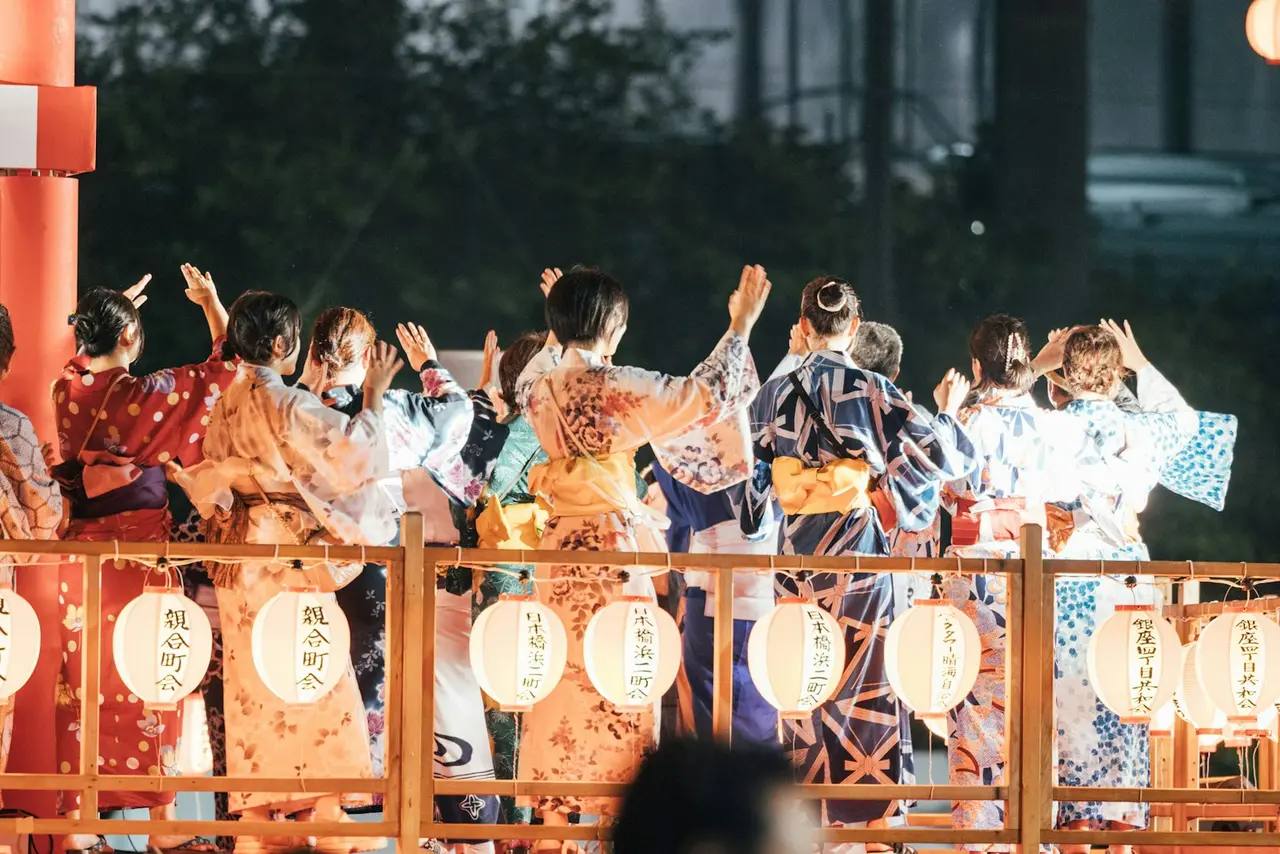
Obon can also be a goal in itself. On the evening of 16 August, Kyoto sees off the ancestral spirits with the Gozan Okuribi: from 20:00, five large fire symbols are lit one after another on the mountainsides around the city, starting with the character “Dai”, and each burns for about half an hour. While the fires are burning, the city asks people to switch off outdoor lighting. In 2027, 16 August is a Monday and also the last of the Obon days. If you would like to experience this evening in Kyoto, book your accommodation early and only travel on from 17 August or later. You can read more about summer festivals, fireworks and Bon dances in our guide to summer in Japan.
Sources: NEXCO – traffic jam forecast for Obon 2026, Kyoto City Tourism Association – Gozan Okuribi
New Year’s Eve & New Year 2026/27
At the turn of the year, government offices close from 29 December 2026 to 3 January 2027 and banks from 31 December to 3 January, both set by law. Many museums and the imperial sites close between 26 and 30 December, depending on the institution. At the same time, New Year is the most important festival of the Japanese year. Temples and shrines are open and, in the first three days of the year, more crowded than at any other time.
| Institution | Closed over the turn of the year |
|---|---|
| Tokyo National Museum | 26–31 Dec 2026 (22–25 Dec only the Gallery of Hōryū-ji Treasures and the Kuroda Memorial Hall); open on 1 Jan 2027, times not yet announced (2026 from 13:00) |
| Kyoto National Museum | 28 Dec 2026–1 Jan 2027 |
| East Gardens of the Imperial Palace, Tokyo | 28 Dec–3 Jan |
| Kyoto Imperial Palace, Katsura Imperial Villa, Shugakuin | 28 Dec–4 Jan (as of 2025/26) |
| Nijō Castle, Kyoto | 29–31 Dec (as of 2025/26) |
| Osaka Castle (main tower) | 28 Dec–1 Jan (as of 2025/26) |
| Hiroshima Peace Memorial Museum | 30–31 Dec (as of 2025/26) |
| Kinkaku-ji, Kyoto | no closing day |
| Banks | 31 Dec–3 Jan (cash machines in konbini usually keep working) |
| Department stores | 1 Jan; New Year sales from 2 or 3 Jan, depending on the store |
The list shows the pattern: if you are in Japan from, say, 28 December to 4 January, you will find the large museums and the imperial gardens closed on several days, while the temples are open. Department stores close on 1 January, and the New Year sales with their lucky bags, the fukubukuro, begin on 2 or 3 January depending on the store; at the turn of the year 2025/26 some large stores in Tokyo opened on the 2nd, others only on 3 January. Many small, owner-run restaurants close for a few days, while chains, hotel restaurants and the konbini stay open. The dates with a year given apply to the turn of the year 2026/27; where it says “as of 2025/26”, the institutions have not yet published their dates for 2026/27. For the turn of the year 2027/28 (government offices 29 Dec 2027–3 Jan 2028), the institutions’ closing days are still to come.
What makes New Year special for travellers
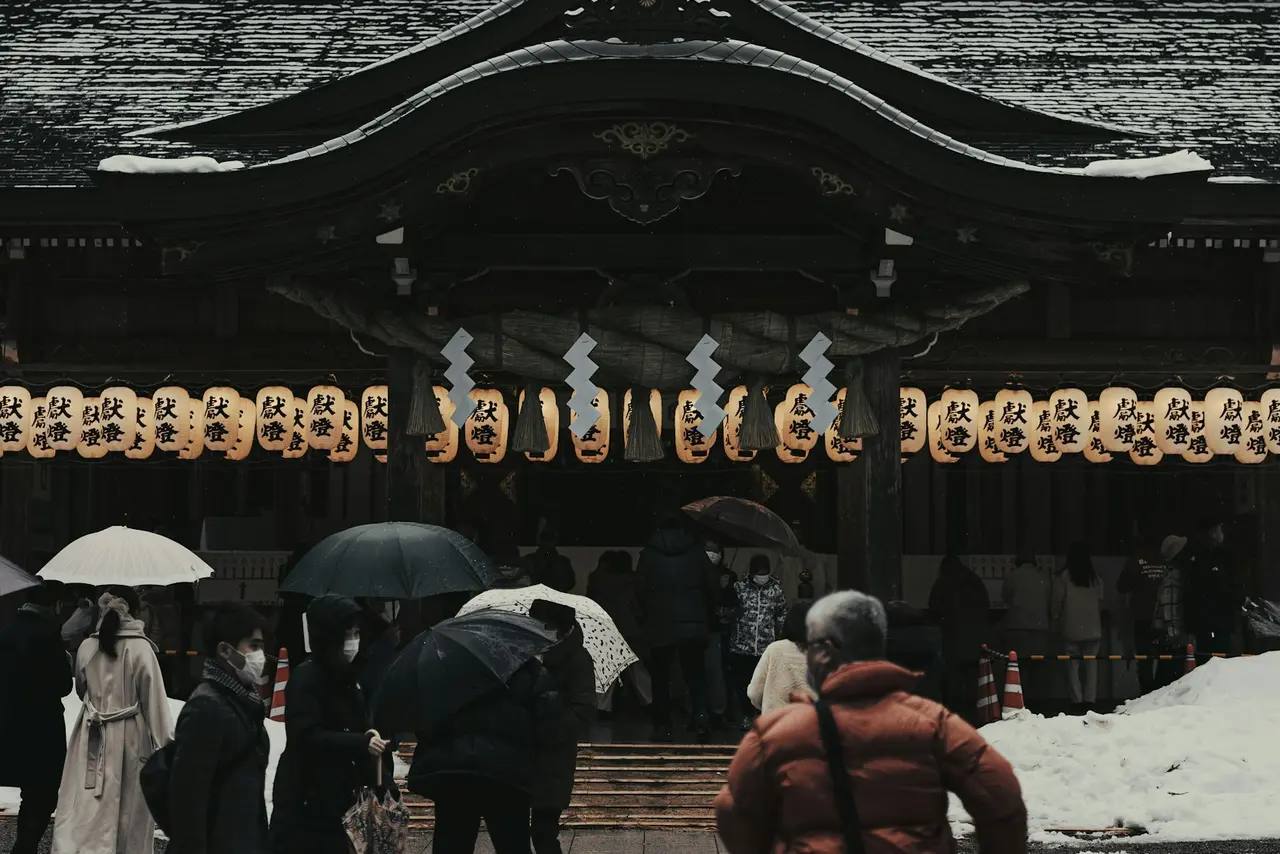
The turn of the year is the quietest and at the same time the most solemn time in Japan. On New Year’s Eve the temples ring their bells; at Chion-in in Kyoto, monks strike the great bell while visitors look on, and the gate closes earlier if the crowds are large. From midnight, the first shrine visit of the year begins. Among the most visited places are Meiji Shrine and Sensō-ji in Tokyo and Fushimi Inari Shrine in Kyoto. In the first three days of January there are often long queues there; from 4 January it usually becomes quieter. Many ryokan prepare a special meal at the turn of the year; whether it includes the traditional New Year dishes, osechi, is something we ask about specifically when booking. If you would like to combine winter itself with snow, onsen and winter illuminations, you will find more in our guide to Japan in winter.
It is high season on the rails too: from 25 December 2026 to 5 January 2027, all Nozomi trains run with reserved seats only, as JR Central has already confirmed. At the last turn of the year, JR East expected the heaviest outbound travel on 30 December and the heaviest return travel on 3 January. Our principle for guests over New Year: arrive by 28 December, then stay in one place and only travel on from 4 January.
Sources: e-Gov – Act on Holidays of Administrative Organs, Art. 1, Bank of Japan – bank holidays, Kyoto National Museum – visitor information, Imperial Household Agency – Kyoto Imperial Palace, Kyoto Tourist Information – opening hours over the turn of the year (PDF), Chion-in – New Year’s Eve bell, JR Central – Nozomi rule until March 2027 (PDF)
The invisible peaks: school holidays, school trips, long weekends
Some busy days appear in no holiday calendar: the Japanese school holidays, the school trips to Kyoto and Nara, and the long weekends. These are precisely the ones that surprise travellers, because they run against the rule of thumb that “weekdays are quiet”.
School holidays: spring, summer, winter
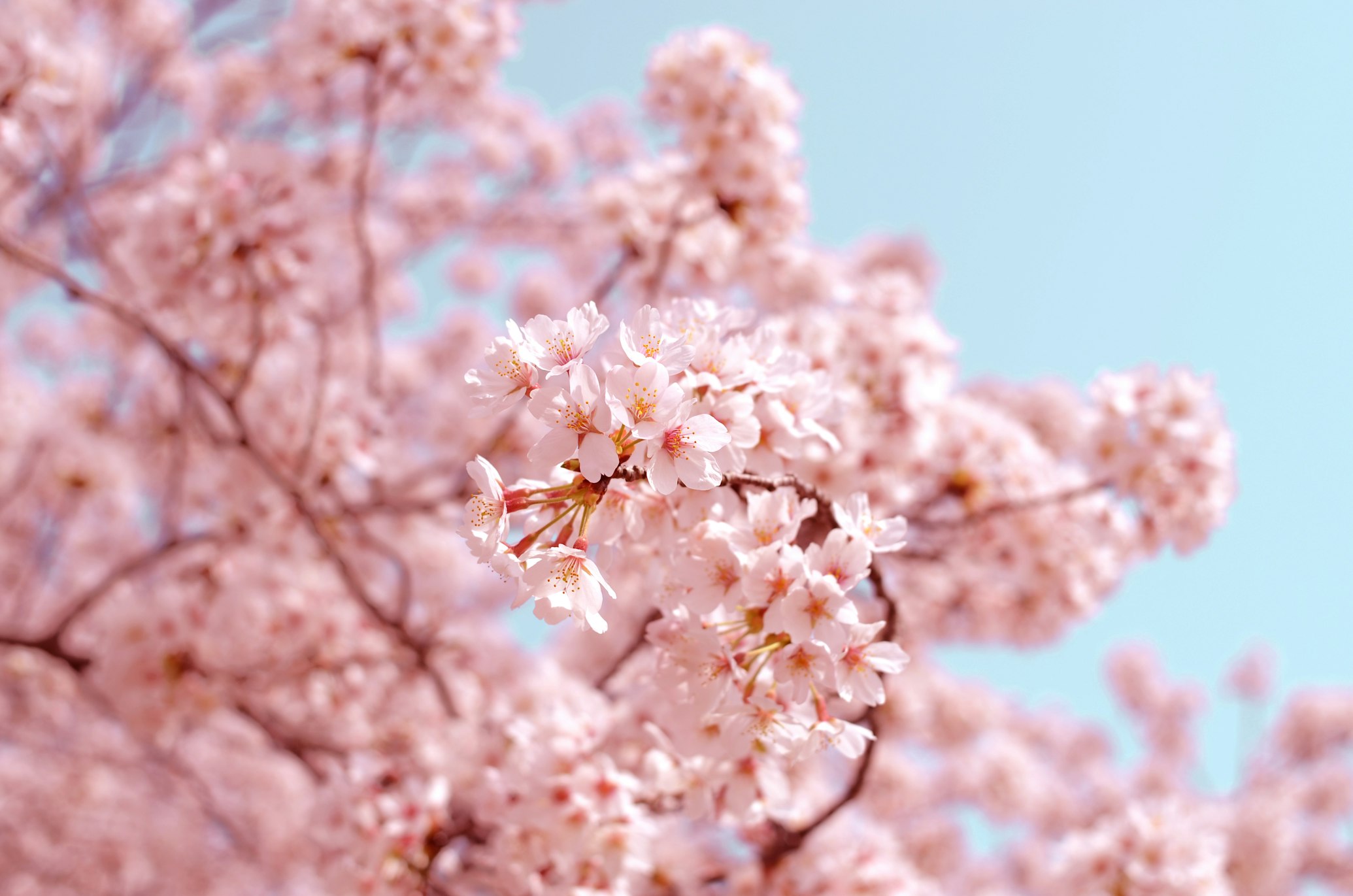
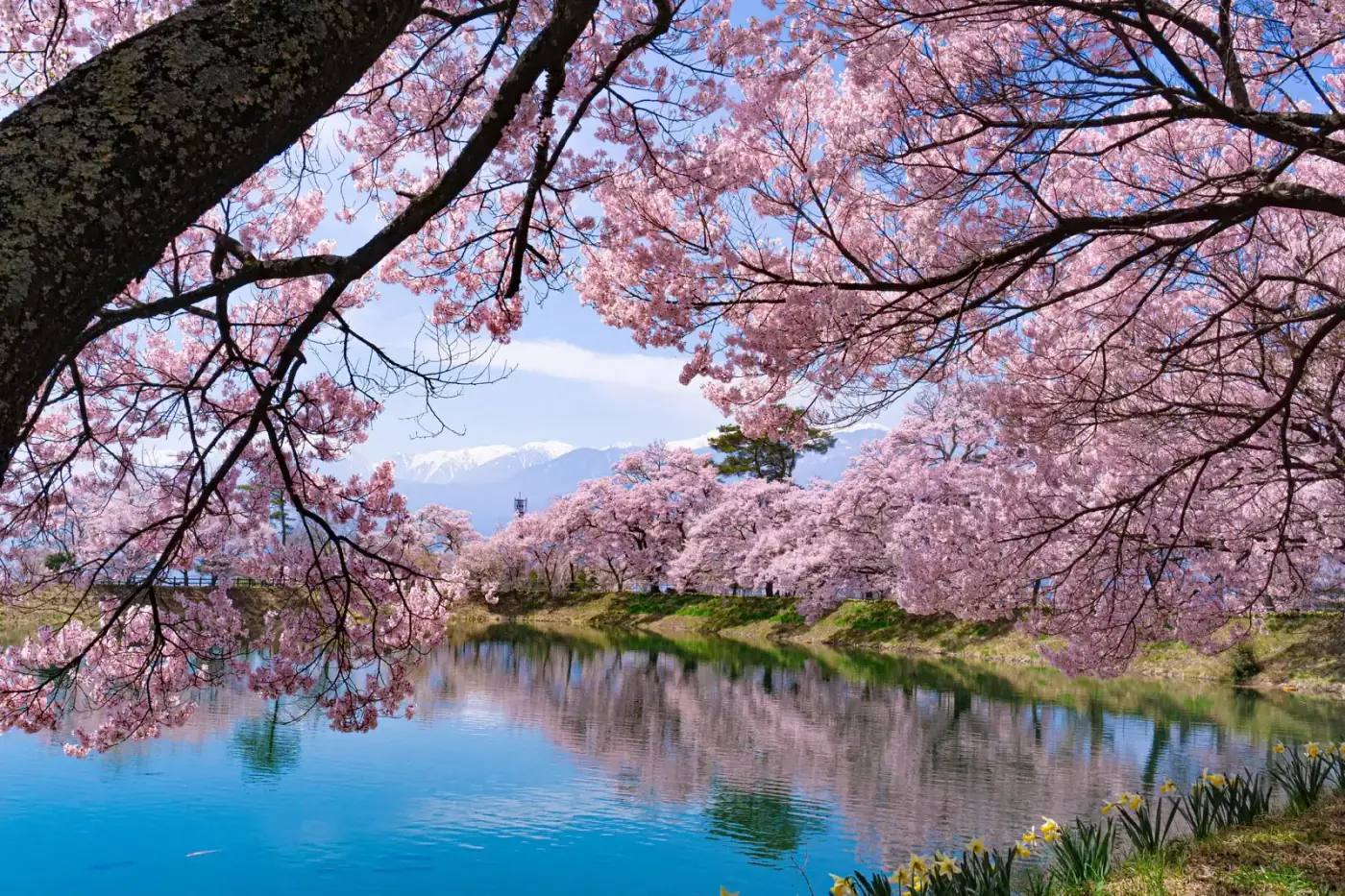
The Japanese school year begins in April. Each municipality sets its own holidays, but the pattern is stable. The spring holidays begin between 20 and 26 March depending on the municipality and last until early April. The summer holidays run from the second half of July to the end of August; in 2026 they lasted until 31 August in Tokyo’s Shinjuku ward, but in Kyoto and Osaka only until around 25 August. The winter holidays run from Christmas into the first week of January. The spring holidays thus fall exactly in the cherry blossom season, whose full bloom comes on 31 March in Tokyo and 4 April in Kyoto on the long-term average. You can read everything about the 2027 blossom in our cherry blossom guide.
School trips: why weekdays in Kyoto are not quiet
The most popular destination for the multi-day school trips of Japanese junior high schools is Kyoto, followed by Nara. According to the City of Kyoto’s tourism statistics for 2025, most pupils on school trips came to the city in May and October, followed by June, November and September; in August, by contrast, almost none came. In spring and September it is mainly junior high schools, in October and November mainly primary and senior high schools. School trips take place on school days, that is Monday to Friday. In these months the great temples of Kyoto are therefore often not as quiet as you might expect, even on a Tuesday morning. We then schedule the best-known places for our guests early in the morning, before the coaches arrive.
Long weekends in 2027
Apart from New Year (1–3 January) and Golden Week, 2027 has five long weekends: 9–11 January, 20–22 March, 17–19 July, 18–20 September and 9–11 October. In addition there are single public holidays in the middle of the week that can become four days off with a bridge day, such as 11 February or 23 September (both Thursdays) and 23 November (a Tuesday). A long weekend fills above all the destinations that can be reached from the big cities in one to three hours, such as Kamakura, Hakone or Nikko. From October 2026, all Nozomi trains will also run with reserved seats only on several long weekends; JR Central has confirmed this for 10–12 October and 21–23 November 2026 and for 9–11 January and 20–22 March 2027.
One example of how the layers overlap is the weekend of 21 to 23 November 2026. It falls in the period when the leaves in Kyoto usually colour most strongly, and on the weekdays before and after it the autumn school groups are out and about there. If you are in Kyoto at this time, you will meet school groups on weekdays and Japanese day-trippers at the weekend. In 2027, 23 November is a Tuesday, so the public holiday alone does not make a long weekend; with a bridge day on the Monday one can still come about, and at the peak of the leaves Kyoto is busy anyway. You will find more on planning the autumn leaves season in the autumn leaves guide.
Sources: Shinjuku City – school holidays 2026, City of Kyoto – school holidays 2026, City of Kyoto – tourism statistics 2025 (PDF), Japan Educational Travel Association (日本修学旅行協会) – surveys on school trips, Travel Voice – school trip destinations of junior high schools, school year 2023, JMA – cherry blossom, long-term averages, JR Central – Nozomi on long weekends (PDF)
When your holidays meet Japan’s peaks
In England, the Easter school holidays in 2027 fall in the cherry blossom season, the early May bank holiday lands in the middle of Golden Week, the summer holidays cover Obon and the Christmas holidays meet the Japanese turn of the year. The May half-term and the October half-term, by contrast, fall at convenient times. If you are tied to school holidays, the overlap can rarely be avoided. But you can know what to expect and shape the route accordingly. The table gives ranges; the exact dates are set by each local authority, and academies and independent schools often set their own. Scotland, Wales and Northern Ireland have their own calendars.
| Your holidays 2027 | Dates (guide values) | Meets in Japan | What this means for you |
|---|---|---|---|
| Easter (Easter Sunday 28 Mar) | England: typically 26 Mar–9 Apr (Good Friday 26 Mar, Easter Monday 29 Mar) Edinburgh: 5–19 Apr | England: cherry blossom, Japanese spring school holidays; full bloom on average 31 Mar (Tokyo) and 4 Apr (Kyoto) Edinburgh: after the blossom | The biggest overlap of the year: secure accommodation early |
| Early May bank holiday | Mon 3 May | The middle of Golden Week (3–5 May are public holidays in Japan) | A long weekend at home is a peak weekend in Japan: stay in one place |
| May half-term | England: typically 31 May–4 Jun (spring bank holiday 31 May) | Everyday life after Golden Week, school trips in Kyoto and Nara | A good window: cities and trains normal; in Kyoto, start early in the morning |
| Summer holidays | England: typically from around 22 Jul to the end of August (summer bank holiday 30 Aug) Scotland: from the end of June to mid-August (Edinburgh: last day of term 29 Jun) | Obon 11–16 Aug, Japanese summer holidays, heat | Spend the Obon week in one place, put long journeys before or after it |
| October half-term | England: typically 25–29 Oct | School trips in Kyoto; the autumn leaves in Kyoto only follow later | Rather quiet outside Kyoto; in Kyoto, school groups on weekdays (start early) |
| Christmas | England: typically around 18–23 Dec to 3–5 Jan 2028 (bank holidays 27 and 28 Dec) | Japanese turn of the year 2027/28 with closures | Christmas is a normal working day in Japan; arrive by 28 December and stay in one place over New Year |
We would like to highlight two windows. The first is the May half-term from 31 May: Golden Week is long over, no special rules apply to the Nozomi any more, accommodation is usually easier to get again, and only in Kyoto and Nara will you meet school groups during the day. The second is the October half-term from 25 October: outside Kyoto it is rather quiet, and the long weekend of 9–11 October is already behind you. If you are travelling with children, you will find more tips on daily rhythm and accommodation in our family guide.
If you live elsewhere in Europe, your school holidays may look quite different: many countries stagger them by region, and some start their summer holidays in June or end them in mid-August. Put your own school calendar next to the traffic-light chart above – the Japanese peaks stay the same wherever you travel from.
Sources: GOV.UK – UK bank holidays, GOV.UK – find your local school term and holiday dates, Royal Borough of Greenwich – term dates 2026 to 2027, Royal Borough of Greenwich – term dates 2027 to 2028, Essex County Council – school terms and holidays 2026 to 2027, City of Edinburgh Council – school term dates
How we plan around the peaks
We do not strike the peaks from the calendar; we rearrange the route instead: moves between places before or after the peak, the peak days themselves in one place. Most guests come to us with fixed holiday dates. In that case we do not move the holiday, but the order within the route. These are the five adjustments we use most often.
- Stay rather than move. During Golden Week, Obon and over New Year, you spend the peak days in one place. Excursions in the surrounding area are no problem; changing cities with suitcases on a peak day is.
- Reverse the order. If your route starts in Tokyo and ends in the countryside, the move between places often falls right in the stream of outbound travel. The other way round, you travel against the direction of most travellers – or we shift the move by two or three days.
- Move the arrival. Over New Year this means: arrive by 28 December or only from 4 January. If you would like to see a museum on 1 January, go to the Tokyo National Museum, which traditionally reopens on 1 January; in 2026 from 13:00 – the times for 2027 have not yet been announced.
- Change the time of day. In Kyoto we schedule the great temples early in the morning during the school trip season and the blossom; the afternoon belongs to quieter neighbourhoods.
- Factor in the closing days. After a public holiday Monday and at the turn of the year, we check the opening hours of each institution individually rather than relying on the usual rule.
How such shifts look in a complete route is shown in our suggestions for two weeks and three weeks. What a trip in high season costs is set out in our cost overview.
When to book what
We secure accommodation for Golden Week, Obon and New Year as early as possible, because good ryokan are often booked months in advance for these days. For the Shinkansen: reserved seats normally go on sale one month before the day of travel at 10:00 Japan time. For the Tōkaidō, San’yō and Kyūshū Shinkansen, you can book via smartEX up to a year in advance; the allocation is limited, however, and the train and seat are only confirmed one month beforehand.
With the Japan Rail Pass, it pays to look closely: it is not valid on Nozomi and Mizuho. You need a supplementary ticket, which is only available in Japan from a machine or a ticket counter, from one month before the journey and with a limited allocation; from Tokyo to Kyoto or Shin-Osaka it costs 4,960 yen. On days when all Nozomi trains have reserved seats only, the supplementary ticket must therefore be bought together with a seat reservation. The alternative is Hikari and Kodama: they are included in the pass, and reserving a seat on them costs nothing extra. For journeys across the peaks, we therefore coordinate the pass, the choice of train and the reservation date together.
Sources: smartEX – advance sales up to one year, JR Central / JR West – sales open one month before, 10:00, Japan Rail Pass – supplementary ticket for Nozomi and Mizuho, Japan Rail Pass – seat reservations
Frequently asked questions about public holidays and travel seasons in Japan
When is Golden Week 2027?
Golden Week 2027 runs from 29 April to 5 May. The public holidays are 29 April (Thursday) and 3, 4 and 5 May (Monday to Wednesday), with the weekend of 1 and 2 May in between. Friday 30 April is a regular working day that many people in Japan take off – which gives them seven days off in a row. From Thursday 6 May, everyday life returns.
Is there a Silver Week in 2027?
No. In 2027, Respect for the Aged Day falls on Monday 20 September and the autumnal equinox on Thursday 23 September. In between lie two ordinary working days. Under Japanese law, an additional bridge holiday is only created when exactly one day lies between two public holidays. In 2027, therefore, there is just the long weekend of 18 to 20 September.
Is Obon a public holiday in Japan?
No. Obon is a festival to remember the ancestors, usually from 13 to 16 August, but it is not a public holiday. Government offices, banks and post offices work normally, although many companies close for a company holiday. The only public holiday is Mountain Day on 11 August. In 2027, Obon falls on Friday to Monday, which tends to intensify the travel wave.
What is closed over New Year in Japan?
By law, government offices close from 29 December to 3 January and banks from 31 December to 3 January. Most post office counters are closed during this time as well. Many national museums and the imperial sites close at the end of December: the Tokyo National Museum from 26 to 31 December 2026 (only partly open from 22 December), the Kyoto National Museum from 28 December 2026 to 1 January 2027, and the East Gardens of the Imperial Palace in Tokyo from 28 December to 3 January. Department stores close on 1 January. Temples, shrines and konbini, on the other hand, are open, and the large shrines are very crowded from 1 to 3 January.
Is Japan still worth visiting during Golden Week?
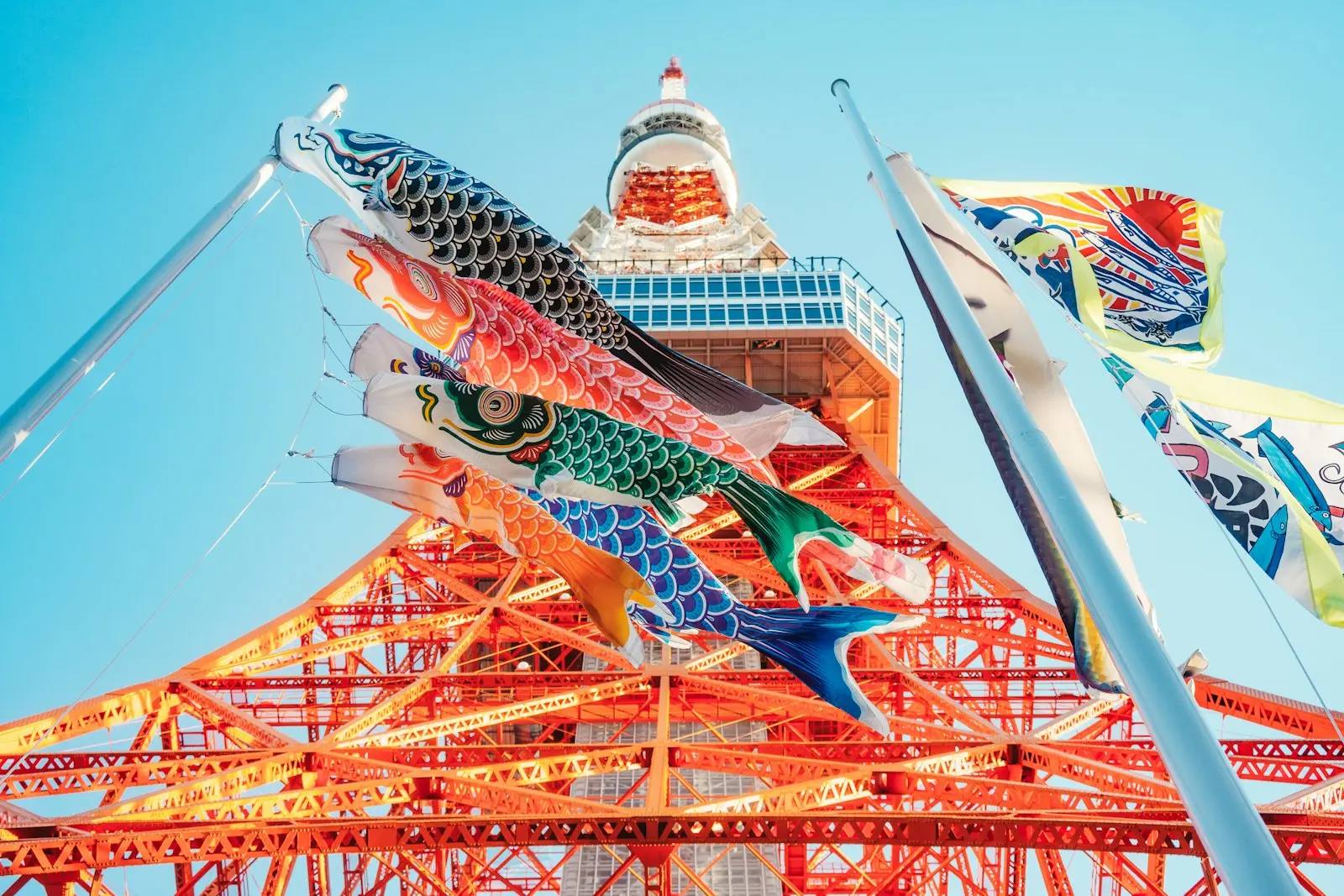
Yes, if the route fits. During Golden Week almost everything is open, the spring weather is pleasant and many places celebrate Children’s Day with carp streamers. What gets crowded are above all trains, motorways and the well-known sights, and accommodation costs more. We plan such journeys so that you spend the peak days in one place and move between places on the days before 29 April or after 5 May.
When should I book the Shinkansen for public holidays?
Ideally as soon as sales open: normally one month before the day of travel at 10:00 Japan time, and for the Tōkaidō, San’yō and Kyūshū Shinkansen via smartEX up to a year in advance, with a limited allocation. On peak days such as over New Year, all Nozomi trains run with reserved seats only. Hikari and Kodama keep their non-reserved cars and are included in the Japan Rail Pass, which is not valid on Nozomi and Mizuho.
Your travel dates are fixed – we arrange the route around them
Tell us your travel period, even if it falls in Golden Week, Obon or New Year. We will show you which days we would spend in one place, when reservations open and what is open on your days. We advise you in English, directly from Japan and without sales pressure.
Enquire about your journeyAbout the author

Kentaro Asakura
Founder of Japan Privat · A Japan specialist who guides you in English
Kentaro Asakura was born and raised in Japan. His student years took him first to the UK, where English became second nature to him, and later to Munich, where he met his wife – together they returned to Japan. With Japan Privat, he has been designing individual journeys for European travellers for more than ten years – in English, with the eyes of a local and a genuine feel for what guests from Europe are looking for.
Photos via Unsplash: Zhaoli Jin (cover image), Tsuyoshi Kozu (Bon Odori), Tadashi Yamanaka (shrine visit in winter). The images have been cropped and reduced in size for the web.