Make Your Own Souvenirs in Japan: A Real One-of-a-Kind Piece Instead of Mass-Produced Goods from the Airport
Table of contents
- The short answer: eight crafts – and what of them comes home with you
- Why a piece you made yourself is not the same as one you bought
- Straight away, in your suitcase or by post: the four scenarios
- Gold leaf in Kanazawa: a pair of chopsticks that exists only once
- Urushi and Chinkin in Wajima: gold in the groove – and nothing that breaks
- Edo-Kiriko workshop in Tokyo: 90 minutes at the cutting wheel
- Knives from Kappabashi: your name on the blade
- Hanko: whoever chooses the characters decides the result
- A kintsugi workshop in a single day: what matters before you book
- Omamori: receive rather than buy – making one yourself is possible, but not necessary
- Painting ceramics: why “paint it and take it with you” does not work
- The journey home: what may go in hand luggage, what in the suitcase and what not at all
- As a gift – at Christmas or for another occasion
- Booking: the hurdles, named openly – and who takes them on
The souvenir you still remember years later is rarely the one from the shelf at the airport – it is the piece on which you carried out the final step yourself. A sheet of gold leaf on a pair of chopsticks, a name that a craftsman in Kappabashi, Tokyo's kitchenware street, strikes into a blade by hand. This guide sorts the workshops by the question that matters on a journey: what can you take with you the same day? What belongs in your checked baggage? What is only shipped within Japan? All prices, times and closing days are as of 13 August 2026. As a tour operator on the ground, we put appointments like these where they fit into your route without any rush.
In brief
- One of a kind means: you make the final step. Where the gold leaf lies, how deep the needle cuts into the lacquer, which characters carry your name – none of that can be reordered.
- Most of it is finished the same day: gold-leaf chopsticks at Goldleaf Sakuda in Kanazawa (60 minutes, 1,760 yen; from January 2027, 1,980 yen), Chinkin – patterns cut into lacquer and filled with gold – at Wajima Kōbō Nagaya (from 15 minutes), Edo-Kiriko cut glass at the Sumida Edo Kiriko Kan (90 minutes), a hanko, the personal name seal, at Tamaru Inbō in Kyoto (from 30 minutes), and an omamori, a protective amulet (about 15 to 30 minutes).
- Ceramics are the exception: the second firing takes one to one and a half months in Kyoto and around two in Kanazawa. The way home is not assured: the Mori Tōki-kan in Kyoto rules out shipping abroad, and Kutani Kōsen gives no information.
- Knives travel in checked baggage only: Narita names kitchen knives expressly; they are not allowed in hand luggage.
- A kintsugi workshop in a single day is possible, but never complete: urushi, the Japanese lacquer used to join the break with gold, only hardens at around 20 to 30 degrees and 75 to 85 per cent humidity, with days between the layers. A two-hour course works with modern materials or on a piece prepared in advance.
- You do not have to make an omamori yourself: the designs differ from shrine to shrine – the Ishiura Shrine in Kanazawa alone keeps around 50 variants of a single dotted pattern. Receive rather than buy: what you give is an offering, not a price.
- The journey home has its say: travellers entering the EU by air have a duty-free allowance of 430 euros – and it applies only to what you carry yourself, not to shipments. Meat and dairy products may not come along, and live plants only with a phytosanitary certificate.
The short answer: eight crafts – and what of them comes home with you
There are eight crafts you can carry out yourself, and most of them come home with you the same day: gold-leaf chopsticks in Kanazawa (1,760 yen), Chinkin chopsticks in Wajima (2,000 yen), a cut Edo-Kiriko glass in Tokyo (5,500 yen), your name on a knife blade in Kappabashi (on a knife bought there), a hanko in Kyoto (from 2,750 yen), a kintsugi piece in Tokyo or Kyoto (from 19,980 yen) and an omamori that you make yourself (from 2,000 yen as an offering). The exception is hand-painted ceramics: they need a second firing, and they are the only category whose way home is not assured.
All amounts are gross prices; net amounts are given in brackets. “No information” means that the workshop says nothing about the language of instruction – for appointments like these we are glad to handle the communication for you.
| What you make | Where | Duration | from approx. (incl. tax) | Taking it home | Language |
|---|---|---|---|---|---|
| Applying gold leaf – onto chopsticks | Kanazawa · Goldleaf Sakuda | approx. 60 min. | 1,760 yen (from Jan. 2027: 1,980 yen) | take it straight away | no information |
| Chinkin – patterns in lacquered chopsticks, gold in the grooves | Wajima · Kōbō Nagaya | 15–60 min. | 2,000 yen | take it straight away | no information · website also available in English |
| Cutting Edo-Kiriko – patterns in overlay glass | Tokyo-Sumida · Sumida Edo Kiriko Kan | 90 min. | 5,500 yen (5,000 yen plus tax) | take it straight away | no information |
| Having a knife engraved – your name in the blade | Tokyo-Kappabashi · Kamata Hakensha · Kama-Asa | approx. 3 min. (Kamata) · no information (Kama-Asa) | free with a knife bought there (Kamata) · in-store fee not stated (Kama-Asa) | checked baggage only | Japanese in the shop · websites also in English |
| Hanko – your name in characters | Kyoto · Tamaru Inbō / Tokyo-Ōimachi · Hanko Land | from 28–30 min. | 2,750 yen (2,500 yen plus tax) | take it straight away | English possible |
| Kintsugi – joining a break with gold | Tokyo · mon cadeau · Tsugutsugu / Kyoto · Tomi Studio | 90–120 min. | 19,980 yen (Shibuya) · 22,000 yen (Tsugutsugu) | take it with you · shipping abroad only at Tsugutsugu | English |
| Making an omamori – pouch, cord, wish | Kyoto · Ryōsoku-in / Tokyo · Anyō-ji / Shiga · Tarōbō-gū | 15–30 min. | 2,000 yen (Shiga) · 3,000 yen (Kyoto) · 3,500 yen (Tokyo), each as an offering | made on the spot | Shiga Japanese only · Kyoto English pages · Tokyo no information |
| Painting ceramics – your design on a blank | Kyoto · Mori Tōki-kan / Kanazawa · Kutani Kōsen | 40–60 min. (+ 1–2 months firing) | 1,500 yen · 2,200 yen | Kyoto: no shipping abroad · Kanazawa: no information | Japanese · English pages |
If a rainy or typhoon day cancels the outing you had planned, two hours at the cutting wheel are often the day people talk about most afterwards.
Sources: Goldleaf Sakuda (official) – gold leaf course: prices, times, taking the piece with you, Wajima Kōbō Nagaya (official) – course overview: Chinkin and Maki-e, Sumida Edo Kiriko Kan (official) – cutting course: prices, time slots, places, Mori Tōki-kan (official) – painting course: prices, 40 minutes, delivery after 1 to 1.5 months
Why a piece you made yourself is not the same as one you bought
Japan is rich in beautiful things to bring home – and the piece you still remember years later is usually the one on which you carried out the final step yourself. A souvenir you buy tells of a place. One you made yourself also tells of an afternoon: of the workshop, of the hands that showed you something, and of the one decision that was yours.
That also shifts the question of origin and maker. You do not have to take anyone's word for where and by whom your piece was made – you were there, in a workshop with a name and an address. A statement of origin turns into your own memory.
What actually makes a piece one of a kind
It comes down to the steps of the work. In Chinkin in Wajima the pattern is cut into chopsticks that have already been lacquered, and only then does the gold powder go into the grooves – your groove decides where the gold sits. At the Kutani workshop Kōsen in Kanazawa you draw the outlines, and the colouring follows the sample card you chose. And in Kyoto a seal carver selects the characters for a foreign name by sound and by meaning at the same time. That combination does not exist a second time, because it was decided for one particular person on one particular afternoon.
These workshops are long established, and their history can be checked: the Kutani workshop in Kanazawa was founded in 1870, the knife grinder in Asakusa in 1923, and the Kyoto seal shop has been in the same place for over a hundred years. The Edo-Kiriko workshop in Sumida became independent from a glass manufactory in 2004 and is a workshop shop recognised by the ward.
What you need to allow for
The price is time and lead time. An appointment takes 15 minutes to two hours, plus the journey there. Places are scarce, many workshops have fixed closing days in the middle of the week, and at some of them instruction is given only in Japanese. That is no reason to do without: if you plan with us, we settle the date, the booking and the language for you in advance. Our overview of independent travel in Japan shows how an afternoon like this fits into an overall route.
Sources: Kutani Kōsen (official) – founded in 1870, division of work in the painting course, Kamata Hakensha (official) – founded in Asakusa in 1923, Sumida Edo Kiriko Kan (official) – workshop shop of the Hirota glass manufactory, independent since 2004, Tamaru Inbō (official) – in Kyoto for over a hundred years, characters chosen by sound and meaning
Straight away, in your suitcase or by post: the four scenarios
Before you book a workshop appointment, one question needs settling: how does the finished piece get home? The day in your itinerary, your luggage and sometimes the choice of workshop all depend on it. Four scenarios cover what happens in practice.
Scenario 1: in your bag the same day
The normal case. Goldleaf Sakuda states expressly that the finished piece can be taken straight away; in Wajima this applies to both Chinkin courses, in Sumida to the glass and at Tamaru Inbō to the seal. With an omamori the piece comes into being under your hands in any case; none of the three places, though, phrases it as “taking it home”. The appointment only has to fit into the day, not into the logistics.
Scenario 2: checked baggage only
Knives affect the journey home most clearly: for kitchen knives, Narita points expressly to checked baggage. Anyone having a knife engraved on the day of departure and flying with hand luggage only has a problem. Glass is on no list of prohibited items, but it is better off in a padded suitcase.
Scenario 3: the workshop also ships abroad
That is rarer than you might think. The Tsugutsugu studio in Tokyo names three ways: take the piece with you in a drying box, leave it at the studio and collect it later – or have it dried there and shipped within Japan or abroad, with the participant bearing the shipping costs. Other workshops say nothing about this; we ask for you before you commit.
Scenario 4: shipping within Japan only
The classic case is ceramics. The Mori Tōki-kan in Kyoto gives one to one and a half months until delivery and, on its English pages, rules out shipping course pieces abroad. Kutani Kōsen in Kanazawa states “shipping costs separate” and says nothing about other countries. The Maki-e variant in Wajima follows around ten days later, again with no information on shipping abroad.
For guests whose journey we design, we are glad to take this step off your hands: the workshop sends the finished piece to our address in Japan, and from there we send it on to your home. We do not promise costs, insurance and transit times across the board, but settle them for your situation beforehand.
What you should not take for granted about shipping
- Knives, food and alcohol cannot be shipped internationally in every case. Whether a carrier accepts them depends on the provider – it is better to plan these pieces into your checked baggage.
- In customs terms, a shipment home is something different from a suitcase. The traveller's allowance applies only to what you carry with you; postal, freight and courier consignments incur import duties. Budget for them – for shipments we send on your behalf, we tell you beforehand what to expect.
Sources: Kintsugi Tsugutsugu (official) – three ways of taking the piece home, shipping within Japan and abroad, Mori Tōki-kan (official, English) – no shipping of course pieces abroad, Wajima Kōbō Nagaya (official) – Chinkin the same day, Maki-e around ten days later, Narita International Airport (official) – kitchen knives in checked baggage only
Gold leaf in Kanazawa: a pair of chopsticks that exists only once
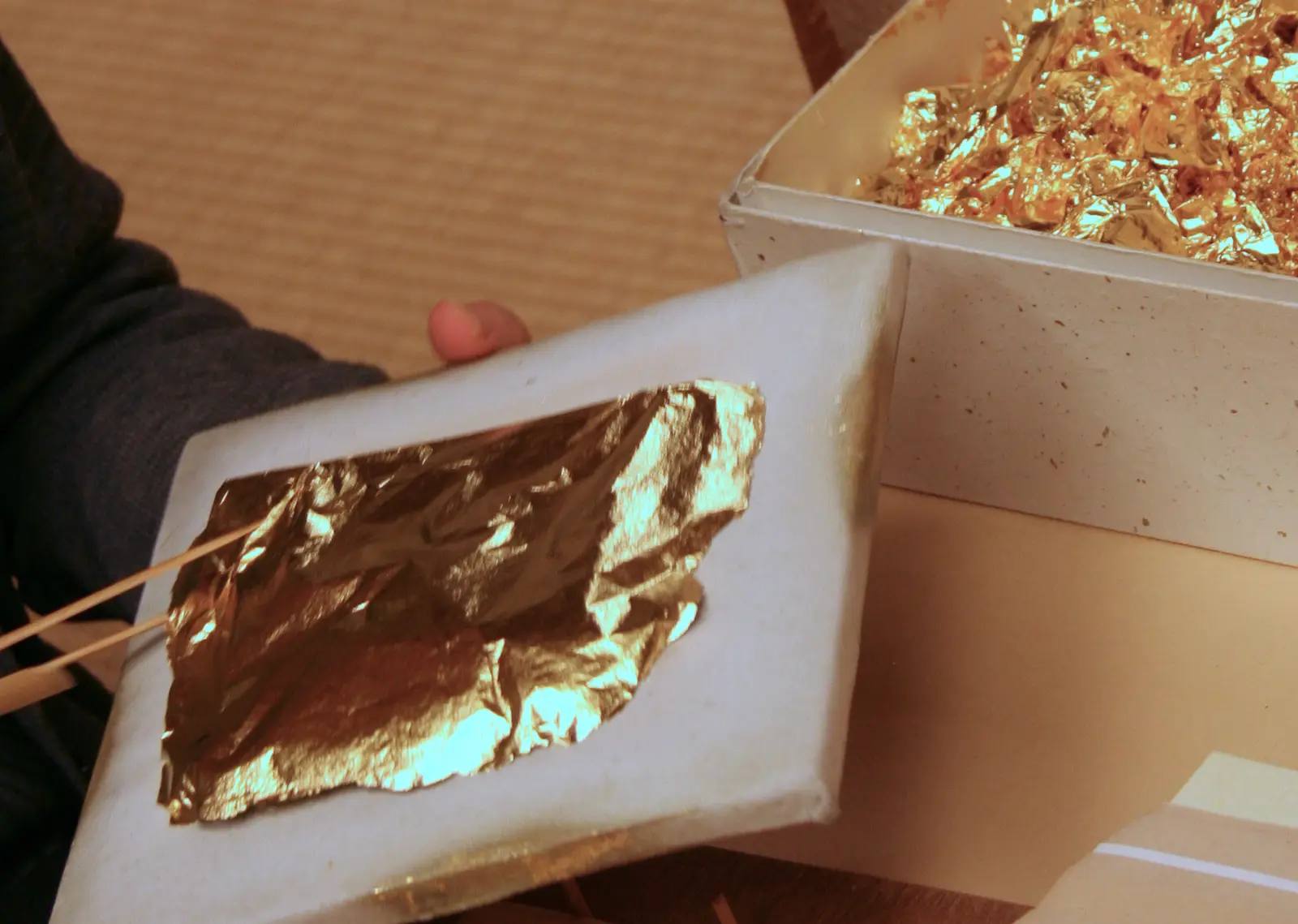
Kanazawa is the city of gold leaf, and the easiest way in leads to the main shop of Goldleaf Sakuda. The course lasts around 60 minutes and takes place four times a day: at 9:00, 10:30, 13:00 and 15:00. Ten objects are available – besides chopsticks, a round plate, several small boxes, a pocket mirror, a hand mirror and a pair of pencils, among others. The pair of wooden chopsticks measures 22.5 centimetres and costs 1,760 yen including materials and tax.
The price list already shows the amounts from January 2027: 1,980 yen for the chopsticks then, and 2,750 instead of 2,310 yen for the round plate. Anyone travelling in 2026 pays today's prices; no explanation of this appears on the company's news page.
The decisive point for planning: once all the steps are done, the piece can be taken away immediately. The workshop accepts up to 30 people per session, and larger groups are asked to get in touch beforehand. Bookings are accepted through the form on the official site until 16:00 on the previous day, and by telephone after that (9:00 to 17:30). The course includes a voucher for 10 per cent off purchases in the shop – valid only on the same day and not for all items.
Older, lower prices and inflated participant numbers circulate on booking portals; what counts are the 1,760 yen and the 30 places on the official site. The workshop gives no information about support in other languages, the course page lists no closing day, and off-site sessions are suspended. Without Japanese, we are glad to settle the booking and the procedure in advance.
Sources: Goldleaf Sakuda (official) – gold leaf course: times, prices, prices from January 2027, taking the piece straight away, Goldleaf Sakuda (official) – home page with telephone bookings 9:00 to 17:30, Goldleaf Sakuda (official) – news overview (no announcement about the price adjustment)
Urushi and Chinkin in Wajima: gold in the groove – and nothing that breaks
Wajima on the Noto Peninsula stands for urushi, the Japanese lacquer. At Wajima Kōbō Nagaya, a row of craft houses, a short path leads inside: in Chinkin you cut a pattern into chopsticks that have already been lacquered, and gold powder is then laid into the grooves. The gold version costs 2,000 yen for a pair and takes 20 minutes to an hour depending on the pattern; the coloured version also costs 2,000 yen and takes from 15 minutes. The chopsticks come in black, red and tame, a translucent reddish brown, each 22.5 centimetres long.
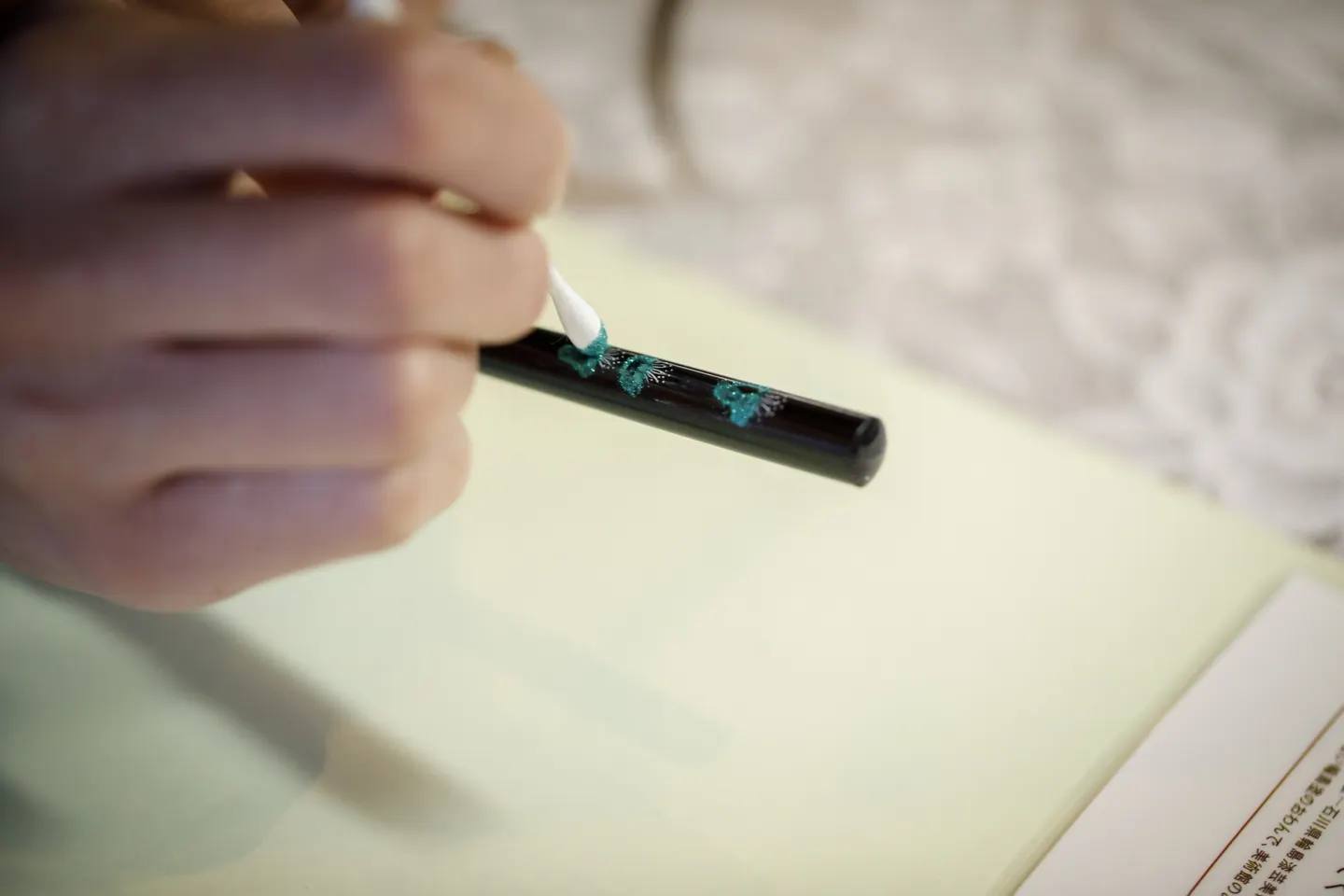
For the journey home this is the most straightforward category: flat, light, robust. Both Chinkin courses hand over the finished piece the same day.
The third variant, Maki-e, follows a different logic: the pattern is painted on with a lacquer-soaked brush and gold powder is scattered over it. Because the lacquer has to harden, the pair only follows around ten days later, with variations possible; whether the workshop ships abroad is not stated on the site – we settle that for you in advance. Here the gold powder is applied by the staff, because urushi can cause skin reactions; do mention a contact allergy before the course begins.
Opening hours are 9:00 to 17:00, the closing day is Wednesday (open on public holidays), bookings are accepted until 15:30, and from ten people a reservation is required. Important: after the earthquake on the Noto Peninsula in January 2024 the house was closed and has been partly operating again since March 2025; the large Chinkin course on a wooden panel is suspended. The reservation page and the reopening announcement contradict each other on short-notice bookings – we call before your trip to ask what currently applies.
The website can be switched to English and further languages; which language is spoken in the course is something the workshop does not say – we are glad to clarify that in advance as well. Wajima lies far off the main routes: anyone thinking about less crowded destinations will find no attraction here, but a working place that is only just starting up again.
Sources: Wajima Kōbō Nagaya (official) – course overview: Chinkin in gold and colour, Maki-e, course on a wooden panel suspended, Wajima Kōbō Nagaya (official) – reservations: closing day Wednesday, bookings until 15:30, Wajima Kōbō Nagaya (official) – home page: opening hours and language selection, Wajima Kōbō Nagaya (official) – announcement on the partial resumption of operations
Edo-Kiriko workshop in Tokyo: 90 minutes at the cutting wheel
Edo-Kiriko is cut glass: patterns are cut into a coloured overlay so that the light breaks through in sharp lines. At the Sumida Edo Kiriko Kan, the workshop shop of the Hirota glass manufactory, the course from about the age of 13 (in Japan, from middle school) lasts 90 minutes and costs 5,500 yen, that is 5,000 yen plus tax, materials included; you take the glass with you. Children from the fourth year of school work for 60 minutes on a lidded vessel and pay 2,750 yen (2,500 yen plus tax).
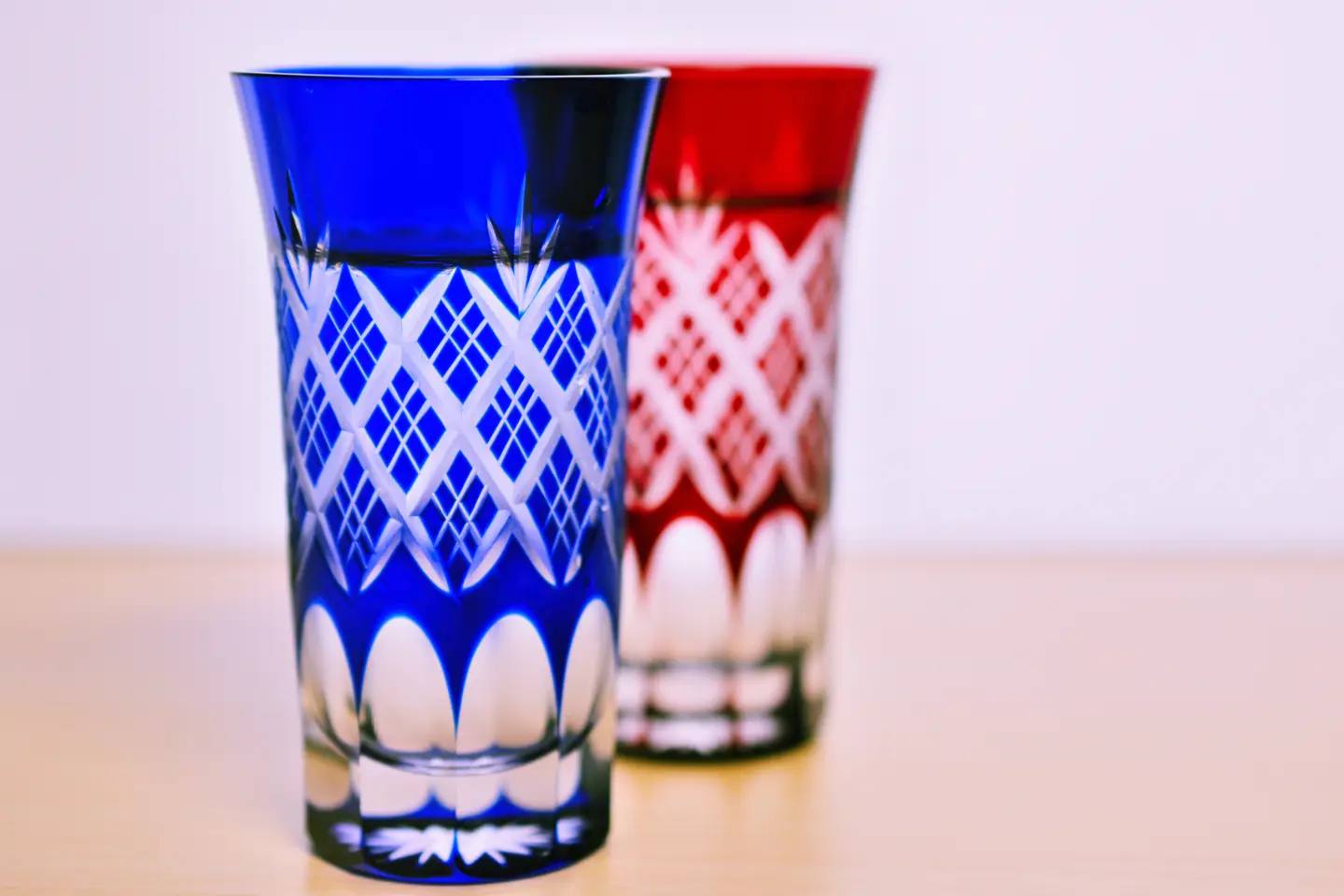
The restriction that most often gets in the way of this appointment: the shop is closed on Sundays and Mondays, and over New Year. The courses run Tuesday to Saturday, and on Mondays when the shop is open, in three time slots – 10:30 to 12:00, 13:00 to 14:30 and 15:00 to 16:30 – with four places per slot, so twelve on a full day. If you only have one weekend in Tokyo, you have to catch the Saturday.
Adults book through the reservation portal, children's courses by telephone. For children, additional rules apply: weekdays only, excluding Saturday, an adult companion is required but may not cut as well, and children under ten may not come along. The official site shows prices net; it says nothing about foreign languages or means of payment. The shop is a six-minute walk from Kinshichō station and open from 10:00 to 17:00; short-notice closing days appear on the home page. Because booking runs in Japanese and four places per time slot go quickly, we are glad to reserve this appointment for you – and to put it on a day when the shop is open anyway.
Older prices and differing opening hours circulate on booking portals; what counts are the 5,500 yen and the workshop's closing days. In the Japanese winter this workshop is particularly strong: indoors, warm and predictable.
Sources: Sumida Edo Kiriko Kan (official) – course: prices, duration, time slots, four places, age rules, Sumida Edo Kiriko Kan (official) – about the workshop: opening hours, closing days Sunday and Monday, Sumida Edo Kiriko Kan (official) – home page with announcements about short-notice closing days
Knives from Kappabashi: your name on the blade
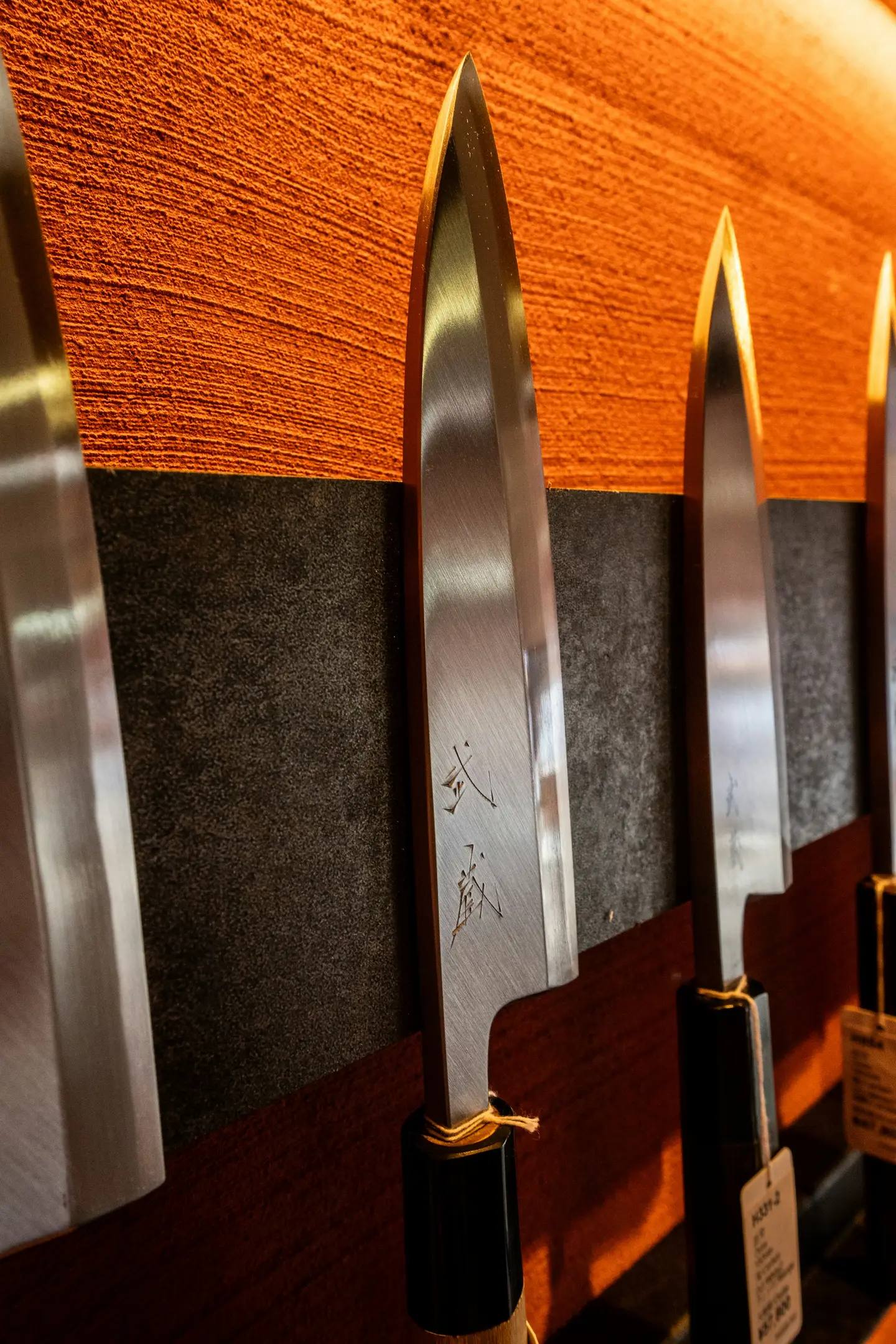
In Kappabashi, the kitchenware street in Tokyo, the engraving is part of buying a knife – by hand, on the knife you have just bought. The blade is craftsmanship; the name on it is your decision. The two shops differ above all in which characters can be struck at all.
Kamata Hakensha: kanji or katakana, in about three minutes
The Kamata grinding workshop, founded in Asakusa in 1923 and today at Matsugaya 2-12-6, engraves knives from its own house by hand free of charge while you wait – around three minutes per knife, longer when it is busy. Engraving is done in Japanese as a matter of principle, that is in kanji or katakana; Latin letters are only possible at the length of initials, and then as a stamp rather than a hand engraving. Anyone who would like the full name in Latin script is better served at Kama-Asa. Only what was bought at Kamata is engraved – also afterwards, and for other makers' brands with the receipt. Opening hours are 10:00 to 18:00; the closing days are irregular.
Kama-Asa: up to 20 Latin characters
A few hundred metres away, at Matsugaya 2-24-1, Kama-Asa engraves by hand under different rules: kanji and katakana up to ten characters, Latin cursive up to 20 characters, with the shop recommending that you begin with a capital letter; depending on the type of knife the limit is lower. Opening hours are 11:00 to 17:30, all year round except over New Year, and only until 16:30 on the last day of each month; payment is by cash, by card or by payment app (in Japan, “e-money”).
For knives from its online shop, Kama-Asa states expressly that the hand engraving is free; whether the same applies in the shop is not written down, and nothing is said there about the duration or about taking the knife home the same day. You can ask when you buy – or have us clarify it in advance. Do not put this visit into the last hour before departure. And the knife travels in checked baggage, never in hand luggage – it fits particularly well into a culinary journey through Japan.
Workshop appointments that fit your route
We know the closing days, the small quotas and the booking routes of these workshops, and we put the appointment where it fits into your itinerary without making the day tight.
Request a no-obligation consultationSources: Kamata Hakensha (official) – engraving: free of charge, around three minutes, kanji or katakana, Kamata Hakensha (official) – how to get there, opening hours, irregular closing days, Kama-Asa (official) – hand engraving, 10 characters kanji/katakana, 20 characters in Latin script, Kama-Asa (official) – shop information Kappabashi: opening hours and closing days
Hanko: whoever chooses the characters decides the result
A hanko, the personal name seal, takes up hardly any space in a suitcase. A European name cannot be translated, only rendered in characters – and whether you or the shop determines those characters changes the result completely.
The shop chooses: Kyoto
Tamaru Inbō, in Kyoto for over a hundred years, runs a branch specialising in this on the Shinkyōgoku shopping street. The shop transliterates foreign names and chooses characters that suit both the sound and the qualities you would like them to convey: “Tom” becomes 都夢 (Tomu) – 都 stands for the sound “to” and means “city”, 夢 for “mu” and “dream”. Common names lie ready-made on the shelf; otherwise the staff choose the characters on the spot. The price begins at 2,750 yen (2,500 yen plus tax) and depends on the material, and the shortest production time is 30 minutes. Open daily from 10:00 to 20:00, with no closing day; hiragana or katakana are possible on request, otherwise the carving is in kanji.
You have a say: Tokyo
In Tokyo, Hanko Land Tokyo in Ōimachi, run by the long-established Bunpukudō, goes the other way round: you can specify the kanji yourself, or the shop uses characters that guests from abroad tend to be pleased with. Its English is good enough to take a seal order, the shop writes; a reservation is not necessary, and guests with an appointment are served first. Opening hours are Monday to Friday from 10:00 to 18:00 and Sundays and public holidays from 10:00 to 14:00; Saturday is the closing day, and there are irregular closures on top of that.
The 28 minutes mentioned apply to standard seals, for instance a name seal in akane wood with a diameter of twelve millimetres for 4,400 yen including tax. Have the meaning of the characters explained to you before the carving begins: a name assembled purely by sound can contain characters that look unusual in Japanese. If you like, we will agree your choice of characters with the shop before the appointment.
Sources: Tamaru Inbō (official) – hanko for guests from abroad: from 2,500 yen plus tax, from 30 minutes, choice of characters, Tamaru Inbō (official) – Shinkyōgoku branch: 10:00 to 20:00, no closing day, Hanko Land Tokyo (official, English) – opening hours and English-language ability, Hanko Land Tokyo (official) – personal seals: prices incl. tax and production times
A kintsugi workshop in a single day: what matters before you book
Repairing a broken piece completely with genuine urushi takes months – on a journey you experience a section of that: a one-day workshop in which you carry out the decisive step yourself. That is not a makeshift arrangement but a division of labour: the workshop takes on what needs time, and you take on what has to be seen and held in your own hands.
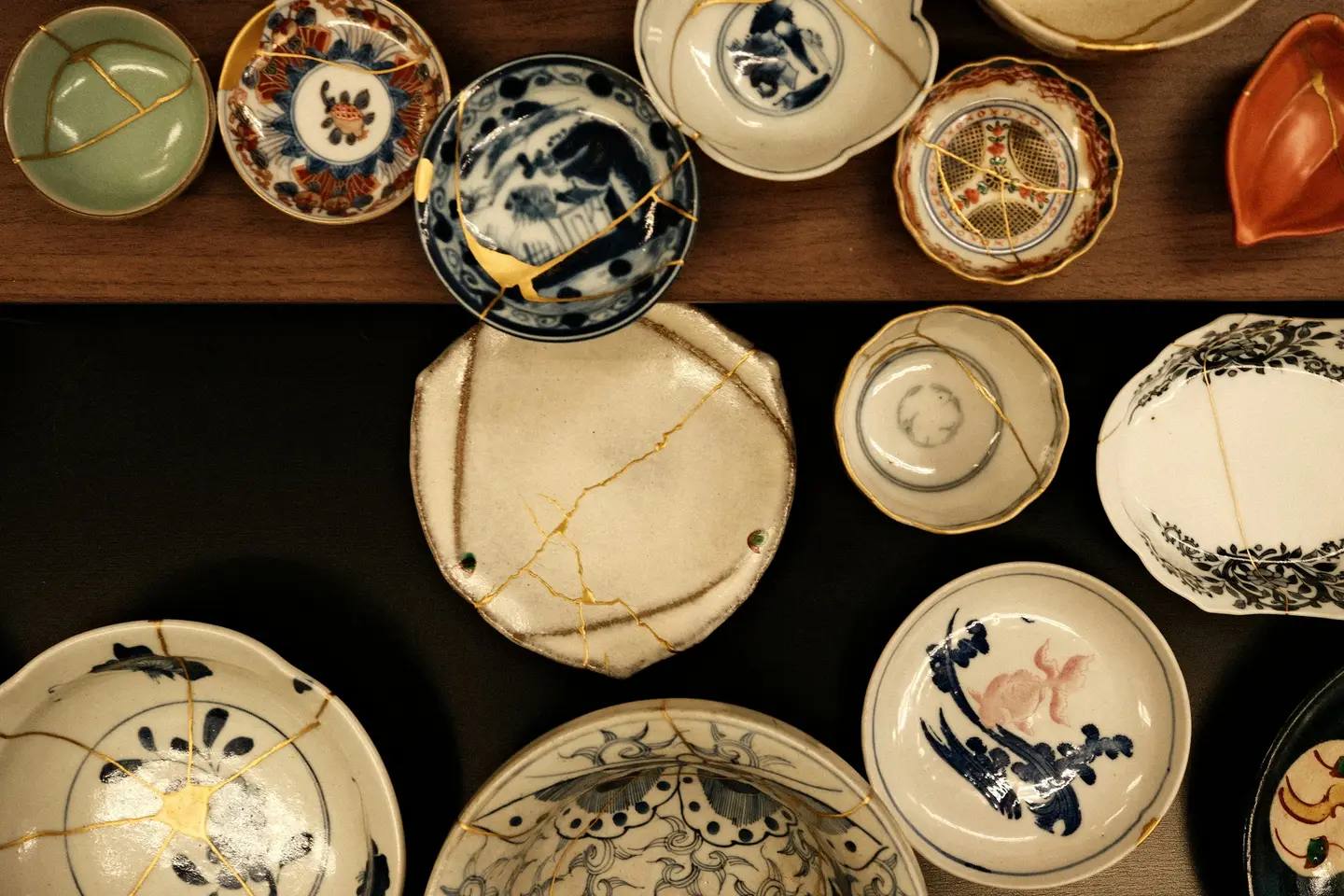
There are two ways of doing this. The first replaces the material: the course works with modern, fast-hardening materials instead of natural lacquer and is finished in two hours. The second shifts the division of labour: the workshop prepares a piece with genuine urushi up to just before the final step, and that step is yours.
This is how the Tsugutsugu studio in Tokyo works, with genuine urushi and genuine gold powder: around 90 minutes, and 22,000 yen per person since 1 February 2026. In the first part you work on a historic piece that is passed on; the piece from the second part goes home with you. Wednesday is the closing day and the minimum age is around twelve; the teachers' English is not fluent, as the workshop itself writes – you state that you would like English-language support when booking, and if you wish we do that for you.
The drying does not end with the course: the studio provides a drying box in which the piece stays closed for one day to a week, in a room at 20 to 30 degrees. If you cannot control that in a suitcase, leave it to dry at the studio and have it shipped later.
The two modern variants are quicker and are taught in English. mon cadeau in Shibuya teaches modern kintsugi: two hours for 19,980 yen, synthetic materials, gold-coloured powder, the piece in a box of paulownia wood, no more than six people. The Tomi Studio in Kyoto, a family atelier, also works with modern materials instead of natural lacquer, but uses genuine gold leaf for the final application: two hours, 20,000 yen including tax, no tableware of your own allowed, taking the piece home the same day.
That the approaches differ is down to the material: urushi does not dry by evaporation but hardens through a reaction with the oxygen in the humidity of the air – a Japanese lacquerware maker gives 75 to 85 per cent humidity at 20 to 30 degrees, and days lie between the layers.
Five questions before you book
- Genuine urushi or synthetic material? Both are fine, but they produce different pieces.
- Genuine gold or gold-coloured powder? The Tomi Studio names genuine gold leaf, Tsugutsugu genuine gold powder, mon cadeau gold-coloured powder.
- Which steps do you carry out yourself? Part of it is prepared in advance – ask which part.
- Is the piece suitable for food? With synthetic materials it is usually decorative.
- How do you treat it after the course? With genuine urushi, days in a closed box at 20 to 30 degrees follow.
Repairing your own broken piece is tuition rather than a workshop: Tsugutsugu reckons with eight to ten appointments of 90 minutes each and several months in total. We are glad to ask these five questions in advance for you – in Japanese, before you commit.
Sources: Kintsugi Tsugutsugu (official) – 22,000 yen from 1 February 2026, genuine urushi, drying box, structure of the course, mon cadeau (official) – modern kintsugi: 19,980 yen, two hours, synthetic materials, no more than six places, Tomi Studio Kyoto (official) – 20,000 yen, modern materials instead of natural lacquer, finish with genuine gold leaf, Yamakyu Urushi – urushi only hardens at 75 to 85 per cent humidity and 20 to 30 degrees
Omamori: receive rather than buy – making one yourself is possible, but not necessary
An omamori, the protective amulet, is not bought but received; the amount you give for it is not a price but an offering to the shrine or temple. That explains why some shrines take cash only and why an omamori is usually brought back after about a year.
Making one yourself: three places with clear information
At Ryōsoku-in, a subtemple of Kennin-ji in Kyoto, the musubi-mamori comes into being: choose a pouch, write your wish on a piece of paper, place it inside, close it, then go to the Bishamon hall. The offering is 3,000 yen, daily from 9:30 to 16:00 in the sutra hall, without reservation; only the matcha version at 6,600 yen has to be reserved in advance. The temple does not state a duration. No vehicles are allowed onto the grounds of Kennin-ji – do come by public transport.
Anyō-ji in Tokyo's Kagurazaka offers an omamori to assemble yourself: a pouch, a cord in nine colours and a stone, 3,500 yen including materials, about 15 to 30 minutes. Booking is through the online shop with payment in advance, which is also the reservation; there is no ticket, and you give your name at reception. The temple gives no information about foreign languages, and the office is staffed on weekdays from 9:00 to 12:00 and 13:00 to 17:00.
Tarōbō-gū in Shiga Prefecture is the most detailed: the offering has been 2,000 yen since 2025, it takes around 15 minutes, and registrations are accepted from 9:00 to 16:00 in the assembly hall. You choose from 200 pouch and cord variants and place inside a wish written on paper as well as a mitama, a small symbol of the deity that has been prayed over beforehand. Priests and miko, the shrine maidens, guide you in Japanese only; registration can close without notice because of festivals or groups, there is a daily limit, and from ten people you register in advance. You do not have to climb up to the assembly hall – to the main building it is around 750 steps from the lower car park and around 250 from the upper one. Because registration runs in Japanese only and can close at short notice, we ask before your trip whether the day of your choice is possible.
You do not have to make anything yourself
An omamori is a special piece even without a workshop, because the designs differ from place to place: the Ishiura Shrine in Kanazawa alone keeps around 50 variants of its dotted-pattern omamori, while other shrines differentiate by season or by material – chirimen silk, denim, lace. Anyone who looks closely will find a different one in every place.
Guests from abroad can receive an omamori too. No appointment is needed – your itinerary stays as it is.
How to handle it afterwards
Where possible, an omamori is brought back after about a year and ritually burned. That is not compulsory – many people carry it until the wish has been fulfilled. Several at once are no problem, and you may also give one away.
Sources: Ryōsoku-in (official) – musubi-mamori: offering 3,000 yen, daily 9:30 to 16:00, without reservation, Anyō-ji Kagurazaka (official online shop) – 3,500 yen, 15 to 30 minutes, booking with payment in advance, Tarōbō-gū (official) – 2,000 yen, around 15 minutes, guidance in Japanese only, 9:00 to 16:00, Ishiura Shrine (official) – dotted-pattern omamori in around 50 variants
Painting ceramics: why “paint it and take it with you” does not work
If you take away a single sentence, let it be this one: painted ceramics do not come with you the same day. Between your brushstroke and the finished piece lies a second firing: the Mori Tōki-kan on Kiyomizu-zaka, the lane up to Kiyomizu-dera, gives one to one and a half months, and the Kutani workshop Kōsen in Kanazawa around two months. For Kyoto, shipping abroad is ruled out; for Kanazawa there is no information at all – which is why ceramics are the only category without an assured way home.
At the Mori Tōki-kan you choose from around ten bisque-fired blanks, sketch in pencil and paint in the lines; the course lasts 40 minutes. With two colours a teacup costs 1,500 yen, a cup, a plate, a rice bowl or a small vase 1,900 yen and a matcha bowl 3,000 yen; with five colours it is 1,900, 2,250 and 3,300 yen respectively. The courses run from 10:00 to 17:00.
What is decisive is the way afterwards: the English pages state that the pieces made during the course are not shipped abroad. Guests from abroad can instead only do the work and take an equivalent piece from stock the same day – but then you take a different one home, not yours. Anyone who wants their own needs an address in Japan. Elsewhere on the same page there is a differing statement; if you would like to do this course, we clarify by telephone in advance what applies in your case.
The Kutani workshop Kōsen in Kanazawa, founded in 1870, divides the work differently: you choose from about 15 blanks and draw the outlines, and a craftsman does the colouring in the colours you select on a sample card. With a tour of the workshop this takes around an hour and costs 2,200 to 6,600 yen plus shipping; about two months later the piece is sent out after the second firing. Registration is requested and accepted until 15:30, opening hours are 9:00 to 17:00, and it is closed only on 1 January. Whether it ships abroad is stated on neither the Japanese nor the English pages. If you would like an experience like this, we ask on your behalf before your trip whether your wish can be granted – and if the workshop does not ship abroad, we discuss with you which way then remains. On a journey along Japanese tea, a matcha bowl you painted yourself is a fitting thing to bring home, provided the way it will travel is settled beforehand.
Sources: Mori Tōki-kan (official) – painting course: prices, 40 minutes, course times, delivery after 1 to 1.5 months, Mori Tōki-kan (official, English) – no shipping of course pieces abroad, Kutani Kōsen (official) – painting course: 2,200 to 6,600 yen plus shipping, around one hour, dispatch after about two months, Kutani Kōsen (official) – opening hours and how to get there, closed only on 1 January
The journey home: what may go in hand luggage, what in the suitcase and what not at all
A one-of-a-kind piece is of little use if it stays at the security check. The overview shows what applies to the typical things people bring home – on departure in Japan and on arrival. The customs figures given here are those for travellers entering the EU.
| What you take with you | Hand luggage | Checked baggage | What to keep in mind on arrival |
|---|---|---|---|
| Engraved knife | no | yes | The rules on carrying a knife in a public place differ from country to country, so please check the regulations that apply where you live. What is decisive for the journey home is that the knife goes into your checked baggage and is packed securely. |
| Edo-Kiriko glass, lacquerware, hanko, kintsugi piece | yes | yes | No particular restrictions; the value of the goods counts towards the traveller's allowance of 430 euros on entry into the EU. Glass travels more safely in a padded suitcase. |
| Sake and shōchū | observe the liquid rules at the security check | yes | On entry into the EU: one litre above 22 per cent alcohol by volume or two litres up to 22 per cent, combinable pro rata; plus four litres of still wine and 16 litres of beer. The EU minimum age is 17, and some countries set it higher, so check the rules where you live; these quantities do not count towards the 430 euros. |
| Tea, confectionery, seasonings | yes | yes | No meat and no milk, not even as an ingredient: the EU regulation expressly covers baked goods and composite seasonings in so far as they contain meat or milk. Other goods: 2 kg; tea and spices: small quantities of 5 kg (fresh) and 2 kg respectively. |
| Meat, sausage, dairy products | no | no | Prohibited in principle from non-EU countries, even in small quantities and even as an ingredient. |
| Live plants, cuttings, seeds, fresh fruit | no | no | For all plants, parts of plants, fruit and seeds the EU requires a phytosanitary certificate from the authority of the country you are travelling from; without this document there is no import, the goods are usually destroyed and a fine may be added. Exceptions: pineapple, coconut, durian, banana, date. Loose soil and growing media are prohibited. |
For air and sea travellers entering the EU the allowance is 430 euros; some EU countries set a lower allowance for children under 15, so check your own customs authority's guidance. What counts is the value of the goods including foreign VAT. If you are above that, declare it at the customs point on arrival – with a high-quality knife or several gifts the limit is reached faster than you would think. If your journey home takes you to a country outside the EU – the UK, Norway or Switzerland, for instance – please check the allowances that apply there.
The most common misconception: the allowance applies only to goods you carry yourself. Luggage sent ahead or on afterwards, freight, post and courier consignments do not fall under it, and import duties apply to them. If we send a piece home for you, we point that out beforehand – and where the suitcase is the simpler way, we tell you that too.
Sources: Your Europe (European Union, official) – entering the EU from a non-EU country: 430 euros for air and sea travellers, alcohol quantities, no alcohol allowance under 17, lower limit for under-15s in some EU countries, Customs information for travellers entering the EU (German-language source) – private imports of food: no meat, no milk; small quantities for tea and spices, Customs information for travellers entering the EU (German-language source) – plants and plant products in travel: phytosanitary certificate, five exceptions
As a gift – at Christmas or for another occasion
A souvenir you made yourself is strong as a gift for one simple reason: it cannot be reordered. What is unwrapped is an afternoon, not an item from a shelf – under the Christmas tree just as much as for a birthday, a wedding or a housewarming.
A rough guide for matching them up. A cut Kiriko glass suits people who enjoy hosting. Chopsticks are right for the whole family – several pairs in different colours, robust in a suitcase. A hanko works best with children: their own name in characters, plus an ink pad. A knife belongs in the hands of the person who really cooks, and rather not as a surprise under the tree, because it wants explaining. And an omamori is expressly meant as something to bring back: the Himeji Shrine writes in English that it is suitable as a gift for friends and family at home.
What you should allow for is the timeline. What is finished the same day goes straight into your suitcase; painted ceramics need one to two months, and for a fixed date the way it will be sent has to be settled beforehand. Keep an eye on the total value: the allowance of 430 euros applies per person and only to what you carry yourself when entering the EU.
The amounts are lower than most people expect – a pair of chopsticks for 1,760 yen, an omamori as an offering of 2,000 yen. What makes it a gift is not the price but the fact that the groove came from your hand.
Sources: Himeji Shrine (official, English) – omamori as a gift for family and friends at home, Ōmiwa Shrine (official) – passing an omamori on is expressly possible, Your Europe (European Union, official) – allowance of 430 euros per traveller for air and sea travellers
Booking: the hurdles, named openly – and who takes them on
The workshops here are working businesses, not attractions with a ticket booth. That has consequences for the planning. We name them openly – and take them off your hands if you wish.
Five typical hurdles
- Closing days nobody expects: Wajima and Tsugutsugu on Wednesdays, the Sumida Edo Kiriko Kan on Sundays and Mondays, Hanko Land on Saturdays – and there it is open only from 10:00 to 14:00 on Sundays and public holidays.
- Very small quotas: four places per time slot for Edo-Kiriko, no more than six people at mon cadeau in Shibuya; in Kanazawa, by contrast, up to 30 per session.
- Guidance in Japanese only: Tarōbō-gū states it expressly; others say nothing about the language, which can mean the same thing.
- Cash and inconsistent booking routes: sometimes a form, sometimes by telephone, sometimes only until 16:00 on the previous day, sometimes online payment in advance; some shrines do not take cards.
- Age limits: Edo-Kiriko from the fourth year of school, accompanying children under ten are not allowed; Tsugutsugu names around twelve years, and the Tomi Studio gives two different minimum ages on two pages – we check that for you as well.
On top of that, the official sites occasionally contradict themselves: on the same English page, the Mori Tōki-kan states “no shipping abroad” in one place and something different elsewhere. Cases like these we clarify with a phone call in Japanese before you book.
If you would like one of these workshop visits in the plan you are making with us, simply let us know: we check in advance whether the date you want is possible, take on the booking in Japanese and put the appointment into your route so that it is not wedged between two train journeys. Why this is needed more often with Japanese businesses than elsewhere is set out in a separate article. How appointments like these can be worked into a route is shown by our suggestions for two weeks and three weeks; if children are travelling with you, it is worth a look at the age limits and daily rhythms.
Sources: Sumida Edo Kiriko Kan (official) – four places per time slot, age rules, booking routes, Wajima Kōbō Nagaya (official) – reservations, closing day, booking deadline, Tarōbō-gū (official) – guidance in Japanese only, daily limit, groups from ten people, Kintsugi Tsugutsugu (official) – closing day Wednesday, minimum age, note on English-language support
Frequently asked questions about making your own souvenirs in Japan
Can I take the souvenir I made myself home the same day?
At most workshops, yes: Goldleaf Sakuda in Kanazawa hands the piece over after around 60 minutes, Wajima Kōbō Nagaya after 15 minutes at both Chinkin courses, the Sumida Edo Kiriko Kan after 90 minutes and Tamaru Inbō in Kyoto from 30 minutes. The exception is ceramics: the second firing takes one to one and a half months in Kyoto and around two in Kanazawa. The Maki-e variant in Wajima follows around ten days later, and a kintsugi piece made with genuine urushi still has to rest for one day to a week in a closed box at 20 to 30 degrees.
What do I do if a workshop only ships within Japan?
Then you need an address in Japan – or a piece that is finished the same day. If we design your journey, we have the workshop send the finished piece to our address in Japan and send it on from there to your home; costs, insurance and transit times we settle with you beforehand rather than promising them. Reckon with import duties on shipments: the traveller's allowance of 430 euros on entry into the EU applies only to what you carry yourself. Knives, food and alcohol are better planned into your checked baggage.
At which workshops can I book and take part in English?
Most reliably at the kintsugi studios: mon cadeau in Tokyo-Shibuya and the Tomi Studio in Kyoto teach predominantly in English; Tsugutsugu offers English-language support but writes itself that the teachers' English is not fluent. Hanko Land Tokyo says its English is good enough for a seal order, and Tamaru Inbō and Wajima Kōbō Nagaya have English pages, the latter in several further languages too. Tarōbō-gū guides visitors in Japanese only; Goldleaf Sakuda and the Sumida Edo Kiriko Kan give no information – there we take on the booking.
Is a one-day kintsugi workshop done with genuine urushi?
Sometimes yes, sometimes no – both are reputable as long as the workshop says which. Urushi only hardens at around 75 to 85 per cent humidity and 20 to 30 degrees, with days between the layers; a complete repair is not possible in a single appointment. There are therefore two models: synthetic materials that are finished in two hours, or genuine urushi on a piece that the workshop has prepared up to just before the final step. What matters is the material, the gold, the steps you carry out yourself, the suitability for food and the aftercare – we are glad to ask these five questions in advance for you.
Can I take a Japanese kitchen knife home with me?
Yes, but exclusively in checked baggage. Narita names kitchen knives expressly; they are not allowed in hand luggage. The rules on carrying a knife in a public place differ from country to country, so please check the regulations that apply where you live – what is decisive for the journey home is that the knife goes into your checked baggage and is packed securely. On entry into the EU, the value of the knife counts towards the traveller's allowance of 430 euros.
What do workshops like these cost and how much time should I allow?
The range goes from 1,500 to 22,000 yen, and the time from 15 minutes to two hours. The least expensive are a painted teacup in Kyoto from 1,500 yen, gold-leaf chopsticks in Kanazawa for 1,760 yen (from January 2027: 1,980 yen) and an omamori as an offering from 2,000 yen; in the middle are Chinkin at 2,000 yen, a hanko from 2,750 yen and Edo-Kiriko at 5,500 yen, and at the upper end kintsugi at 19,980 to 22,000 yen. The engraving at Kamata Hakensha is free of charge, but only for knives bought there; for its shop, Kama-Asa names no fee. Add the journey there and some buffer.
Your journey through Japan with a piece that belongs to you alone
Tell us what interests you – gold, lacquer, glass, steel or paper – and we will put together a route in which the workshop visits fit your paths and your pace. We advise you in English, directly from Japan, as a tour operator on the ground and without sales pressure.
Enquire about your journeyAbout the author

Kentaro Asakura
Founder of Japan Privat · A Japan specialist who guides you in English
Kentaro Asakura was born and raised in Japan. His student years took him first to the UK, where English became second nature to him, and later to Munich, where he met his wife – together they returned to Japan. With Japan Privat, he has been designing individual journeys for European travellers for more than ten years – in English, with the eyes of a local and a genuine feel for what guests from Europe are looking for.
Cover image: Eckhard Pecher, “Kanazawa Gold Factory”, CC BY 2.5, via Wikimedia Commons – cropped and reduced in size for the web.